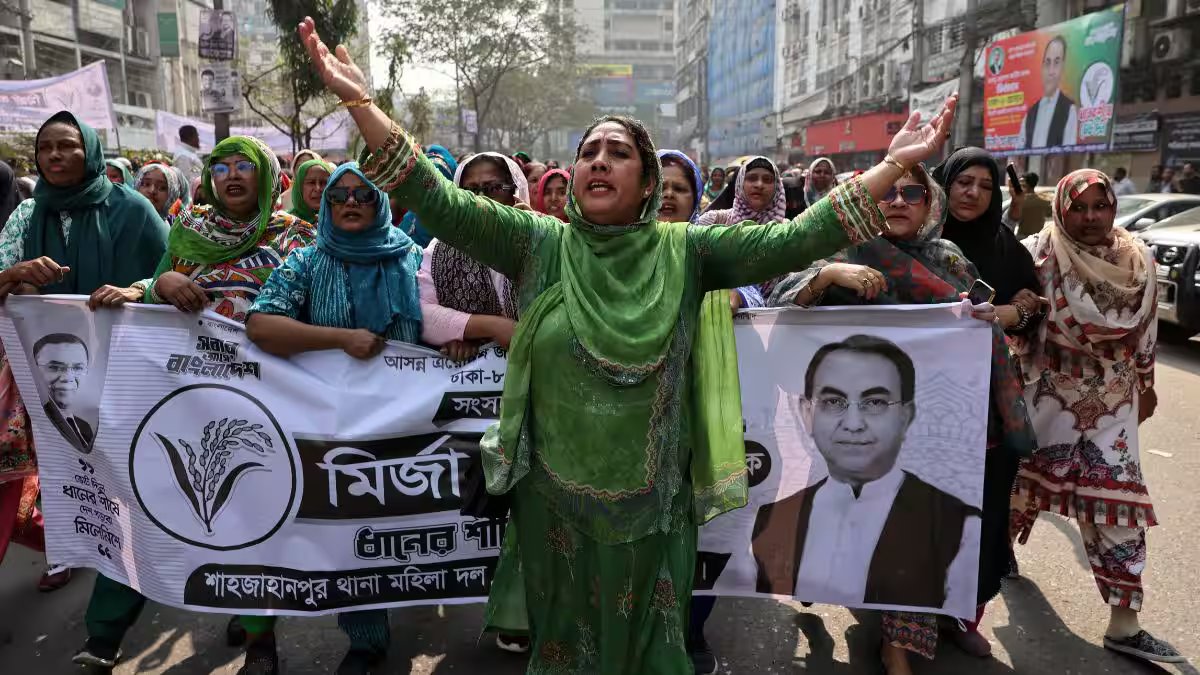
Three days before Bangladesh’s national election, violence erupts as clashes between BNP and Jamaat‑e‑Islami supporters leave 40 injured, raising fears of an unstable, tense, and highly charged polling environment
With just three days to go before the national election on February 12, political tensions in Bangladesh have boiled over into fresh violence. At least 40 people were injured in violent clashes between supporters of the Bangladesh Nationalist Party (BNP) and the Jamaat‑e‑Islami during rival campaign activities in the Bauphal area of Patuakhali district on Sunday.
The confrontation began when both parties organised separate processions and rallies, leading to exchanges of slogans that quickly escalated into running battles involving sticks and other makeshift weapons.
Many of the injured were treated at the Bauphal Upazila Health Complex, with some later referred to larger hospitals for further care. Law enforcement, including police, army and Coast Guard personnel, were deployed to restore order after clashes flared again in front of the local health facility.
As violence unfolded, leaders from both sides traded accusations. A Jamaat‑e‑Islami leader claimed “BNP activists launched an ambush” against his supporters, while a BNP acting convener denied the allegation and instead accused Jamaat of stirring trouble for political gain.
Rights groups have reported numerous incidents of clashes, injuries and even deaths in recent weeks, heightening fears that the upcoming vote will be marred by instability and communal tensions.
Also read |
Jobs, prices and democracy: Can issues that toppled Hasina govt decide Bangladesh election?
A critical moment for Bangladesh
This election is widely seen as a crucial moment for Bangladesh’s political future, especially following the ouster of long‑time leader
Sheikh Hasina and the dramatic reshaping of the country’s political landscape. Analysts say a decisive outcome could shape the nation’s stability and international relations for years to come.
As the nation heads into voting day, security forces are on high alert, and calls for calm and fair electoral conduct are mounting from civil society and international observers alike.
End of Article