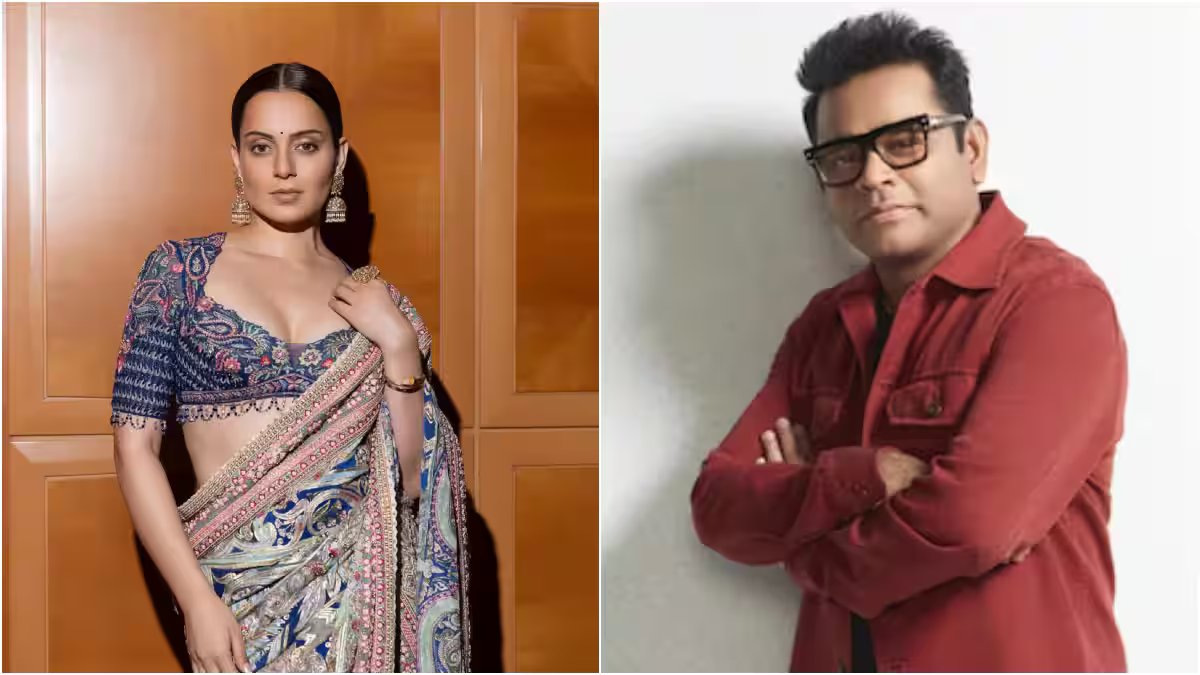
Kangana Ranaut called Oscar-winning composer A R Rahman “prejudiced and hateful”, alleging he refused to meet her about her film Emergency because he believed it was a “propaganda film”, in a social media post following his comments on Chhaava.
Actor-director Kangana Ranaut has publicly criticised composer A R Rahman, accusing him of refusing to meet her about collaborating on her film Emergency and of calling it a “propaganda film”.
The remarks came after Rahman’s recent interview with BBC Asian Network, in which he described the historical drama
_Chhaava_ as “divisive” while explaining why he chose to score it. Ranaut responded to those comments on social media, drawing further attention to the ongoing industry conversation.
Taking to Instagram, Ranaut wrote, “Dear @arrahman ji, I face so much prejudice and partiality in the film industry because I support a saffron party yet I must say I have not come across a man more prejudiced and hateful than you.” She went on to allege that Rahman had declined to even meet her to discuss Emergency.
“I desperately wanted to narrate my directorial Emergency to you. Forget narration, you even refused to meet me. I was told you don’t want to be part of a propaganda film,” she wrote on Instagram. “Ironically, Emergency was called a masterpiece by all critics. Even opposition party leaders sent me fan letters appreciating the film for its balanced and compassionate approach but you are blinded by your hate. I feel sorry for you #emergency.”
Emergency, which Ranaut directed and in which she starred as former Prime Minister Indira Gandhi, focuses on the 1975-1977 Emergency in India. The political drama did not perform strongly at the box office and has been a point of debate since its release.
The controversy echoes Rahman’s earlier comments, in which he described Chhaava as capitalising on divisive themes even though its core message was bravery. Rahman also recently suggested that a shift in industry power structures could explain why he has received fewer Bollywood offers in recent years.
Ranaut’s social media post sparked wider discussion across entertainment news and social platforms, with responses reflecting a range of views on artistic choice, political perception and collaboration in the Indian film industry.
End of Article