Andrew Mountbatten-Windsor has had a habit of sitting in the back of cars. However, Thursday’s ride in the back of a car was unlike any other for the former prince.
On Thursday (February 19), on his 66th birthday, Andrew, the younger brother of King Charles III, was arrested and taken away from his home on the King’s estate at Sandringham over suspicions that he shared confidential information with the notorious sex criminal Jeffrey Epstein.
While Andrew has been released from custody — an
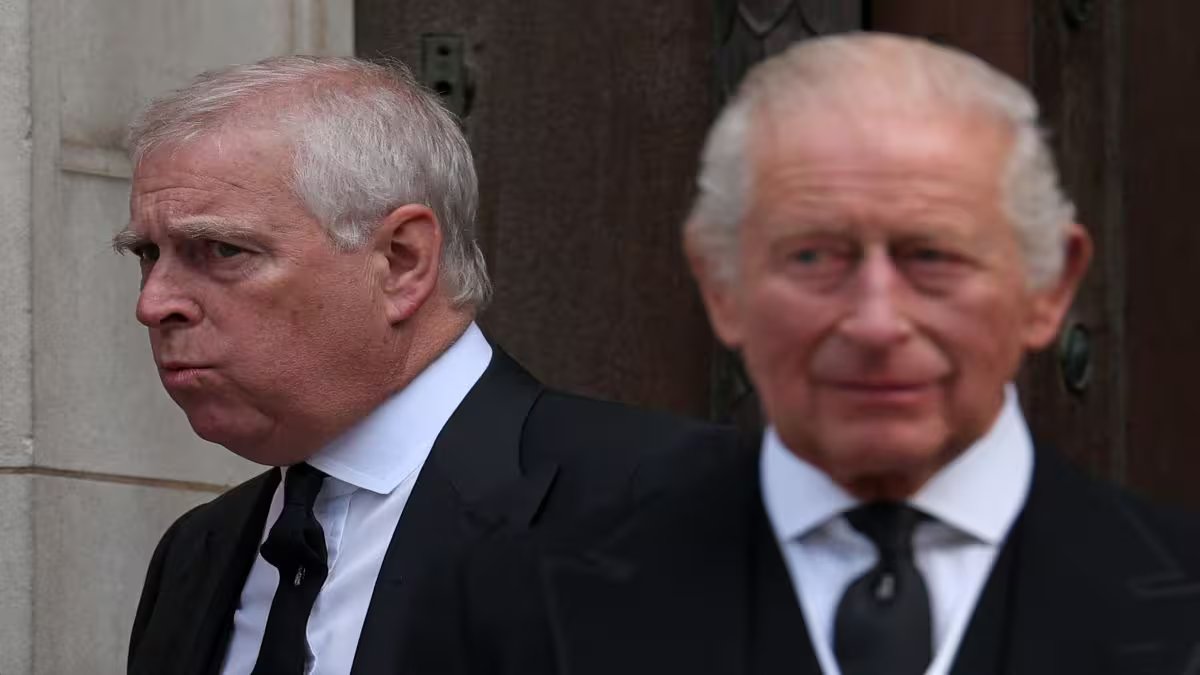
image of a shell-shocked Andrew has gone viral — after being held for 11 hours in custody, questions persist. Many are wondering what this means for the British monarchy. Does Andrew’s arrest bring down the centuries-old monarchy, or do the British royals persist?
An unprecedented royal arrest
Last year, Andrew was
stripped of his Duke of York and Prince titles, rendering him a commoner. Later, in January, he was seen leaving his home of nearly 23 years and moving to the Sandringham Estate, specifically Wood Farm, a favourite getaway of his father, Prince Philip.
It’s from here that
Andrew was arrested on Thursday (February 19) on suspicion of misconduct in public office related to his links to Jeffrey Epstein. After being held in custody for 11 hours, he was
released, with the Thames Valley Police saying that he was released under investigation, meaning he has neither been charged nor exonerated.
The arrest on Thursday came after the police previously said they were “assessing” reports that Andrew sent trade information to Epstein when the former prince was Britain’s special envoy for international trade. Correspondence between the two men was released by the US Justice Department late last month, along with millions of pages of documents from the American investigation into Epstein.
“Following a thorough assessment, we have now opened an investigation into this allegation of misconduct in public office,’’ Assistant Chief Constable Oliver Wright said in a statement.
This arrest is a significant moment in the history of the monarchy. The last senior royal arrested was King Charles I in 1647 after being convicted of treason. He was executed two years later. Over the years, other royals have had their brushes with the law — his sister, Princess Anne, was convicted of an offence under the Dangerous Dogs Act in 2002 after her English bull terrier, Dotty, bit two children walking in Windsor Great Park — but none have been arrested, per se.
What was even more striking was King Charles’ reaction to the news of the arrest. It appears that the British monarch wasn’t intimated earlier that Andrew would be arrested, and that was evident from his statement.
“What now follows is the full, fair, and proper process by which this issue is investigated in the appropriate manner and by the appropriate authorities.
“In this, as I have said before, they have our full and wholehearted support and co-operation,” said King Charles, before adding, “Let me state clearly: the law must take its course.”
Andrew’s arrest, royal scandal, and public trust
Andrew’s arrest is the latest scandal to hit Britain’s 1,000-year-old royal family, and for many is the final nail in the coffin for the monarchy.
The family has seen many a
scandal. In 1936, Britain’s King Edward VIII gave up the throne to marry Wallis Simpson, an American divorcée, triggering a constitutional crisis that stunned Britain and the Commonwealth. Then in 1995, following three years of divorce, Princess Diana stunned the world during her interview with Panorama. She then revealed that “there were three of us in this marriage”. And before Andrew’s arrest, the biggest disgrace came in 2020 when Prince Harry and wife, Meghan, announced they were stepping down from working royals — a move dubbed as Megxit.
All of these have resulted in the monarchy’s popularity declining, particularly after the death of the widely beloved Queen Elizabeth II in 2022. In 1983, 86 per cent of Britons said it was “very important” or “quite important” to continue having a monarchy, according to polling by the nonprofit National Centre for Social Research. Last year, that had dropped to 51 per cent.
A Savanta poll conducted earlier this month showed support for the monarchy at just 45 per cent, down from 63 per cent as recently as 2020. Support among 18-to-24-year-olds has dropped to 23 per cent.
But as historians and royal watchers note, Andrew’s arrest on suspicion of misconduct in public office takes the reputational and constitutional risk for his family to another level.
They note that none of the previous scandals will erode trust, as will Andrew’s arrest. As royal historian Kate Williams told CNN, “The question is going to be asked increasingly, ‘What did Charles know?’ And I think people are going to start saying, ‘What did William know?’
“This is going to be the biggest challenge that the royal family has had on their hands since the death of Diana.”
A real test for the monarchy
Andrew’s arrest, according to royal watchers, is the biggest test for the monarchy. Veteran royal commentator Richard Fitzwilliams told Harper’s Bazaar, Andrew’s arrest “is the institution’s ultimate test.” He further explained that in the weeks and months to come, “the royals will be under enormous pressure.”
“Every family has its horrors, but this has lasted for years,” he added, noting that Andrew’s charge is a serious one — and there may be more to come.
Longtime royal biographer Sally Bedell Smith also believes that Andrew’s arrest “is a calamity for the royal family,” adding that while in one respect Thursday’s events “aren’t surprising,” the “scene of five police officers entering a rear door of his temporary home in Wood Farm at Sandringham, and another officer at the front door was a truly shocking sight that will forever blight the royal family.”
Even Rachel Bowie, senior director of royals and special projects at PureWow, expressed concern about the monarchy’s future. She told Harper’s Bazaar that “Andrew’s arrest upends the feeling of stability that the monarchy is supposed to project. It also sets into motion questions about who knew what and when”.
She added that the arrest could also open up the royal family to “more scrutiny,” saying that if evidence came out that there was any type of royal cover-up for Andrew, “it could be the monarchy’s undoing.”
The monarchy’s separation from Andrew
However, not everyone agrees that Andrew’s arrest marks the beginning of the end for the British monarchy.
Many of King Charles’ supporters point to the actions he has already taken – stripping titles and home from his brother, as well as promising cooperation with any inquiries. Many also point to Charles’ statement following Andrew’s arrest. They note that the statement is a clear indication that the King is putting aside his family loyalty.
Jonathan Dimbleby, the King’s biographer, too believed that the monarchy wasn’t in peril. “I don’t think that it damages the monarchy,” he told the BBC of the arrest. “I think we have to separate the notion of a family from the institution of the monarchy.”
Others also believe that the manner in which Andrew was arrested, albeit shocking, will also lessen the damage to the royal family.
Regardless of what comes next in this saga, one thing is certain: the monarchy has to change the state of affairs. As Simon Jenkins wrote in an opinion piece in The Guardian, “What happens next hardly matters: the mystique and awe surrounding the royals had been shattered. The former prince’s arrest must change everything.”
With inputs from agencies
End of Article