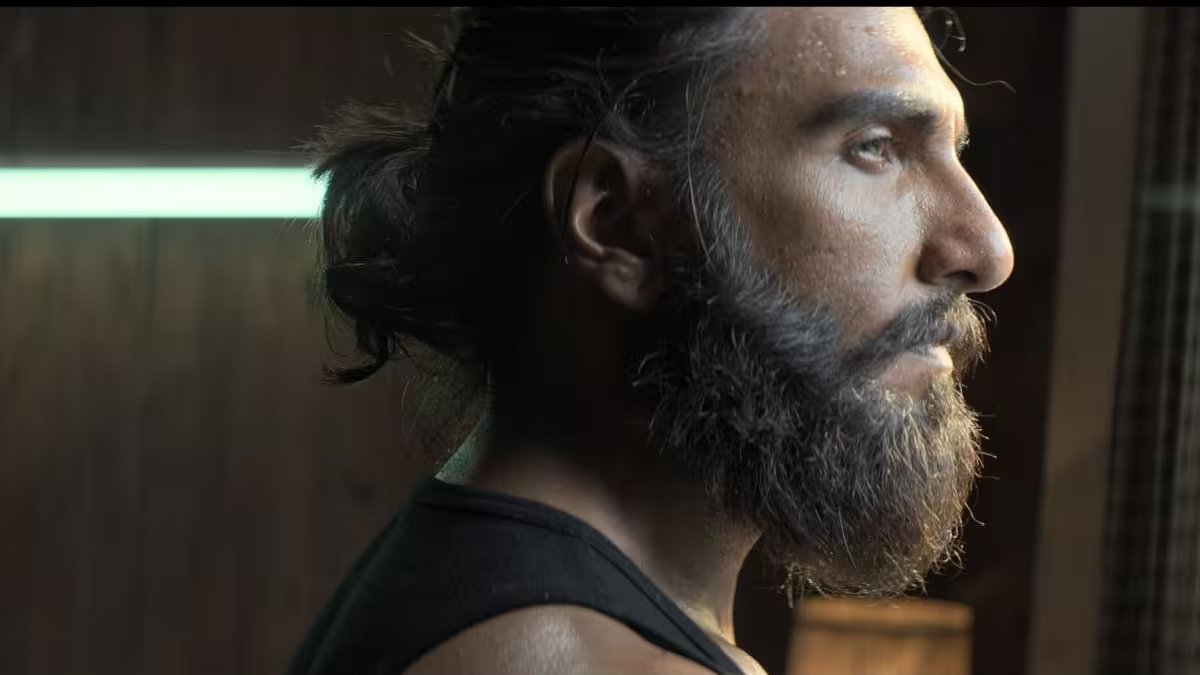
The character the actor essays in the film has been inspired by Major Mohit Sharma, even though director Aditya Dhar has denied that it’s based on his life
Ranveer Singh’s spy thriller Dhurandhar is finally here- On the big screen where it always belonged. It’s a dense and dark thriller peppered with pulsating action and political commentary. The tempting ensemble has Ranveer Singh, Arjun Rampal, Sanjay Dutt, Akshaye Khanna, Sara Arjun, R. Madhavan, Rakesh Bedi in pivotal roles.
The character
Ranveer Singh essays in the film has been inspired by Major Mohit Sharma, even though director Aditya Dhar has denied that it’s based on his life.
On 21 March 2009, Major Mohit Sharma engaged in an encounter with terrorists in the Hafruda forest of the Kupwara sector of Jammu and Kashmir. He killed four terrorists and rescued two teammates in the process, but got shot multiple times. So will Singh die in the end of part one?
The answer is NO. This is just the tip of the iceberg as Dhar has a lot in store for part two due to the complexities of the narrative.
Ranveer Singh not playing Major Mohit Sharma?
Aditya Dhar recently tweeted- “Our film Dhurandhar is not based on the life of braveheart Major Mohit Sharma AC(P) SM. This is an official clarification.”
I assure you, if we do make a biopic on Mohit sir in the future, we will do it with full consent and in complete consultation with the family, and in a way that truly honors his sacrifice for the nation and the legacy it has left for all of us.”
Rather than retelling historical events,
_Dhurandhar_ traces the intellectual lineage of this strategy. Dhar situates the ISI’s worldview in the rhetoric of Zulfikar Ali Bhutto, whose speeches in the late 1960s and during the 1965 war articulated a vision of perpetual struggle with India. Bhutto’s insistence on a “thousand-year war” and his argument that confrontation was a form of self-preservation formed the seed of what would later harden into a covert, attritional doctrine.