US and Israel launch major attacks on Iran in Operation Epic Fury, triggering fears of World War 3. Netanyahu and Trump justify strikes amid escalating West Asia tensions and potential regional fallout.
The United States and Israel launched strikes against Iran on Saturday, with Israel’s public broadcaster reporting that supreme leader Ayatollah Ali Khamenei had been targeted as the Islamic republic retaliated with barrages of missiles at Gulf states and Israel.
According to US officials, the strikes were designed to eliminate what Washington sees as imminent threats posed by Iran’s missile industry, naval bases and command‑and‑control nodes, after Iran refused to drop its nuclear ambitions and allegedly ignored repeated ultimatums to cap uranium enrichment.
Key targets reportedly included missile depots, naval installations, and sites near the office of Supreme Leader Ayatollah Ali Khamenei in Tehran, signalling a deliberate message that the US is willing to hit the core of Iran’s military and leadership apparatus. President Donald Trump framed the operation as a pre‑emptive defence measure, arguing that destroying Iran’s missile inventory and naval capabilities was necessary to protect American citizens and allies across the West Asia.
Rising global anxiety: Is World War 3 imminent?
The sudden escalation has ignited widespread debate and fear across social media platforms. Hashtags referencing World War 3 surged as users speculated whether the US-Iran confrontation could spiral into a global conflict. Analysts said that while the current strikes are localised, the potential for broader regional escalation remains high. Tehran has responded with defiance, promising to retaliate against what it calls an “unprovoked, illegal, and illegitimate” attack, signalling that the situation could rapidly deteriorate.
Britain, Germany and France slammed Iran for retaliating to US-Israel strikes Saturday with attacks on countries in the Middle East hosting US military bases. “We condemn Iranian attacks on countries in the region in the strongest terms,” UK Prime Minister Keir Starmer, French President Emmanuel Macron and German Chancellor Friedrich Merz said in a joint statement after discussing the conflict.
Several countries, including Italy, Germany, Poland, Kazakhstan, India, and China have issued advisories urging their citizens to leave Iran. Military analysts caution that Iran’s extensive missile arsenal and proxy networks in Lebanon, Syria, and Yemen provide Tehran with multiple avenues for counterattack, heightening the risk of a protracted confrontation.
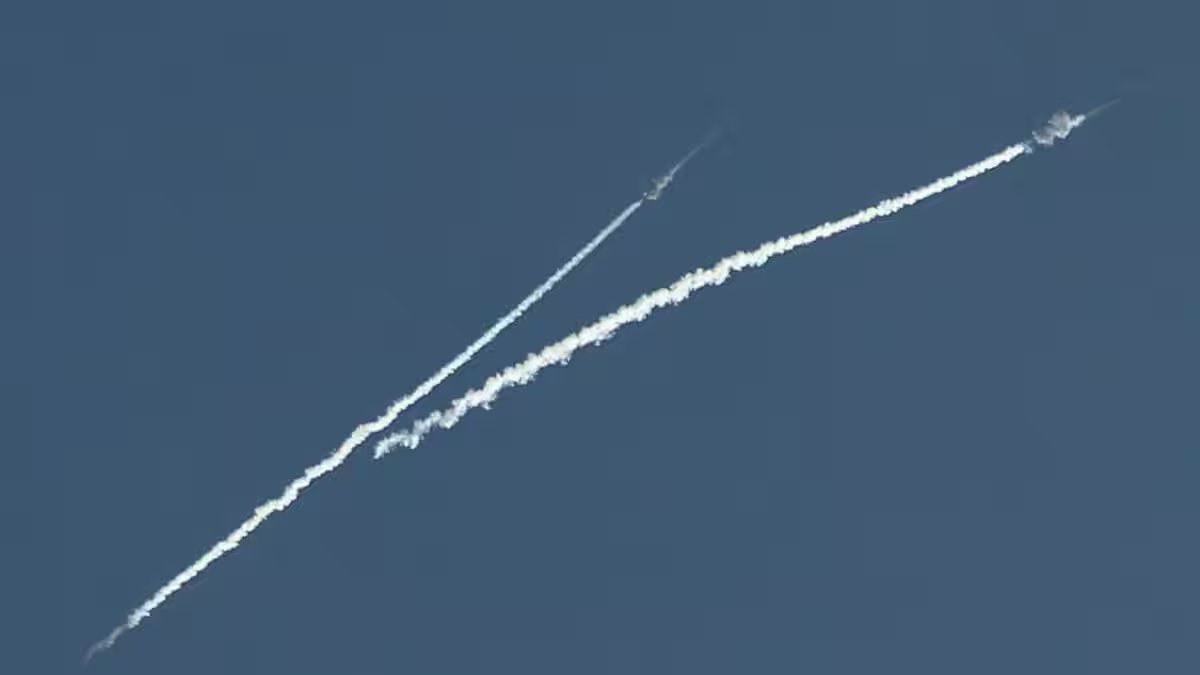
Analysts warn that while the US–Iran confrontation is serious and carries the risk of wider regional boiling over, it still remains, for now, a West Asia‑centred conflict rather than a full‑scale global war. Gulf capitals such as Abu Dhabi, Doha and Kuwait have gone on high alert, with sirens sounding and defence systems intercepting inbound missiles, which has raised fears that a “regional World War” among local powers could materialise if containment fails.
Still, history shows that social‑media panic often outpaces reality. Similar “WW3” chatter spiked after strikes on Iranian nuclear sites in previous years, even when the conflict stayed contained to the West Asia. Governments and strategic analysts, while deeply alarmed, are focused on diplomatic de‑escalation and damage‑limitation, rather than openly preparing for a third global war.
What could push this into a wider global conflict
The real danger lies not in a single strike, but in a chain of cross‑alliance reactions. Iran’s allies in the region, including non‑state actors backed by Tehran, could intensify attacks on US or Israeli forces, which in turn might trigger deeper retaliatory strikes. Should such retaliation spill into third‑country territory or draw in major powers such as Russia or China, the conflict could quickly mutate from a West Asia crisis into something resembling a multi‑theatre global war.
Economically, the risk is already palpable. Oil prices jitter, global shipping routes in the Gulf become more hazardous, and financial markets brace for supply‑shock premiums, all classic signs of a “war‑like” environment even if states stop short of declaring World War 3.
In the short term, whether this stays a high‑intensity regional war or balloons into a broader global conflict will depend on restraint shown by Washington, Tehran, regional powers, and outside heavyweights and on how quickly diplomacy can grab space from the war‑drum narrative dominating social media.
End of Article