The killing of Ayatollah, a fresh conflict in India’s neighbourhood, a war that has entered its fifth year … the week that went by was gripped with violence, chaos, and uncertainty.
West Asia has plunged into an unprecedented crisis.
Iran’s Supreme Leader Ayatollah Ali Khamenei was killed in his office on Saturday morning during US-Israeli air strikes. The two allies launched a joint operation in Tehran and other cities, targeting the regime. In retaliation, Iran has launched missiles at Israel and other West Asian countries, which house
US military bases.
“This is the single greatest chance for the Iranian people to take back their Country,” US President Donald Trump wrote on Truth Social, describing Khamenei as “one of the most evil people in history”. Now, the Islamic Revolutionary Guard Corps (IRGC) has launched Iran’s “most massive and powerful offensive operation” yet. This conflict is likely to grow bigger.
Tensions also escalated between Pakistan and Afghanistan earlier in the week. Pakistan bombed Kabul and other cities on Friday (February 27), reportedly killing hundreds. This was in response to the Afghan Taliban’s major offensive against Pakistani military posts near the border a day before.
Meanwhile, the biggest war since World War II, the one between Russia and Ukraine, entered its fifth year. Even as military losses rise on both sides, Ukraine has continued to stand up to enemy forces. President Volodymyr Zelenskyy admitted to the fatigue felt across Ukrainian society, but reiterated that they will not surrender.
In Mexico, Nemesio “El Mencho” Oseguera, one of the world’s most wanted drug traffickers, was killed in an operation by the country’s military. The cartel boss, who headed the Jalisco New Generation Cartel (CJNG), was traced with the help of US intelligence.
El Mencho’s men were quick to respond, unleashing chaos across Mexico. The death has sparked days of violence, mostly in Jalisco, as CJNG gang members clashed with security forces, setting fire to businesses and property. It has sparked fears about whether the country will be able to contain the chaos as it prepares to host the FIFA World Cup.
We talk about all this and more in our weekly roundup.
1. The joint US and Israeli airstrikes killed Iran’s Supreme Leader Ayatollah Ali Khamenei. The death of the country’s most powerful man is a turning point in Iran’s history, and it threatens to overthrow the Islamist regime, ending decades of repression. For now, the big question remains: Who will
succeed Khamenei, and how will the next leader be picked?
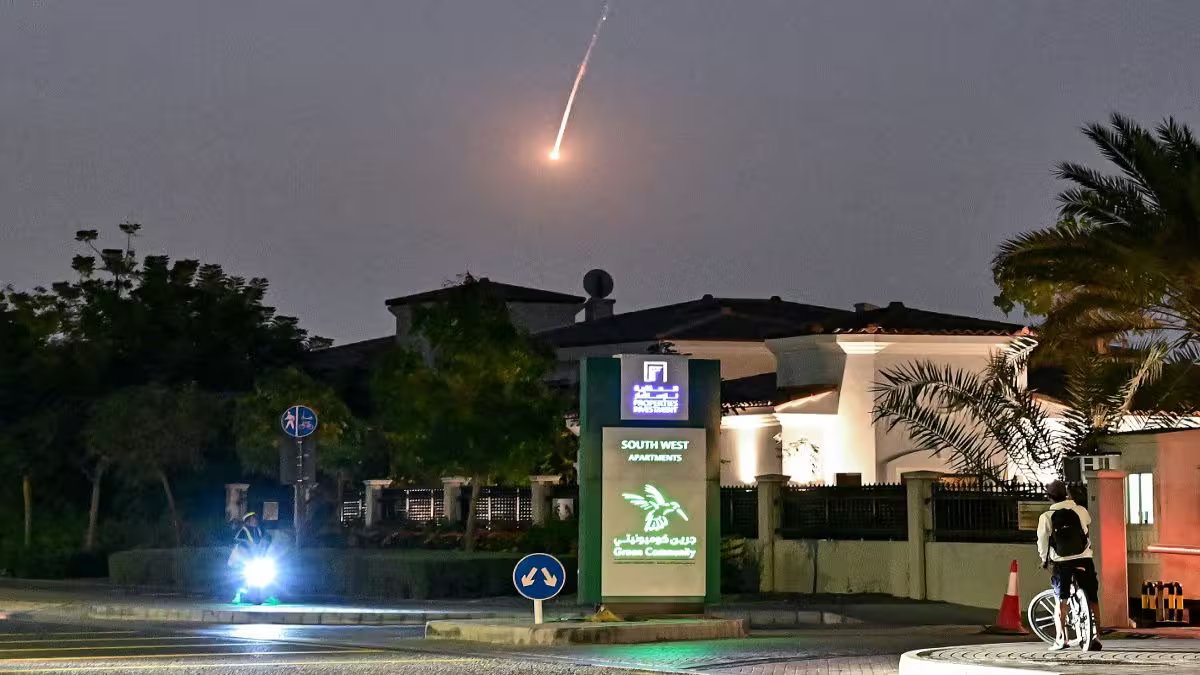
2. Iran was quick to respond to the US-Israel operation. Within hours, it fired missiles at Israel and targeted Bahrain, the UAE, Kuwait, Saudi Arabia, and other West Asian nations.
In Dubai, the airport was shut, the iconic Palm Jumeirah was hit, and Burj Khalifa was reportedly evacuated. Explosions were also heard in Abu Dhabi, Doha, and Riyadh. But
why is Iran attacking the countries in the region? We explain.
3. It sounds like a script straight out of Netflix’s Nacros. In a high-risk operation last Sunday (February 22), Mexican forces killed the country’s most wanted cartel boss, Nemesio Oseguera Cervantes, also known as “El Mencho”. The killing led to violence as members of his dreaded Jalisco New Generation Cartel (JNGC) clashed with security forces. So
who was El Mencho, and
how was he traced and gunned down?
4. A fresh conflict has erupted between Pakistan and Afghanistan. The two neighbours have been trading fire from across the border. Pakistan bombed Kabul and other cities, claiming to kill hundreds of Taliban fighters on Friday (February 27), a day after the Afghan Taliban announced a major offensive against Pakistani military posts. Islamabad’s Defence Minister Khawaja Asif has declared “open war”. But
what triggered the clash? And
which side is more powerful? We explain.
5. The Russia-Ukraine war has entered its fifth year. The biggest conflict since World War II is defined by drones, trenches, and freezing winters. According to a report by the Center for Strategic and International Studies, 1.8 million soldiers (an upper estimate) have been killed on both sides, and 14,999 civilians have fallen prey to the conflict. While delegations from Russia and Ukraine met recently for US-brokered peace talks in Switzerland, the meeting yielded no breakthroughs.
Which way will this conflict go in 2026?
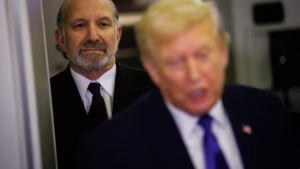
6. It was an important week for Donald Trump, even on the domestic front. On Tuesday evening (February 24), he delivered the
State of the Union address – the longest ever such speech in America’s history, clocking in at 1 hour 48 minutes. He spoke about tariffs, the India-Pakistan conflict, Iran and a lot more. Also, not everything he said was correct.
So, we did a fact-check.
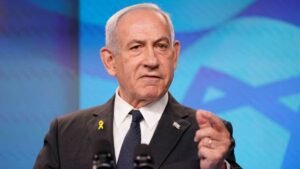
7. Prime Minister Narendra Modi went on a two-day visit to Israel. Ahead of the trip, his counterpart, Benjamin Netanyahu, invited India to join the
“hexagon of alliances”. This bloc would involve six nations and will be designed to counter “radical axes” of influence in West Asia, particularly what Netanyahu describes as the “radical Shia axis” and an “emerging radical Sunni axis”. This has left Pakistan rattled.
Here’s why.
8. The Epstein files continue to throw up more dirt on some of the most influential people in America. Among them is Indian-American wellness guru Deepak Chopra. While he claimed to have “limited” contact with Jeffrey Epstein, that is far from the truth. According to the documents released by the US Justice Department, hundreds of messages were exchanged between them. On at least two occasions,
Chopra invited Epstein to bring his “girls” on trips.
9. Our last story is about Punch, the now-famous macaque from a Japanese zoo. Abandoned by his mother, he went viral for his attachment to a plushie. Today, Punch is a global sensation. His videos have garnered millions of views, the Ikea comfort toy, which he carries, has been sold out, and brands the worldover are using images of the baby monkey for advertisements. But why can’t we have enough of Punch?
Here is what science says.
That’s our curated Sunday reading list for you. We will be tracking all the developments from West Asia. You can find more explainers and analyses
here.
End of Article