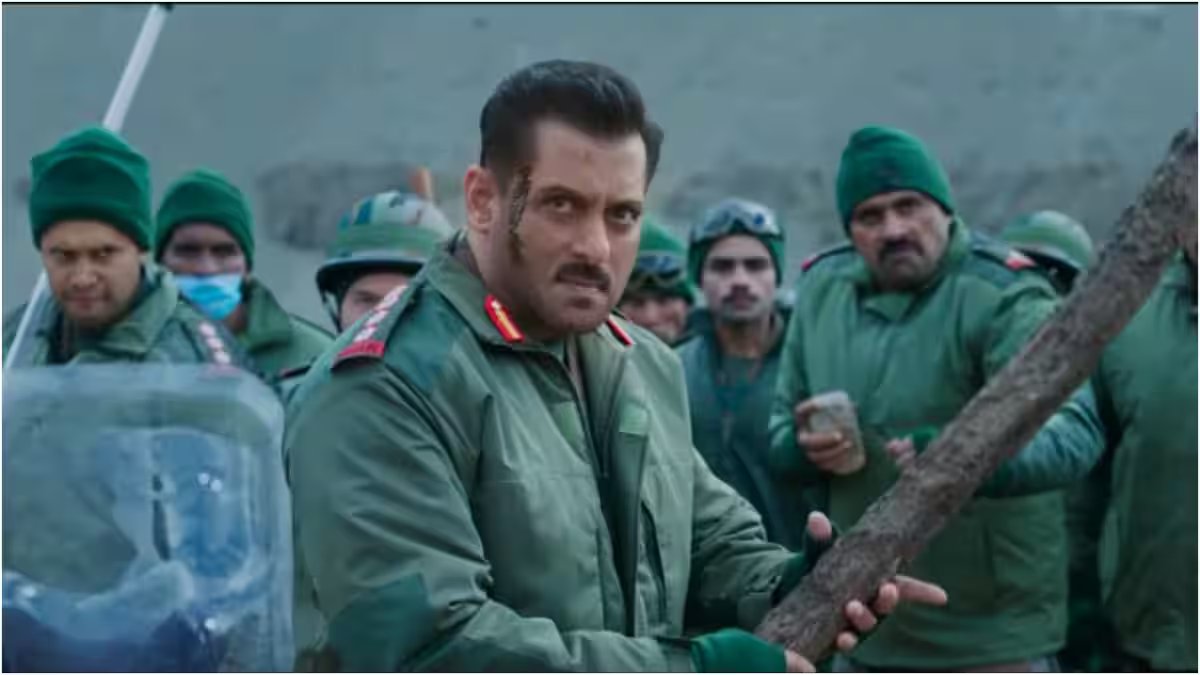
Battle of Galwan, starring Salman Khan and directed by Apoorva Lakhia, is facing criticism from Chinese media ahead of its April 2026 release. Know everything about the controversy here.
A new row has erupted around the upcoming Bollywood film Battle of Galwan, with Chinese media and commentators criticising the movie even before its release. The controversy highlights how film and geopolitics are increasingly intersecting in South Asia, especially when cinema touches on real-world conflicts.
Here’s a clear breakdown of what the controversy is, why it’s inflaming reactions, and what Battle of Galwan is about.
Why Battle of Galwan matters
_Battle of Galwan_ is a patriotic war drama starring Salman Khan, directed by Apoorva Lakhia, and scheduled for theatrical release in April 2026. The film is inspired by the June 2020 clash between Indian and Chinese troops in the Galwan Valley, a remote, high-altitude region of eastern Ladakh, where soldiers from both sides engaged in hand-to-hand combat, resulting in fatalities. The incident marked one of the worst military confrontations between the two countries in decades and remains a sensitive and symbolic flashpoint in India-China relations.
For Indian audiences, Battle of Galwan is framed as a tribute to the country’s security personnel and a cinematic portrayal of bravery under extreme conditions. The teaser, which dropped ahead of its release, depicts intense combat sequences and emotional moments tied to the lives of Indian soldiers.
Why Chinese Media is targeting the film
Shortly after the teaser’s release, Chinese commentators have accused the film of presenting distorted facts, according to Global Times. A Chinese military expert quoted by the publication said Bollywood films often focus on emotional storytelling and entertainment rather than accuracy. The expert added that no level of cinematic exaggeration can change historical facts or weaken the People’s Liberation Army’s resolve to defend China’s sovereign territory.
Indian experts and media observers, however, note that Battle of Galwan is a work of cinema rooted in India’s lived memory of a contentious border incident, not a diplomatic document, and that artistic expression often engages with national trauma and heroism.
On Chinese microblogging platform Weibo, reactions were sharply critical. While one user alleged that the film contradicts established facts, another remarked, “When history falls short, Bollywood steps in,” with several others dismissing the teaser as exaggerated and “over-the-top.”
The report also downplayed the role of Indian Army officer Colonel Bikkumalla Santosh Babu, referring to his actions during the clash as a “so-called pivotal role.” Additionally, it accused India of leveraging cinema to stoke nationalist sentiment, describing this approach as part of a “deeply rooted cultural and political tradition.”
Reiterating Beijing’s long-standing position on the Galwan incident, the article maintained that India crossed the border first and that the PLA acted to defend China’s territory in accordance with the law.
It was also being said that the release of the film could flare up the Indo-China tension, which was recently getting better.
Recent precedent: Dhurandhar
Interestingly, this is not the first Bollywood title to face political pushback of late. The recently released blockbuster, Dhurandhar starring Ranveer Singh, was banned or restricted in several Gulf countries and in Pakistan over perceived sensitivities in its content and portrayal of security issues.
More about Battle of Galwan
_Battle of Galwan_ is a high-stakes war drama starring Salman Khan as Colonel B. Santosh Babu, based on the real-life 2020 clash between Indian and Chinese troops in the Galwan Valley. Directed by Apoorva Lakhia and produced by Salman Khan Films, the film also features Chitrangda Singh, Zeyn Shaw, Ankur Bhatia, and Vipin Bhardwaj in key roles. The project’s teaser, released on Khan’s 60th birthday, drew massive attention and sparked strong audience reactions online. The film is slated for a theatrical release on April 17, 2026 worldwide, and it has already become one of the most-anticipated films of 2026.
End of Article