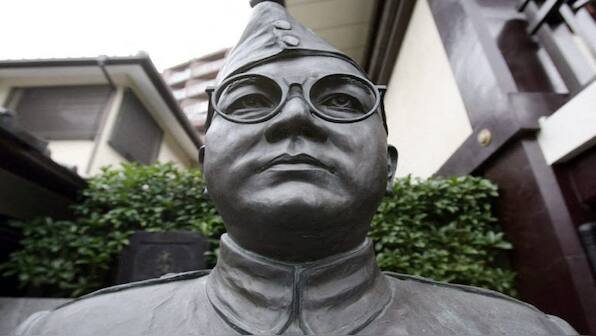
Today (January 23) marks the 129th birth anniversary of Netaji Subhas Chandra Bose, one of India’s most well-known freedom fighters. On the occasion, known as Parakram Diwas in India, Prime Minister Narendra Modi paid glowing tributes to Bose, saying he epitomised fearless leadership and unwavering patriotism.
“On the birth anniversary of Netaji Subhas Chandra Bose, which is commemorated as Parakram Diwas, we recall his indomitable courage, resolve and unparalleled contribution to the nation. He epitomised fearless leadership and unwavering patriotism. His ideals continue to inspire generations to build a strong India,” PM Modi noted on X.
But while the PM and the country marks this event with pride, the freedom fighter’s daughter, Anita Bose Pfaff, has once again sought the government’s intervention to repatriate the ashes of her father that have been preserved at Tokyo’s Renko-ji Temple.
“As Netaji’s daughter I invite the Indians of today who still revere him to support his posthumous return from exile; to support the transfer of his mortal remains to India for a final and fitting disposal,” Pffaf said in a statement issued from her home in Germany.
But what are Bose’s ashes doing in Japan in the first place? We explain it.
Where are Netaji’s ashes?
Netaji Subhas Chandra Bose is widely believed to have died in a plane crash in Taiwan. An RTI response in 2017 stated, “After considering the reports of Shah Nawaz Committee, Justice GD Khosla Commission and Justice Mukherjee Commission of Inquiry, the Government has come to the conclusion that Netaji had died in the plane crash on 18.8.1945.”
According to official accounts, Bose died on August 18, 1945, after his Japanese military aircraft crashed in Taipei. Badly burned, he was said to have died two days later and his remains were cremated and brought to Japan where his ashes were entrusted to the Tokyo Indian Independence League and placed in Renko-ji Temple following a memorial service.
According to official documents, on September 14, 1945, the remains were placed at the Renko-ji Temple near Tokyo and they rest there until this day. The urn was received by Reverend Kyoei Mochizuki, the priest of the temple, who vowed to take care of the ashes until they were taken to India. Every year since, on Netaji’s death anniversary, a memorial service is held at the temple by its chief priest. It is attended by prominent Japanese and Indian citizens, including officials from the embassy.
According to the declassified Netaji files released by the government in 2016, India has been paying for the upkeep of the remains at the temple. Between 1967 and 2005, India paid Rs 52,66,278 to the temple.
Have there been attempts to bring Bose’s remains to India?
It is said that several governments have tried to bring back the remains starting with India’s first Prime Minister Jawaharlal Nehru but none have succeeded.
The Netaji files show that the Nehru government had, in the early 1950s, taken custody of Bose’s ashes but was reluctant to bring them home because the leader’s family refused to accept his death.
Thereafter, there were many attempts made by the Japanese government to approach New Delhi but there was no response from the Congress which was in power at the Centre.
In 1979, when Morarji Desai was PM, a Japanese military intelligence officer who had close ties with Bose’s Indian National Army (INA), urged India to take his remains and was assured that the issue would be taken care of in a year or two. However, Desai lost the prime minister’s chair and could not keep his promise, according to a report in India Today.
A year on, during Indira Gandhi’s regime, former Japanese army officers had informed her that Ryoichi Sasagawa, chairman of the Japan Shipbuilding Industry Association, offered to bear all the expenses for taking Bose’s remains “to his motherland for a permanent repose”, according to the report. But Gandhi made no efforts to take the matter forward.
The PV Narasimha Rao government’s plan to bring back the ashes from Renko-ji to celebrate Netaji’s birth centenary in 1997 was shelved. Back then his daughter Pfaff had met Pranab Mukherjee, the then external affairs minister, in Germany and she said that she needed to consult with the family.
She had reportedly suggested taking the remains to Germany if Bose’s family and the political parties in India did not reach a consensus. However, this was not acceptable to both New Delhi and Tokyo.
In 1998, Pfaff, met IK Gujral after he took over as prime minister and also wrote a letter to him in February that year, requesting the government to “make arrangements to have the ashes of my father returned from Tokyo to his homeland, especially to Delhi, which after all was the goal of his INA campaign”, reports India Today. “The ashes should be immersed in the Ganga or parts of the ashes in different rivers of India,” she wrote in the letter, adding that political parties in the country “could join together in this effort, irrespective of their political programme”.
Gujral could do little to pay heed to the plea as he resigned a month later.
During his time as prime minister, Dr Manmohan Singh exchanged letters with his Japanese counterpart Yoshiro Mori, in 2006, regarding the transfer of Netaji’s remains to India. But nothing came out of it.
What does Netaji’s family have to say?
Over the years, several members of Netaji’s family have been in communication with the Indian governments to bring back his ashes from Japan. Bose’s younger brother Sailesh Bose wrote to Indira Gandhi in 1982 to pass an order not to bring the remains to India as he believed that there is no convincing proof that the remains are genuine, reports India Today.
A similar letter was sent to then PM VP Singh by his nephews, Ashoke Nath Bose, Amiya Nath Bose and Subrata Bose in May 1990. Most of the Bose family members did not believe that Netaji died in the plane crash.
In 2007, Pfaff wrote to Dr Singh asking how the Indian government intended to be involved in the return of her father’s remains.
She also wrote to the priest of the Renko-ji Temple on July 16, 2007, saying, “I would be willing to take charge of my father’s, Subhas Chandra Bose’s, remains after which you and your late father have looked in such exemplary fashion for so many years. Let me express my great regard and gratitude to you and your family for your dedication to the task.”
She added that she was willing to attempt a DNA test on the father’s remains, which she had earlier deemed unnecessary.
In 2018, Bose’s grandnephew and author Ashis Ray said that no government had made an effort to bring back the remains. In his book, Laid to Rest: The Controversy over Subhas Chandra Bose’s Death, he collated the findings of 11 different investigations and concluded that the freedom fighter died in the plane crash in Taipei.
“From the Nehru government to the Modi government, every single Indian administration has been convinced about the truth but has told to bring the remains to India,” Ray told PTI in 2018.
What has been the Modi government’s move on this?
Before coming to power in 2014, Narendra Modi had promised to bring Netaji’s remains back to India if voted to power. However, since coming to power, there’s been little success on the matter. In 2016, and 2019, Pfaff, Dwarka Nath Bose, a well-known physicist and son of his elder brother, and Ardhendu Bose, another nephew of Netaji, had requested the government to order a DNA test of the ashes at Renkoji, in a bid to end the controversy. However, this has not been done so far.
When PM Modi visited Japan last year, Pfaff had made a fresh appeal to help bring her father’s remains to India.
“I certainly would request him to take up the idea which the Narasimha Rao government did… They tried to bring back the remains of my father to India,” she was quoted as telling NDTV, adding, “The reason why I also feel this gets a bit more urgent for me personally is my own age.
She said she wants to “have closure” on this issue.
Will 2026 be the year Pfaff gets closure on the matter? We shall have to wait and watch.
With inputs from agencies
End of Article