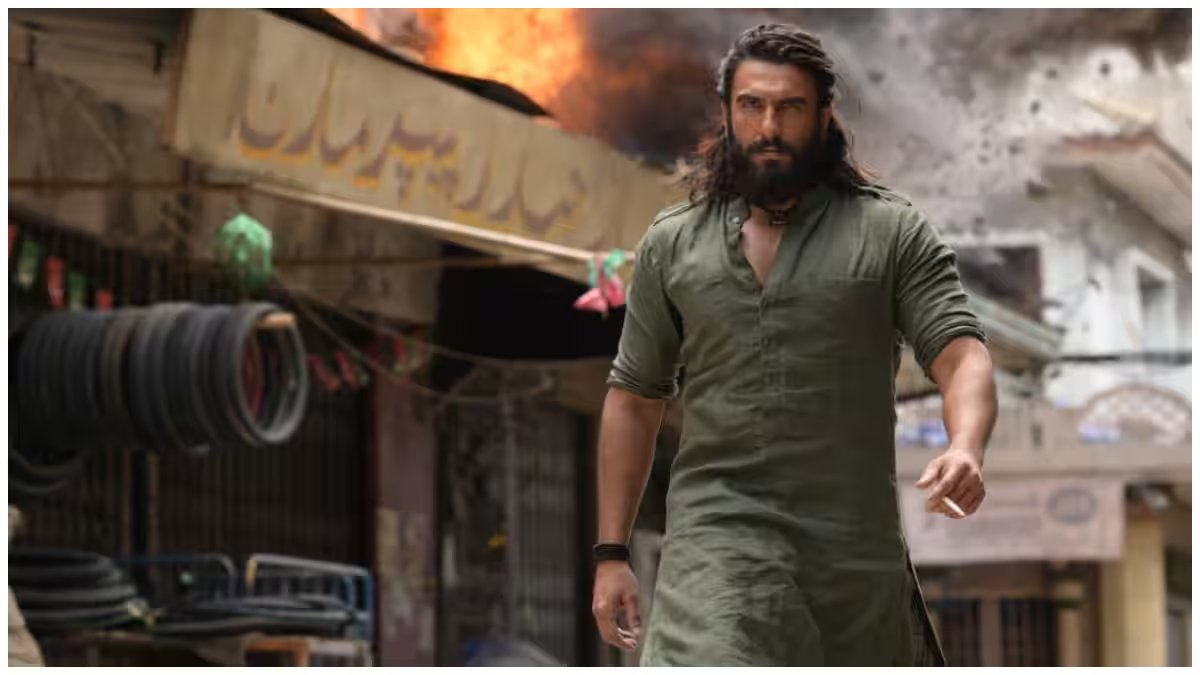
The ending and the post-credit scene of Aditya Dhar’s directorial ‘Dhurandhar’ sets the stage for an explosive sequel, which is all set to hit the theatres in March 2026. But, what does the ending really mean and imply? Read on to know.
When the credits roll on Dhurandhar, the audience realises that what seemed like a “mission complete” ending was only the beginning. The protagonist, Ranveer Singh’s character, initially introduced as “Hamza”, ends up revealing his true identity as Jaskirat Singh Rangi. This reveal in a flashback underscores that the entire gang-war arc in Karachi’s underworld was part of a larger covert operation named “Operation Dhurandhar.”
In the climax, Hamza completes the first phase of the plan with help from his allies, including SP Chaudhary Aslam and local politician Jameel Jamali. He successfully takes down the crime-lord Rehman Dakait. But the victory is bitter. The final chapter, ominously titled “Et Tu Brutus,” evokes betrayal. After killing Rehman, Hamza hallucinates seeing the dead gangster’s blood-soaked face in a hospital corridor, a haunting moment that reveals the psychological cost of his actions.
Back home, we see him collapse in the arms of his wife (played by Sara Arjun), begging for basic comfort like food- an image that humanises him, showing the emotional weight behind the bloodshed, the guilt, and the dual identity he carries. It shows that behind the veneer of a spy and assassin is a man bruised by guilt and inner conflict.
But the real twist comes in the post-credits. Hamza opens a secret diary, strikes out “Rehman Dakait”, signalling Phase One is done. But as he turns the page, invisible-ink names flash out: among them is Major Iqbal of the ISI, and a whole list of high-profile operatives. As this montage plays, showing Hamza’s painful past, his rise in Lyari’s underworld, the brutal violence, and a glimpse of a violent confrontation between Hamza and Iqbal, it becomes clear – this was not just about a gangster, it was the beginning of a long, broader mission.
The final frame hits hard. “Dhurandhar: to be continued,” followed by the single word “Revenge”, and a date- March 19, 2026. Hamza’s haunting final line, “Yeh naya Hindustan hai, ye ghar mein ghusega bhi aur marega bhi”, leaves us with a chilling promise of what’s coming.
Why the ending hits emotionally
At its heart,
Dhurandhar isn’t just a spy thriller. It’s a story about transformation, about how duty, anger, and loss can strip away morality and humanity. Hamza begins as a mission-driven spy. But by the end, drenched in the crimes he committed and the betrayal he enacted, he becomes something darker – a puppet-master, a kingpin operating under the banner of patriotism. Yet, we still see the man beneathn with the guilt-ridden, haunted soul, seeking solace in the arms of his wife. That tension, between purpose and humanity, nationalism and personal trauma, gives the movie a raw emotional weight.
Instead of offering closure, the ending leaves you unsettled and thoughtful. It asks if can a man who kills for his country can still remain human? Or does the mission redefine him entirely?
And with Part 2 already slated for 2026, we know this isn’t the end of Hamza’s story. It’s only the beginning of something far more dangerous, and far more complicated.
End of Article