China begins its annual Two Sessions in Beijing on Wednesday (March 4), with attention on economic growth targets, defence spending and the new five-year plan. As geopolitical tensions rise, the meetings will reveal Beijing’s priorities on technology, military expansion and domestic resilience
China is set to begin its annual legislative gatherings, known as the Two Sessions, on Wednesday (March 4, 2026), bringing thousands of delegates from across the nation to Beijing.
No significant surprises are anticipated at the carefully orchestrated political event, as legislation put to a vote is typically cleared in advance by the ruling Communist Party.
Even so, China’s most important political occasion will offer insights into the priorities of the country’s top leadership, against a fragile geopolitical backdrop unsettled by the unpredictable US President Donald Trump.
Here’s what you need to know:
What are the Two Sessions?
The Two Sessions refer to concurrent meetings of China’s largely symbolic parliament and a separate political advisory body.
The first to convene, on Wednesday, is China’s political advisory group, the Chinese People’s Political Consultative Conference (CPPCC).
This gathering is generally viewed as lower stakes, featuring delegates such as academics, entrepreneurs and even well-known public figures.
The CPPCC also counts representatives from Hong Kong, Macau and Taiwan.
However, most China observers will turn their attention to the National People’s Congress (NPC), the country’s highest legislative body, which opens on Thursday.
Members of the Communist Party hold an overwhelming majority of seats in the NPC.
It is often described as a “rubber-stamp” parliament because most legislation approved there has already been settled by party leadership beforehand.
What are people looking out for?
The highlight is typically the NPC’s opening meeting, when Premier Li Qiang presents the government work report — a speech expected to set out major economic growth targets and detail measures to reach them.
“Against a backdrop of strategic competition and global uncertainty, Beijing will continue emphasising domestic self-reliance alongside external resilience,” Asia Society Policy Institute (ASPI) analysts wrote in a note.
“This requires strengthening domestic demand, accelerating indigenous innovation, and diversifying export markets.”
China’s five-year plan (FYP), outlining national development objectives for 2026-2030, is also expected to be endorsed by the NPC and released during the sessions.
According to ASPI analysts, the blueprint is likely to spell out science and technology strategies spanning next-generation artificial intelligence, advanced manufacturing and industrial modernisation, as well as energy and resource security.
The plan will be important for understanding how China defines “high quality” economic growth, including which advanced sectors are thriving and which require further improvement, Lim Tai Wei, a professor and East Asia specialist at Japan’s Soka University, told AFP.
China is also anticipated to reveal the same day that it will increase military spending in its annual defence budget, as Beijing expands its activities in disputed parts of the South China Sea and tensions remain over the self-governed island of Taiwan.
Since 2023, China has raised defence expenditure by 7.2 percent each year, and this year’s rise is expected to be comparable, Lim said.
What can we expect?
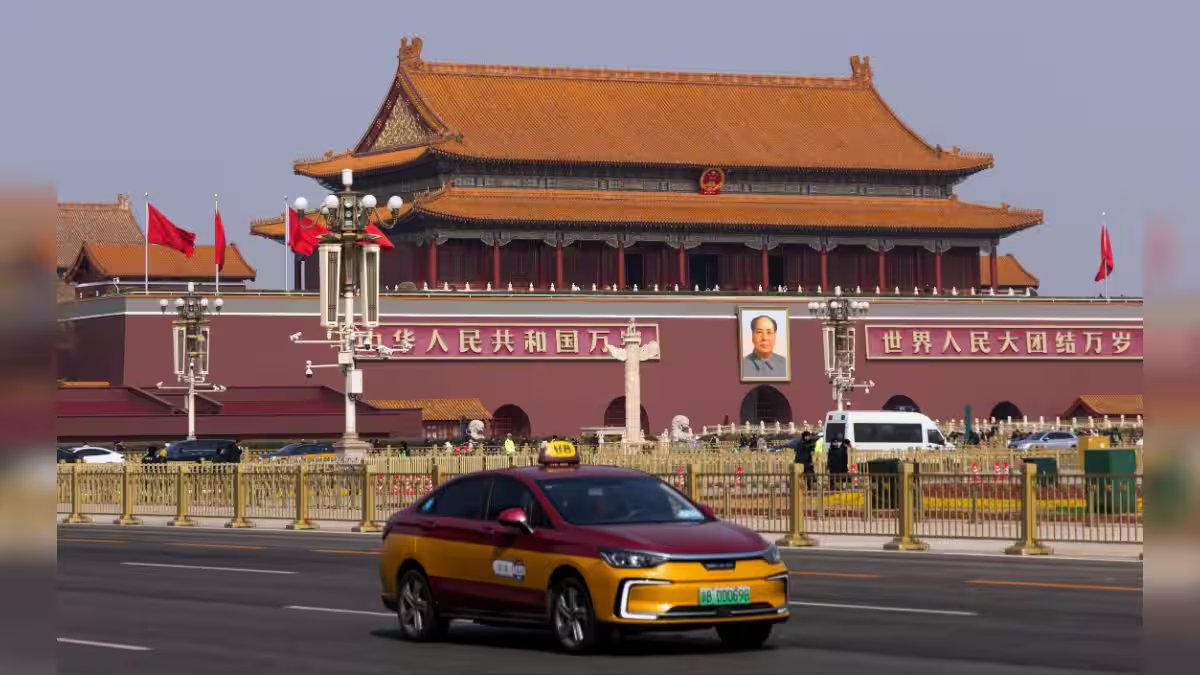
The sessions will run for about a week, largely taking place at Beijing’s grand Great Hall of the People.
Authorities will undertake extensive measures to prevent disruptions during the meetings, with careful coordination aimed at projecting an image of political cohesion.
State media presents the gatherings as evidence of the party’s readiness to hear public concerns, despite maintaining exclusive control over political power.
The Two Sessions showcase China’s “whole-process people’s democracy in action”, state news agency Xinhua said.
An increased police presence and tighter traffic restrictions are expected in Beijing ahead of and throughout the event.
Observers will nevertheless be alert for any unforeseen incidents or unscripted remarks by senior officials during the tightly controlled proceedings at the Great Hall.
At a party congress held at the same location in 2022, former president Hu Jintao — Xi Jinping’s immediate predecessor — was unexpectedly escorted out of the closing ceremony in an episode recorded by journalists that spread widely outside China.
This year is also likely to mark the third straight occasion without a press conference by the premier — once a key feature of the closing session that allowed foreign journalists to question China’s second-ranking leader.
Also Watch:
With inputs from AFP
End of Article