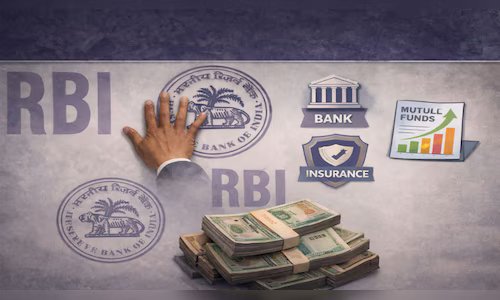
According to the RBI bulletin released on February 20, the Budget allocates resources toward infrastructure, domestic technology, and workforce development, outlining a plan for robust fiscal management while aiming to support economic stability and innovation.
“In 2026-27, the gross fiscal deficit is budgeted to decline to 4.3% of GDP from 4.4% of GDP in 2025-26 (Revised Estimates, RE), keeping in view the government’s medium-term aim to reach a debt-to-GDP ratio of 50±1% by fiscal year 2030-31,” the RBI said in its bulletin released on February 20.
Capital expenditure remains the cornerstone of India’s economic strategy.
In the Union Budget 2026-27, the Government has earmarked ₹12.2 lakh crore (3.1% of GDP) for capital expenditure, while the effective capital expenditure is set to rise significantly.
According to the RBI, while the Union Budget 2026-27 earmarks ₹12.2 lakh crore (3.1% of GDP) for capital expenditure, the effective capital expenditure is budgeted to increase to 4.4% of GDP in 2026-27 from 3.9% of GDP in 2025-26 (RE).
The revenue expenditure is budgeted to be contained at 10.5% of GDP in comparison to 10.8% of GDP in 2025-26 (RE).
The RBI also highlighted that on the receipts side, gross tax revenue is budgeted to increase by 8% in 2026-27 over 2025-26 (RE), largely due to the projected accelerated growth in income tax and union excise duties.


