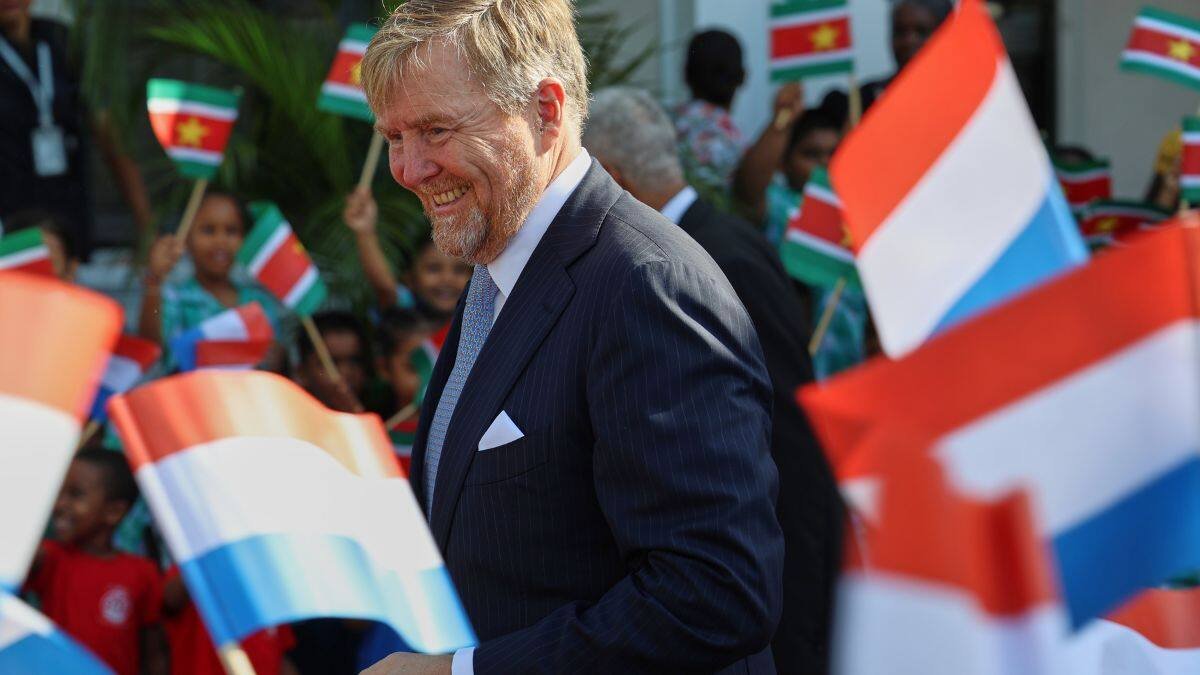
The Dutch king’s visit to Suriname rekindles the global debate on colonial-era accountability, examining whether apologies for slavery can be meaningful without reparations, structural reforms and genuine engagement with descendant communities.
The unexpected state visit of King of the Netherlands Willem‑Alexander to Suriname has reopened a debate that many assumed was long settled but whose implications still echo across continents and centuries. As the king declared he would “not shy away” from acknowledging slavery’s painful legacy, the question resurfaces: what does a genuine apology for colonial-era crimes truly require?
A symbolic step and yet only the beginning
On arriving in Paramaribo on 1 December 2025, the first royal visit by a Dutch monarch in nearly half a century, the king and Queen Máxima met leaders of Afro-Surinamese and Indigenous communities. In a solemn pledge, the king said that the Dutch monarchy would openly confront its history: “we will not shy away from history, nor from its painful elements, such as slavery.”
The gesture comes after prior formal measures. In 2022, then-Prime Minister Mark Rutte issued a government apology for the Netherlands’ involvement in the transatlantic slave trade, which was followed in 2023 by a royal apology from the king himself.
During Monday’s visit, descendants of the enslaved and Indigenous representatives formally accepted the royal apology in a closed-door ceremony. “We accept the apology and the request for forgiveness with the full conviction that the king … wishes to cooperate in healing and restoration,” said Wilgo Ommen, a representative of Indigenous communities.
A wealth built on human suffering
Acknowledging history is essential. But meaningful redress demands more than words. A sobering 2023 study commissioned at the request of the Dutch parliament quantified how much the Dutch royal family — the House of Orange-Nassau — financially benefited from slavery between 1675 and 1770. Adjusted for today’s value, their gains amount to roughly €545 million.
The scale of exploitation is equally vast: historians estimate that around 600,000 Africans were shipped by Dutch traders, largely to South America and the Caribbean, during the empire’s 16th- and 17th-century “golden age”.
Given how deeply intertwined colonial wealth — economic, cultural and institutional — is with forced labour and subjugation, reckoning demands more than recognition. It requires reparation, restoration, and structural change.
What “sorry” must include: beyond apology, towards justice
If an apology is to carry meaning, particularly for descendants whose inheritances were built on stolen lives, it must be coupled with tangible commitments. Here are essential elements:
Truth and transparency: A fully independent historical accounting of colonial-era crimes, enrichment, and consequences including institutional complicity, land theft, forced labour must be made public and taught.
Material reparations: Financial and social compensation to communities harmed by slavery and colonialism considering lost wealth, generational disadvantage, and deprivation.
Structural reforms and investment: Long-term programmes promoting equality, education, economic opportunity, and cultural restoration in communities descended from the oppressed.
Institutional change and condemnations: Acknowledgement not just of historical wrongs, but of their modern legacies’ racism, inequality, socio-economic disparities and steps to dismantle these.
Sincere dialogue and inclusion: Engagement with descendants and Indigenous peoples as partners in designing and implementing policies not as symbolic gestures but as genuine stakeholders.
Where the Dutch effort stands and where it falls short
The Dutch government has taken some initial steps: beyond the apology, in 2022 it established a 200-million-euro fund aimed at dealing with the legacy of slavery and improving education around it.
But many activists call this insufficient. Groups like The Black Archives and Black Manifesto argue that “an apology should be tied to a form of repair and reparatory justice or reparations.”
The royal visit to Suriname, and the face-to-face acceptance of apology by descendants, offer powerful symbolism. Yet symbolism without follow-through risks being hollow, a gesture rather than justice.
The test for all former colonial powers
The Dutch example resonates far beyond its borders. Across Africa, the Caribbean, Asia, hundreds of millions of lives were shaped by colonialism and slavery. Leaders and activists today demand recognition, legal accountability, and reparations for “colonial-era crimes” through formal criminalisation and reparatory frameworks.
A real “sorry” must therefore be more than contrition. It must be a pledge: to heal, to restore, to rebuild to share not just words, but justice and opportunity.
For the beneficiaries of colonialism, this requires letting go of inherited wealth built on suffering. For victims and their descendants, it demands not just recognition, but reparatory justice. Only with both can remorse become repair and apology transform into equality.
End of Article