It’s Day 11 of the Iran war, and the impact of the constant fighting is being felt the world over. Nations are facing disruptions in their oil and gas supplies, resulting in soaring prices and countries adopting various measures to cushion the impact.
India is no different. In the wake of the oil crisis triggered by the Iran war and the near shutdown of the Strait of Hormuz, the Narendra Modi administration has invoked the Essential Commodities Act, 1955, ordering all oil refining companies to maximise production of Liquefied Petroleum Gas (LPG) and make it available to domestic consumers only.
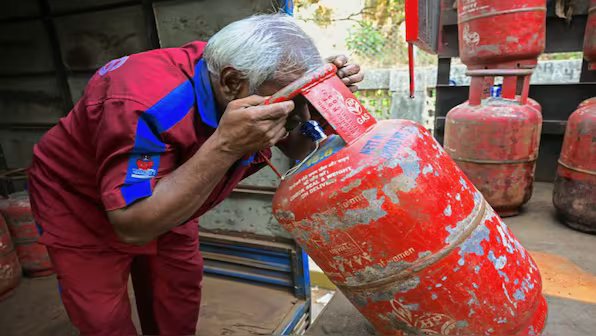
Notably, this mandate from the government comes amid a panic that there’s a shortage of gas cylinders, despite the government making assurances that the nation has adequate stocks of energy.
But what exactly is the Essential Commodities Act that the Centre has invoked? More importantly, what does it mandate? And why has it been invoked now?
What is the Essential Commodities Act?
Enacted by Parliament in 1955 and appearing in Schedule IX of the Constitution, the Essential Commodities Act is a tool used by the government to ensure that everyday goods, which are essential to the common man, remain available at fair prices.
Through this legislation, the central government can regulate the price, production, supply, and distribution of, and trade and commerce in, commodities that are essential to the general public.
With the Essential Commodities Act, the Centre can prevent hoarding, profiteering, and artificial shortages, particularly during crises such as wars, natural disasters, or supply disruptions.
But many of you may be wondering what essential commodities are. While an essential hasn’t been clearly defined in the Act, Section 2(A) states that an “essential commodity” means a commodity specified in the Schedule of the Act.
As of today, items deemed as essential and listed in the law are: drugs; fertilisers, whether inorganic, organic or mixed; foodstuffs including edible oils; hank yarn made wholly from cotton; petroleum and petroleum products; raw jute and jute textiles; seeds of food-crops and seeds of fruits and vegetables, seeds of cattle fodder, jute seed, cotton seed.
In 2020, an amendment enabled the government to regulate prices of certain foodstuffs — cereals, pulses, oilseeds, edible oils, onions, and potatoes under extraordinary circumstances, which include an extraordinary price rise, war, famine, and natural calamity of a severe nature.
Why has the Centre invoked the Essential Commodities Act?
Taking into account the situation unfolding as a result of the war in West Asia, the Modi government invoked the Essential Commodities Act to address the potential
shortages of oil and LPG. It’s important to note that India consumed 31.3 million tonnes of LPG during the financial year 2024-25. Of this total, only 12.8 million tonnes were produced inside the country.
This means that the rest of the country’s requirements are met through imports, which could now be affected as a result of the war. These LPG shipments pass through the narrow
Strait of Hormuz, a route that has now been effectively blocked.
As News18 reports, by invoking the Essential Commodities Act, the government is signalling that it is prepared to actively manage fuel supply and distribution if disruptions intensify. In effect, the move is aimed at preventing shortages, stabilising the market, and ensuring that essential sectors and consumers continue to receive uninterrupted fuel supplies even if global energy markets become volatile due to the war.
What changes come into effect after Centre invoked the Act?
The Centre has invoked the Essential Commodities Act, directing all oil refining companies and public sector oil marketing companies (OMCs) to prioritise the production and uninterrupted supply of Liquefied Petroleum Gas (LPG) for domestic consumers.
According to the order, all public-sector and private-sector refiners must ensure that propane and butane streams they produce are directed entirely towards the manufacture of liquefied petroleum gas. Moreover, all LPG produced under these directions has to be supplied exclusively to the three public-sector oil marketing companies: Indian Oil Corporation, Bharat Petroleum Corporation Ltd and Hindustan Petroleum Corporation Ltd.
The order has also restricted refiners from diverting toward any petrochemical manufacturing.
“All oil refining companies shall not divert, utilise, process, crack, convert or otherwise employ propane or butane streams for manufacture of petrochemical products or other such downstream derivatives,” the order states.
How bad is the situation in India right now?
On Tuesday (March 10), amid the Iran war, a reported
shortage of gas cylinders has been reported by hotels in Mumbai, Chennai, and Bengaluru.
In Mumbai, the Mumbai Hotels Association has stated that around 20 per cent of hotels and restaurants have already shut down owing to a shortage of LPG gas cylinders. It has warned that up to 50 per cent of hotels could shut within the next two days if supplies do not improve.
This could be attributed to the fact that the government has mandated that cooking gas be prioritised for households and not commercial purposes.
In Bengaluru too, hotels are complaining of a shortage of LPG cylinders. The Bangalore Hotels Association has said operations across the city were likely to be affected starting March 10. And similar is the fate of hotels in Chennai too.
Some residents have also begun standing in long queues awaiting their LPG cylinder supplies, with videos on social media showing the same.
Has the Centre invoked the Act in the past?
The short answer is yes. The last time the government invoked this legislation was in August 2025 to reduce wheat stock limits for traders/wholesalers from 3,000 metric tonne (MT) to 2,000 MT, and for retailers the limit was reduced from 10 MT to eight MT.
The limits were part of the Centre’s “continuous efforts to moderate prices of wheat before the festive season”.
Similarly, in December 2023, the Centre had invoked the Act for wheat stocks.
In August 2022, the Modi administration invoked the ESA, asking states to monitor and verify the stocks of tur dal available with traders. This move came after the price of the lentil was rising significantly.
Most notably, the ESA was imposed when the country went into a national lockdown in April 2020 to contain the spread of Covid-19. At the time, the Centre urged states to ensure availability of essential goods to citizens at fair prices and avoid hoarding. The Centre imposed stock limits, capped prices, enhanced production and ensured no black marketing occurred.
It remains to be seen how long India will keep the ESA invoked. For now, it’s a wait-and -watch game.
With inputs from agencies
End of Article

EPC contractors usually prefer established international steel export partners.