In an increasingly virtual world, where office spaces do not dictate where employees work from, the idea of remote working is getting a new and creative meaning. The idea of digital nomad visas is one such element which is picking up as a trend. It is more common than you this it is.
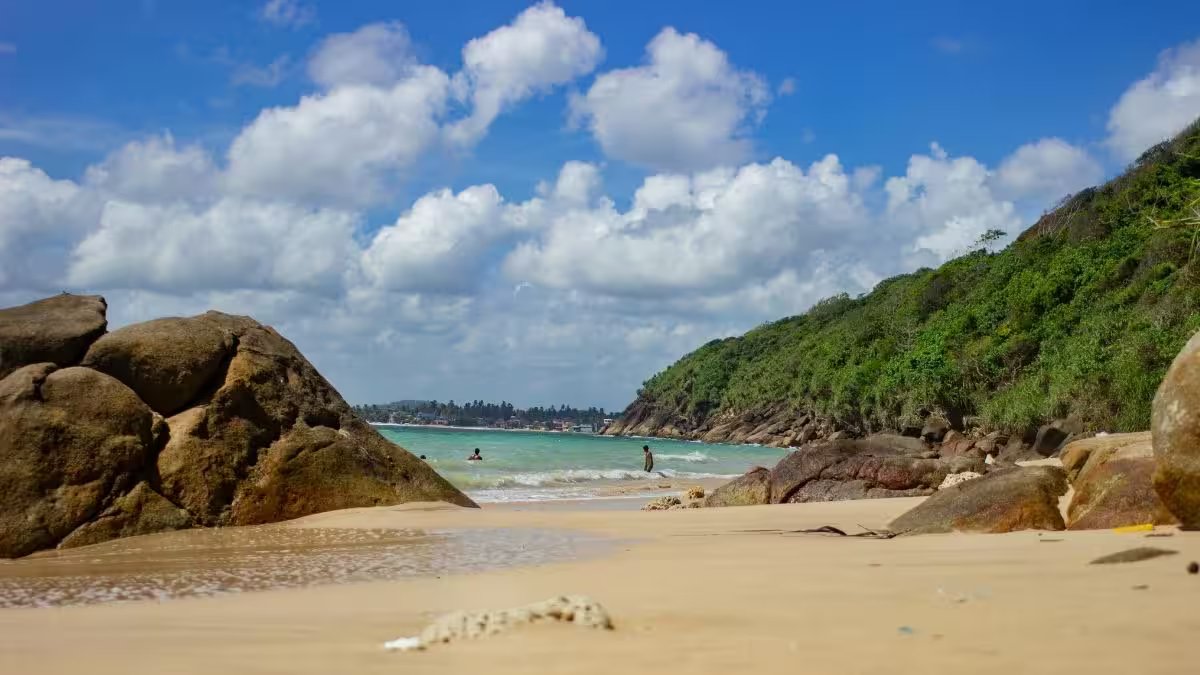
Sri Lanka has recently rolled out a Digital Nomad Visa aimed at attracting foreign professionals who want to live in the island nation while working remotely for overseas employers or clients.
The initiative is part of a broader effort to position Sri Lanka as a long-stay digital hub, boosting tourism revenue, foreign exchange inflows, and global knowledge exchange.
The visa is open to foreign nationals aged 18 and above, including spouses and dependants. To qualify, the main applicant must be engaged in remote employment, freelancing, or own a business that is not registered in Sri Lanka and serves clients outside the country.
Applicants are required to remit a minimum monthly income of USD 2,000. If the number of dependants exceeds two, an additional
USD 500 per dependant must be remitted each month.
Applicants must submit a completed visa application form, a formal request letter, a passport valid for at least six months, and two recent passport-sized photographs.
Supporting documents include marriage and birth certificates where applicable, a completed security clearance form, medical clearance report, and a police clearance certificate issued within the last three months.
International health insurance covering medical care in Sri Lanka is mandatory. A recommendation from the Ministry of Digital Economy and proof of minimum monthly remittance are also required.
Applications are submitted to the Department of Immigration and Emigration’s Residence Visa Division, where documents are reviewed for eligibility and compliance. Successful applicants receive a visa endorsement on their passport.
The Digital Nomad
Visa is issued for a period of one year and can be renewed annually. Extensions require proof of tax registration with the Inland Revenue Department. The visa fee is USD 500 per year for the main applicant, spouse, and each dependant.
Visa holders are permitted to reside legally in Sri Lanka, open local bank accounts, rent property, enrol children in private or international schools, and access telecommunications and co-working facilities. Local employment is prohibited, and all income must be sourced from abroad. Failure to comply with visa conditions may result in cancellation.
The discussions to have the visa started in 2021. This opens the door for remote workers, including Indians, to live on the island for up to a year while working for clients outside the country.
What is growing trend?
Over the past decade, digital nomadism has evolved from a niche lifestyle embraced by a select few to a mainstream way of working and living.
Digital nomads are individuals who adopt a location-independent, technology-enabled approach to both work and life, allowing them to pursue new opportunities and experiences beyond traditional boundaries.
As per the digital nomads trends reports of MBO partners, in 2025, the average digital nomad visited 6.2 locations, compared to 6.6 in 2024 and 7.2 in 2023. The amount of time spent at each location has also increased.
Most digital nomads want to live a more flexible, location-independent life; here, they balance the same weightage that goes towards traveling, the cultural experience, and professional engagement.
With this move, Sri Lanka joins a growing list of more than 50 countries worldwide offering digital nomad visas across
Europe, the Americas, Asia and Africa.
Many such programmes were launched between 2020 and 2025, following the COVID-19 pandemic, as destinations sought to attract high-spending, long-stay visitors.
Estonia pioneered the concept with its digital nomad visa in June 2020, followed by Barbados’ Welcome Stamp. Croatia, Dubai/UAE, Portugal and Spain introduced similar schemes between 2021 and 2023.
While Japan and Thailand rolled out their digital nomad visas in 2024. Countries such as Italy have also introduced visas tailored to highly skilled, non-EU remote professionals.
There are over 50 countries that offer digital nomad visas or special permits for remote workers.
For Sri Lanka, the expectation is that digital nomads and longer-stay tourists will increase local spending, support small businesses, and contribute to sustained tourism-led recovery, particularly as the country continues to rebuild following the economic crisis and inflationary pressures seen in 2024.
Trends to watch:
Remote compliance requirements increase
Governments are increasing tax and social security enforcement on remote workers. Platforms like Localyze help manage cross-border compliance.
More hybrid-nomads
Expect growth in nomads who maintain a home base but travel seasonally, especially among families.
Global South destinations rise
More nomads are exploring Colombia, Kenya, and the Philippines for affordability and visa ease.
AI-powered freelancing grows
Roles that leverage generative AI (e.g., prompt engineering, content QA, automation scripting) are on the rise
Women and Gen Z surge
2026 is projected to bring a higher share of female and Gen Z nomads, driven by online entrepreneurship and flexible career design.
Countries are now capitalizing on the trend by extending very enticing
visa opportunities that attract rich, skilled persons and enable them to contribute to the local economy.
End of Article