On the tenth day of the Iran war, prices of oil surged, as Saudi Arabia battled drones targeting oil fields and Bahrain’s state energy company warned after a missile strike that it may be unable to fulfil export contracts. Additionally, maritime traffic in the Strait of Hormuz — through which 20 per cent of global crude and gas passes — has all but halted since the war began on February 28.
As Tehran continues its barrage of strikes on oil-rich Gulf nations, the benchmark price for a barrel of crude soared
beyond $100 — a first since Russia’s invasion of Ukraine four years ago.
Meanwhile, US President Donald Trump dismissed the spike in prices, stating it was a “small price to pay” to eliminate Iran’s nuclear threat, reiterating the White House’s insistence that the rise is temporary.
“Short term oil prices, which will drop rapidly when the destruction of the Iran nuclear threat is over, is a very small price to pay for USA, and world, safety and peace,” he wrote on social media Sunday evening. “Only fools would think differently!” he argued.
As the situation is likely to worsen, with some experts predicting that the
price of crude per barrel could touch $150, here’s how nations across the globe are responding.
Japan
Reliant on West Asia for 95 per cent of its oil supplies, with around 70 per cent coming via the Strait of Hormuz, which is effectively closed due to the Iran war, Japan is preparing for the worst.
The Japanese government is considering using part of its national oil reserves amid the ongoing Iran crisis, with Akira Nagatsuma, a member of the Centrist Reform Alliance opposition party, telling Reuters that the Japanese government instructed a national oil reserve storage site to prepare for a possible release of crude.
South Korea
South Korean President Lee Jae Myung said on Monday that authorities would cap domestic fuel prices for the first time in nearly 30 years. The country will also look for sources of energy beyond supplies shipped via the Strait of Hormuz, and a 100 trillion won ($67 billion) market-stabilisation programme should be expanded if needed, he added.
Vietnam
Another Asian country, Vietnam is planning to scrap tariffs on fuel imports as prices of crude climb higher. Vietnam’s ministry of finance said it had drafted a decree that would slash import tax rates to zero on some petroleum products to “help stabilise the domestic market and ensure national energy security”.
“If the conflict continues and the blockade of the Strait of Hormuz persists, alternative supplies on the international market will become scarce and risk driving prices up,” it said in a statement.
As the war enters its tenth day, prices of fuel in Vietnam have risen sharply. Commuters are already feeling the pinch, with some worried about the long-term effects of the war. “The price is sky-high. My salary is still the same but the price of the gas is significantly going up,” said Le Quang, 25, a teacher living in Ho Chi Minh City, to AFP. “I think I will need to walk to work.”
Indonesia
Indonesia will increase the amount it has allocated for fuel subsidies in its state budget, its finance minister said on Monday.
The country has currently budgeted 381.3 trillion rupiah ($22.5 billion) for energy subsidies and to compensate state firm Pertamina and utility company PLN for their efforts to keep some fuel prices and electricity tariffs at an affordable level.
China
The Xi Jinping-led nation is heavily dependent on West Asia for its crude requirements; the country imports 57 per cent of oil from the region, as per data in 2025.
Now, as prices of oil are rising, the country has asked its main refiners to suspend exports of diesel and gasoline to prioritise domestic needs. It has also asked refiners to try and cancel shipments already committed.
However, the guidance did not apply to jet fuel refuelling for international flights, bonded bunkering or supplies to Hong Kong or Macau.
Philippines
As a way to cope with soaring fuel prices, the government in the Philippines has adopted a four-day working week for all government departments. This move aims at fewer commutes, lower costs and less traffic, resulting in lesser fuel consumption.
President Ferdinand Marcos has also ordered all government agencies to reduce their fuel and electricity consumption by 10 to 20 per cent, while police have warned against hoarding as queues were seen forming at some petrol stations.
Myanmar
Since Saturday, Myanmar’s military government has enforced rules to ration fuel, requiring half of all private vehicles to stay off the roads each day, depending on their licence plate numbers.
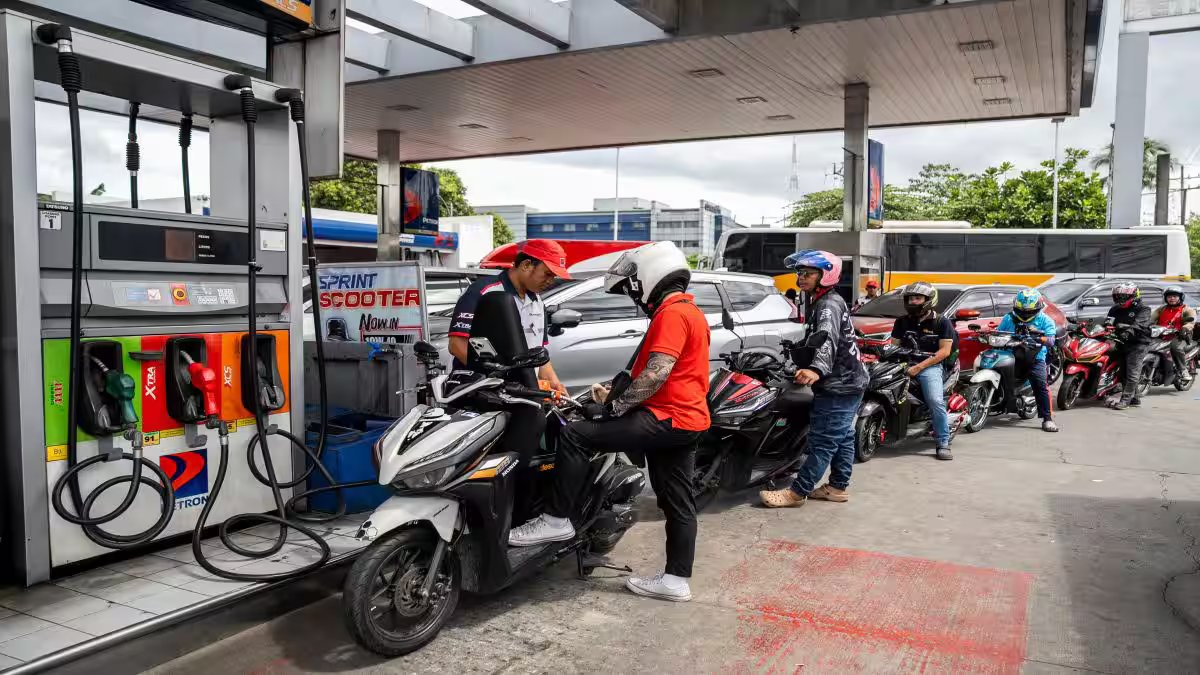
AFP reporters in Yangon have seen queues outside some petrol stations and restrictions on the amount of fuel sold to each driver, but the junta has only allowed modest price hikes so far.
Thailand
Thailand said last week it had secured two months’ worth of oil supplies but was suspending exports to conserve its holdings. The government also capped the price of diesel at just under 30 baht ($0.94) per litre for a 15-day period.
Bangladesh
In South Asia, Bangladesh has shuts its universities and started rationing of fuel. Authorities closed all the public and private universities across the country from Monday, bringing forward the holidays for Eid al-Fitr as part of emergency measures in order to conserve electricity and fuel.
The country of 170 million people imports 95 per cent of its oil and gas needs.
And in an attempt to curb panic buying of crude, authorities have capped fuel purchases for several types of vehicles. For example, motorcyclists are now limited to a maximum of two litres per tank. “Consumers tend to buy more than they usually purchase” during times of crisis, Bangladesh Petroleum Corporation said in a statement.
As part of broader austerity measures, the government has also asked all foreign-curriculum schools and private coaching centres to suspend operations during this period to limit electricity use.
Pakistan
Bangladesh’s neighbour, Pakistan, has also introduced Covid-like rules as the price of oil keeps rising. The cash-strapped nation is mulling
work from
home for employees and mandating schools and colleges to shift to online sessions. Authorities are also considering ensuring that only essential staff remain present in offices during March. Telecom and IT companies have also been asked to consider allowing employees to work online at least twice a week.
Proposals are also under consideration to promote ride-sharing among office employees. All these just to reduce fuel consumption.
Currently, Pakistan has petrol and diesel stocks for about 25 days, around 10 days of crude oil reserves, and 15 days of LPG supplies, according to its Finance Minister Muhammad Aurangzeb. This has led to citizens rushing to petrol pumps, even as a Rs 55 increase to Rs 321.17 for diesel and Rs 335.86 for petrol was announced.
India
Indian refiners have begun negotiating for additional crude oil that does not transit through the vital Strait of Hormuz, with supplies being sourced from the US, Russia and West Africa.
Minister for Petroleum and Natural Gas Hardeep Singh Puri, in a post on social media platform X in the early hours of Sunday, said: “Energy imports into the country are in full flow from all non-Hormuz routes. The energy requirements of our citizens are being fully met.”
“India is in a comfortable position. There is no room for anxiety or speculation in this regard,” Puri added.
When asked if India will see higher inflation as a result of an increase in oil prices, Finance Minister Nirmala Sitharaman in a written reply to Parliament noted that domestic price levels are currently near the lower end of the Reserve Bank of India’s (RBI) tolerance band, which should help limit the impact of higher crude prices on inflation.
G7 countries
On Monday as oil prices soared past the $100-mark, G7 finance ministers sat down to discuss the release of emergency oil reserves.
Three G7 countries, including the US, have so far reportedly expressed support for the release of the emergency reserves, which are held by the International Energy Agency’s 32 member countries across the globe.
With inputs from agencies
End of Article