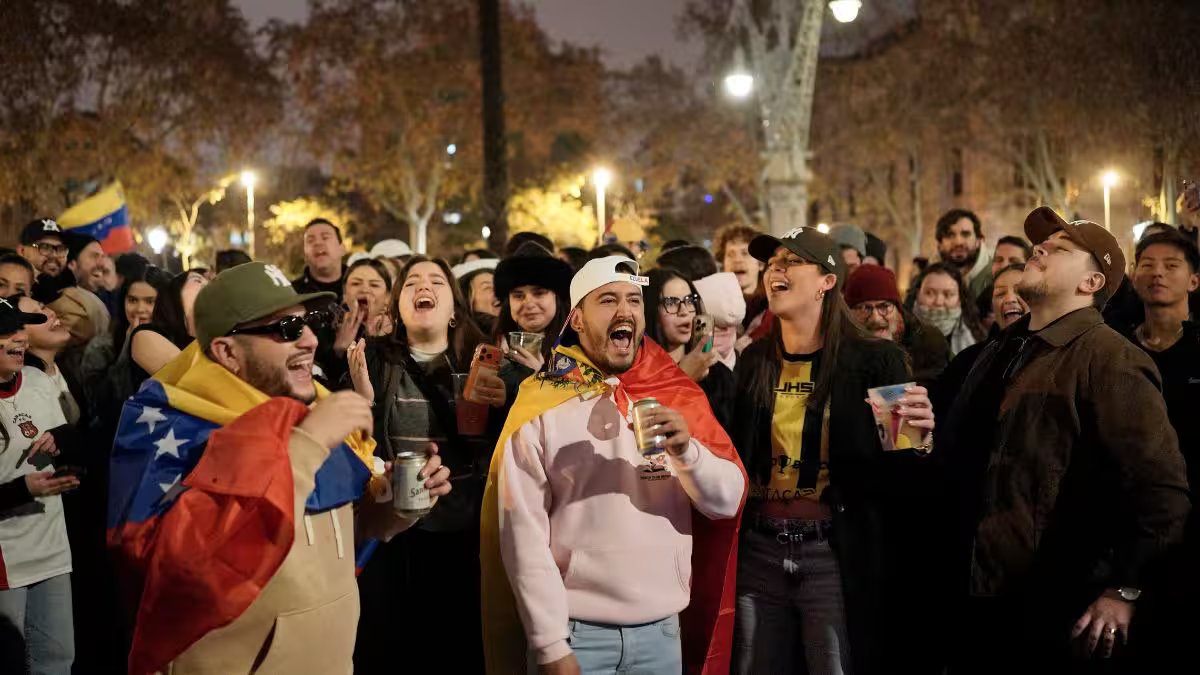
National Assembly President Jorge Rodriguez called on Venezuela to “continue this path of peace for the construction of democratic coexistence.” The names of those released on Saturday were, however, not disclosed
Venezuela has freed 17 political prisoners ahead of the discussions on whether the country should adopt the historic amnesty bill designed to end the use of courts to crack down on dissent.
The law, if enacted, will free political prisoners of all charges levelled against them for expressing their dissent of ousted leader Nicolas Maduro and his predecessor Hugo Chavez over the past 27 years.
“Under the Amnesty Law, 17 people deprived of their liberty in Zona 7 are being released at this moment,” National Assembly President Jorge Rodriguez wrote on social media, referring to the detention centre in the capital, Caracas.
He called on Venezuela to “continue this path of peace for the construction of democratic coexistence.” The names of those released on Saturday were, however, not disclosed.
Meanwhile, lawmakers discussed the amnesty bill in the parliament on Thursday but failed to reach a consensus on the subject and agreed to continue the debate on February 19.
The amnesty legislation covers charges of “treason,” “terrorism”, and spreading “hate” that were used to lock up dissidents, according to the bill text.
What does the law say?
The law seeks to improve the lives of thousands of inmates who are in jail, as well as former prisoners who have already been conditionally released. The new law will cover cases running from 1999 until today, but will exclude those who may have participated in killings, serious abuses of human rights and drug trafficking, Rodriguez said.
The Helicoide prison, known for prisoner abuse and a symbol of alleged government repression, will be dismantled and converted into a sports complex.
A 2022 United Nations report claimed that Venezuela’s state security agency used the prison complex, originally designed as a mall, for torture.
Families and rights advocates have long demanded that charges and convictions against detainees who are considered political prisoners be dropped. Opposition politicians, dissident members of the security services, journalists and rights activists are often subject to charges like terrorism and treason, which their families say are unjust and arbitrary.
End of Article