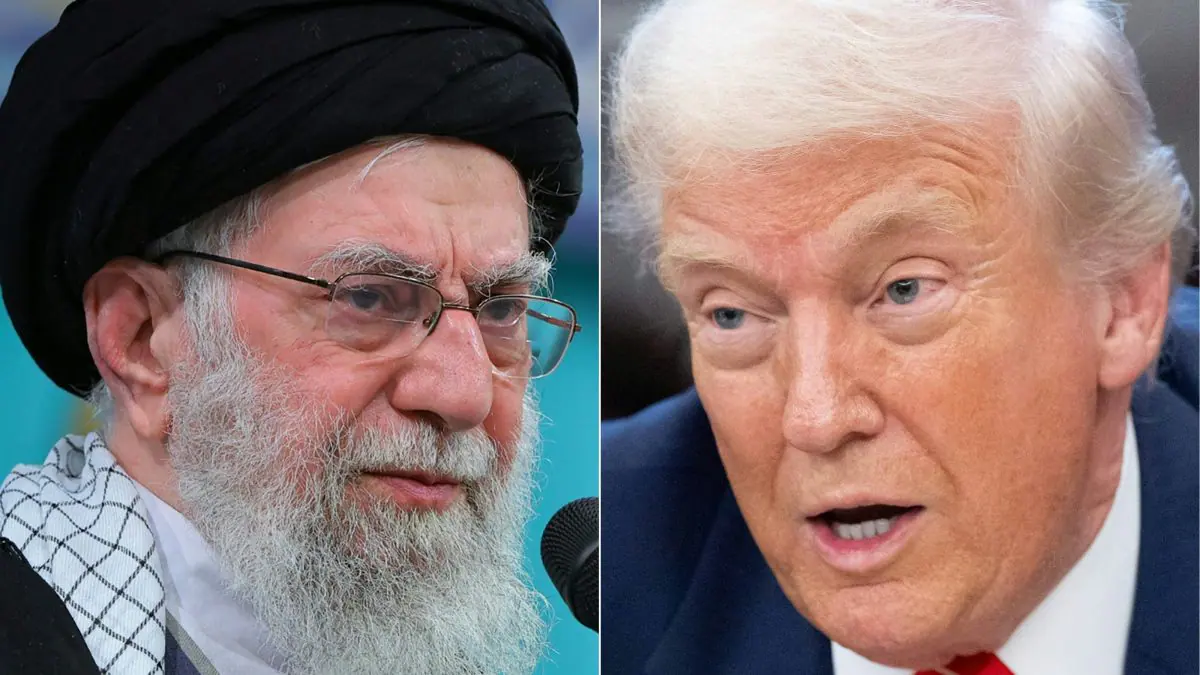
Iran and the United States say nuclear talks will go ahead in Oman this week, despite rising tensions, mixed signals over the agenda, and President Donald Trump warning Tehran’s top leadership that it should be “very worried.”
Iran and the United States confirmed on Wednesday that they will proceed with nuclear negotiations in Oman later this week, even as President Donald Trump escalated his rhetoric against Tehran’s leadership, saying Iran’s supreme leader should be “very worried.”
The announcement came after hours of uncertainty over whether the talks would not materialise. Earlier reports had suggested the negotiations between the long-time adversaries were unraveling over disagreements about where the meeting would be held and what issues would be on the
agenda.
Those doubts had heightened fears of renewed US military action, especially as tensions have surged following Iran’s violent crackdown on some of the largest protests since the 1979 Islamic revolution.
Iranian Foreign Minister Abbas Araghchi sought to settle the matter by confirming that the talks were back on track. He said discussions were now “scheduled” for Friday in Muscat, adding: “I’m grateful to our Omani brothers for making all necessary arrangements,” in a post on X.
A White House official separately confirmed to AFP that the meeting would indeed take place in Oman on Friday.
Earlier, diplomats had indicated that Turkey was the likely venue. However, Axios reported that Washington was close to walking away after Iran objected both to the location and to including its ballistic missile programme in the discussions.
Trump stares down Iran’s supreme leader
Despite the diplomatic reset, Trump continued to apply pressure. In an interview with NBC News, he warned Iran’s supreme leader Ayatollah Ali Khamenei, saying, “I would say he should be very worried.”
Trump also claimed Iran had considered building a new nuclear facility after US strikes on Iranian nuclear sites during Israel’s war with Tehran in June. “They were thinking about starting a new site in a different part of the country,” he said. “We found out about it, I said, you do that, we’re going to do very bad things to you.”
Washington has reinforced its military presence in the region, with Trump describing the deployment of a US aircraft carrier group as an “armada.” One of its aircraft shot down an Iranian drone earlier this week, while Tehran has warned it would retaliate against US targets if attacked.
US Secretary of State Marco Rubio said the United States was “ready” to meet Iran, but stressed that talks must go beyond nuclear issues to be “meaningful.”
“They will have to include certain things, and that includes the range of their ballistic missiles, that includes their sponsorship of terrorist organisations across the region, that includes their nuclear programme and that includes the treatment of their own people,” Rubio said.
Iran has consistently rejected negotiations over its missile programme, arguing that the weapons—capable of reaching Israel—are a legitimate means of self-defence.
Tehran now faces mounting pressure at home and abroad, following last year’s Israeli bombing campaign and the weakening of key regional allies, including Hezbollah in Lebanon and the fall of Syria’s longtime leader Bashar al-Assad.
End of Article