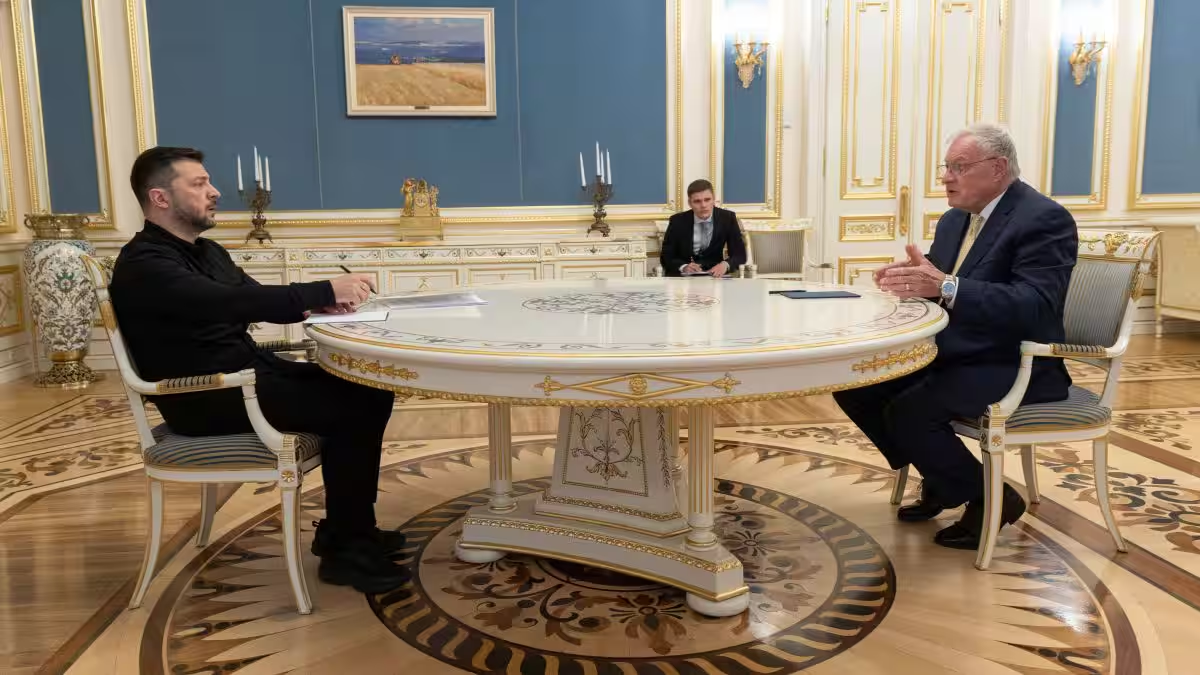
The negotiation strategy, which has often been described as an “America First” approach, involves pushing both Kyiv and Moscow to make concessions
US Special Envoy for Ukraine, Keith Kellogg, stated on Saturday that a deal to end the war in Ukraine is “really close,” though its conclusion hinges on resolving two major sticking points, namely the future of the Donbas region and the Russian-occupied Zaporizhzhia Nuclear Power Plant.
Speaking at the Reagan National Defense Forum, the outgoing envoy, who has been instrumental in the
Trump administration’s efforts to broker a peace settlement, described the diplomatic efforts as being in “the last 10 metres,” which he characterised as the most difficult stage of any negotiation.
“We’re really, really close,” Kellogg affirmed. He detailed the principal obstacles: “If we get those two issues settled, I think the rest of the things will work out fairly well. The two main outstanding issues… were on territory—primarily the future of the Donbas—and the future of Ukraine’s Zaporizhzhia nuclear power plant, Europe’s largest, which is under Russian control.”
Calls for concessions amid unprecedented casualties
The pursuit of a deal comes as the conflict continues to extract a severe human cost. Kellogg, a retired Lieutenant General, shed light on the scale of the war, calling the death and injuries “horrific” and unprecedented for a regional conflict.
He estimated that Russia and Ukraine have collectively suffered more than two million casualties, including dead and wounded, since the invasion began in February 2022.
The negotiation strategy, which has often been described as an “America First” approach, involves pushing both Kyiv and Moscow to make concessions. Kellogg has previously co-authored proposals suggesting military aid to Ukraine be conditional on its participation in peace talks, and that Russia be offered sanctions relief and a delay on Ukraine’s NATO membership.
“When you look at everything the Ukrainians are willing to work with, now it’s over to the Russians, over to Putin,” Kellogg said in a previous interview, reflecting the current state of dialogue. “We’ve got one side. Now you need to come up the other side. And I think we’re close.”
Russia currently controls nearly a fifth of Ukrainian territory, including the Crimean Peninsula. Kellogg’s successor will inherit the delicate task of navigating the final, complex territorial and security issues to secure a ceasefire.
End of Article