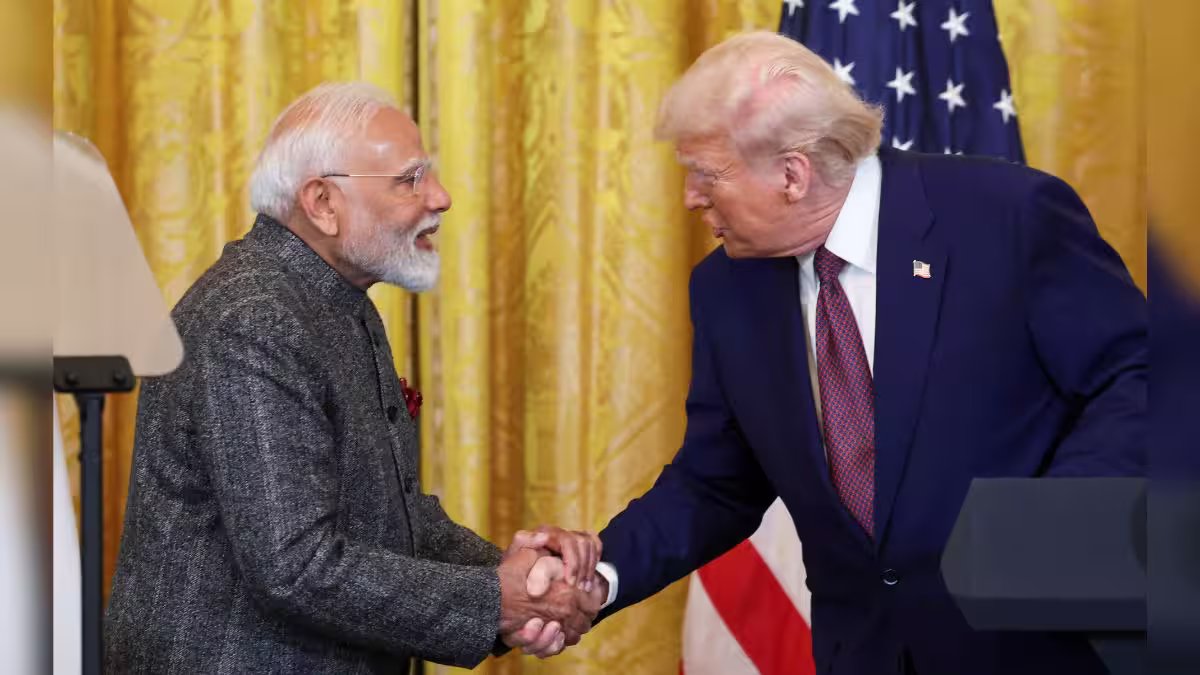
US President Donald Trump announced earlier this week that Washington has reached a trade deal with India, cutting down tariffs from 50 per cent to 18 per cent, marking an end to a year-long discussion on the negotiating table
The US has agreed to consider further lowering tariffs on Indian goods after the countries held Bilateral Trade Agreement talks. Currently, Washington has cut down tariffs on New Delhi to 18 per cent.
The development comes as India and the US issued a joint statement announcing an Interim Trade Deal that is meant to open a
$30 trillion market for Indian exporters.
US President Donald Trump announced earlier this week that Washington has reached a trade deal with India, cutting down tariffs from 50 per cent to 18 per cent, marking an end to a year-long discussion on the negotiating table.
Trump held
a phone call with Prime Minister Narendra Modi. This phone call was followed by Potus’ major announcement. While reciprocal tariffs (25 per cent) have been reduced to 18 per cent, the penal levies that Trump imposed on India for buying Russian oil (another 25 per cent) have been cut to zero.
Key pointers of the deal
Under the interim framework, the two countries have agreed to make significant concessions on tariffs and make changes that are meant to bolster trade.
-
India will eliminate or reduce tariffs on all American industrial goods and a wide range of food and agricultural products
-
The US will slash reciprocal tariffs on Indian goods to 18 per cent, providing a huge market opportunity in key sectors such as textiles & apparel, leather & footwear, plastic & rubber products, organic chemicals, home décor, artisanal products, and select machinery
-
Washington will also remove tariffs on certain Indian aircraft and aircraft parts. The deal also mentions India receiving a preferential tariff rate quota for automotive parts
-
Additionally, tariffs will go down to zero on a wide range of goods, including generic pharmaceuticals, gems and diamonds
-
Both countries have shaken hands on providing preferential market access in sectors of respective interest on a sustained basis
End of Article