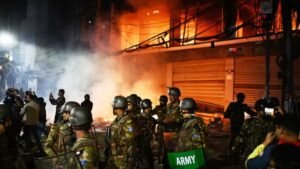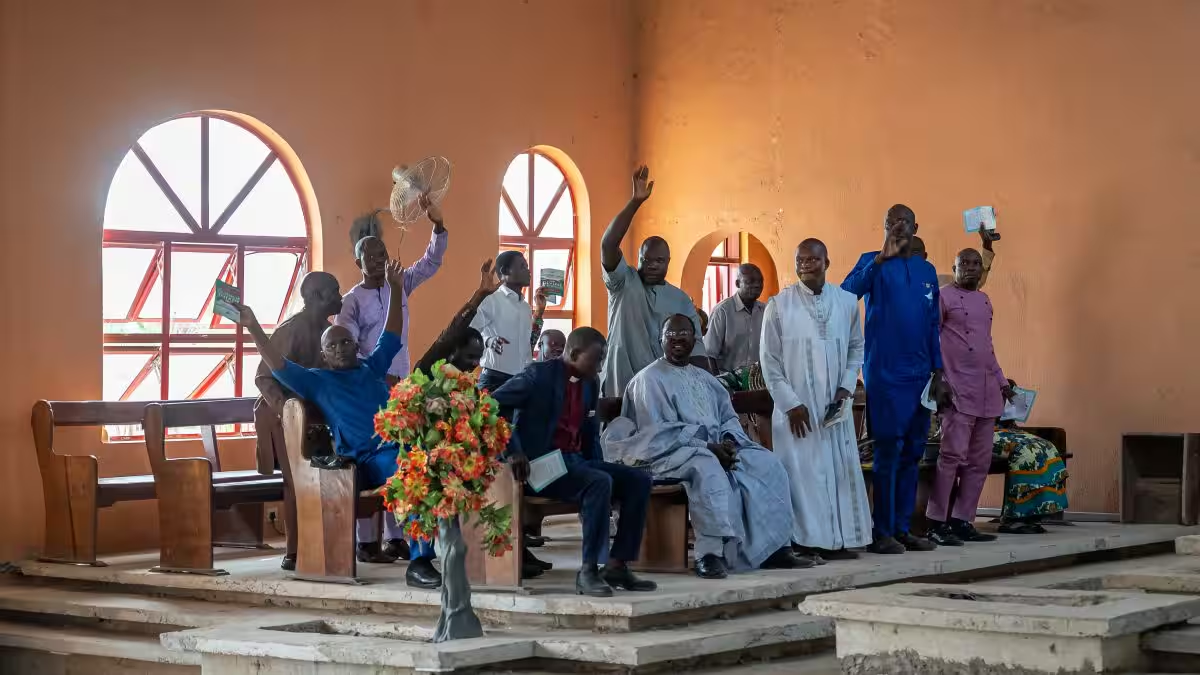
The aerial missions, which began in late November, are being tracked from a base in Accra, Ghana, and have drawn attention from analysts watching US–Africa relations closely
The United States has been conducting near‑daily surveillance flights over Nigeria for several weeks, as per an exclusive Reuters report.
The move comes amid heightened tensions after President Donald Trump threatened possible military action over
violence against Christians in the West African nation. The aerial missions, which began in late November, are being tracked from a base in Accra, Ghana, and have drawn attention from analysts watching US–Africa relations closely.
The flights are operated by Tenax Aerospace, a Mississippi‑based firm, using a Gulfstream V aircraft equipped for reconnaissance. While the missions are not publicly acknowledged as military operations by the US government, flight tracking data, reviewed by Reuters, shows consistent activity that suggests a broad surveillance effort over Nigerian territory.
Part of broader security cooperation
US officials say the surveillance is part of broader cooperation with Nigeria to monitor militant groups such as Boko Haram and gather information on security threats in the region.
The missions also aim to collect intelligence linked to the kidnapping of a US pilot in neighbouring Niger, adding another layer to the United States’ interest in West African stability.
The operations appear to reflect a renewed US push to maintain a strategic presence in West Africa after its forces were largely pushed out of neighbouring Niger earlier in 2025. Some analysts believe this marks a shift in Washington’s posture as it balances counterterrorism goals with diplomatic sensitivity in a volatile region.
Trump’s threats still echoing
The surveillance flights come after Trump’s controversial comments in October, when he warned that the United States might consider military intervention in Nigeria if its government failed to stop what he described as attacks on Christian communities. Trump had said he was preparing the Pentagon for possible action, a statement that alarmed Nigerian officials and fuelled protests domestically.
Nigeria has consistently rejected claims that it targets Christians and insists its internal security challenges—including jihadist violence—affect people of many faiths. President Bola Tinubu has said that the government is committed to protecting all citizens and has engaged in discussions with US counterparts to address shared security concerns.
Despite the surveillance missions and lingering rhetoric from Washington, Abuja says it welcomes US assistance in combating terrorism so long as its sovereignty and territorial integrity are respected. Senior Nigerian advisers have pushed back on the narrative used by some US officials, asking for a more nuanced understanding of the country’s complex security landscape.
End of Article