The US Departments of Energy and Defense transported a fuel-free microreactor by military aircraft to Utah, marking the first demonstration of rapid nuclear power deployment for military and civilian use
In a first-of-its-kind operation, the US Departments of Energy and Defense transported a small nuclear reactor by cargo aircraft from California to Hill Air Force Base in Utah on Sunday to demonstrate the ability to deploy nuclear power quickly for military and civilian purposes.
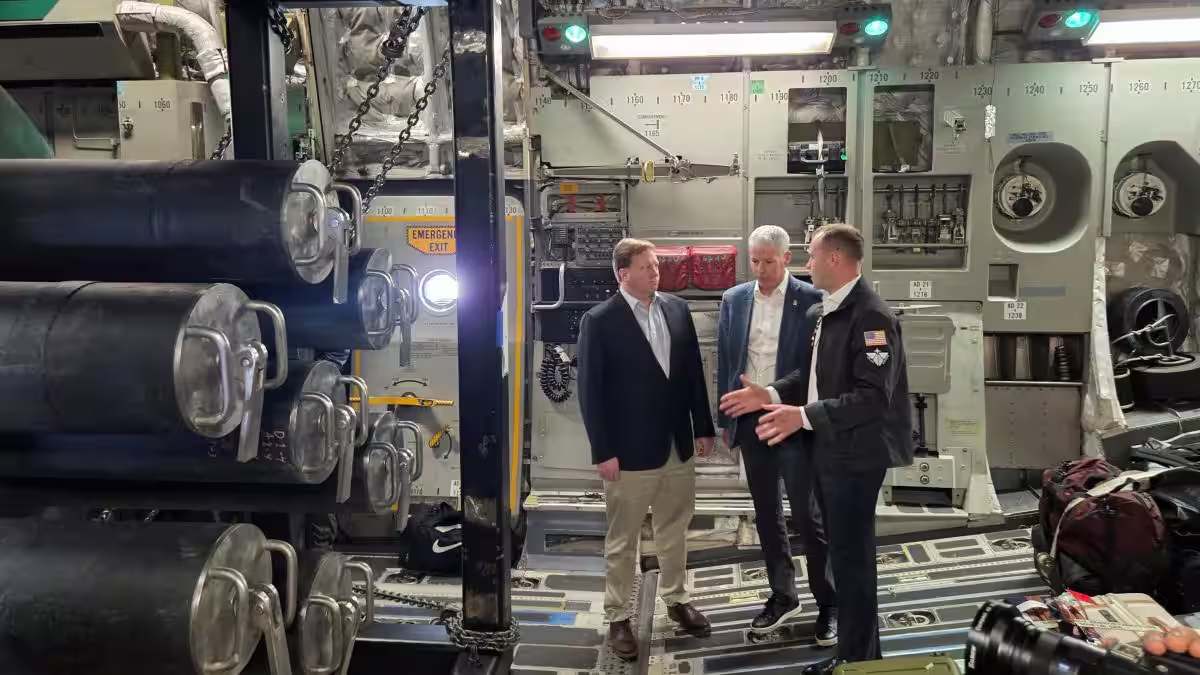
The agencies partnered with California-based Valar Atomics to fly one of its Ward microreactors aboard a C-17 aircraft without nuclear fuel. Energy Secretary Chris Wright and Under Secretary of Defense for Acquisition and Sustainment Michael Duffey accompanied the reactor and its components on the flight, describing the event as a milestone for
US nuclear energy and military logistics.
“This gets us closer to deploy nuclear power when and where it is needed to give our nation’s warfighters the tools to win in battle,” Duffey said.
Administration push for small reactors
The administration of Donald Trump has identified small nuclear reactors as one option to expand domestic energy production. In May last year, Trump issued four executive orders aimed at strengthening nuclear deployment to meet rising energy demand linked to national security and competitive AI development.
In December, the Energy Department awarded two grants intended to accelerate the development of small modular reactors.
Supporters say microreactors could provide power to remote and hard-to-reach locations, offering an alternative to diesel generators that depend on frequent fuel deliveries. Critics, however, question their economic viability.
“There is no business case for microreactors, which—even if they work as designed—will produce electricity at a far higher cost than large nuclear reactors, not to mention renewables like wind or solar,” said Edwin Lyman, director of nuclear power safety at the Union of Concerned Scientists.
Development timeline and capacity
The Energy Department plans for three microreactors to reach “criticality” by July 4, meaning a nuclear reaction can sustain itself, Wright said.
The reactor, transported on Sunday, slightly larger than a minivan, is capable of generating up to 5 megawatts of electricity, enough to power 5,000 homes, according to Valar chief executive Isaiah Taylor. It is scheduled to begin operating in July at 100 kilowatts and peak at 250 kilowatts this year before eventually ramping up to full capacity.
Valar aims to begin selling power on a test basis in 2027 and to achieve full commercial operations in 2028. Taylor said that while private companies fund nuclear technology development, federal support is needed to enable fuel fabrication and uranium enrichment within the country.
Fuel for the reactor will be moved from the Nevada National Security Site to the San Rafael facility, Wright told reporters.
Concerns remain over radioactive waste. Lyman noted that even small generators produce significant quantities of waste. Other experts have said reactor designers are not required to address disposal at the outset beyond outlining how it will be managed.
Although long-term disposal of nuclear waste remains unresolved, Wright said the Energy Department is in discussions with several states, including Utah, about hosting facilities for fuel reprocessing or permanent disposal.
End of Article