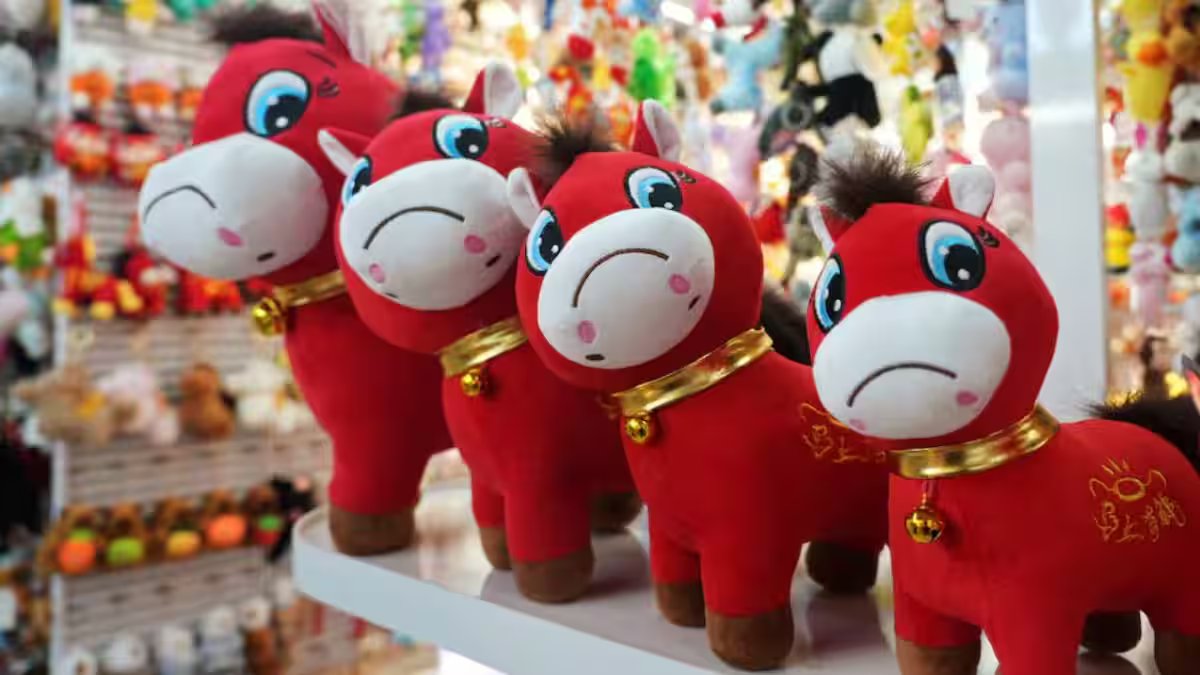
A misstitched plush horse with a mournful expression has become an unexpected hit in China ahead of the Lunar New Year.
At one of the bustling corridors of Yiwu International Trade City, China’s largest wholesale complex, a small shop is drawing crowds in the lead-up to the Lunar New Year. Shoppers are eager to get their hands on an unexpected hit, a red plush horse with a sorrowful face that has become the latest viral craze across Chinese social media.
From cheerful design to accidental frown
Originally intended to be a cheerful decoration for the Year of the Horse, the toy’s melancholic expression was the result of a simple error. Zhang Huoqing, who runs the shop Happy Sister in Yiwu, explained that a worker mistakenly sewed the horse’s mouth upside down, transforming its intended smile into a frown. What was meant to symbolise good fortune and happiness instead appeared dejected and weary.
When Zhang discovered the flaw, she offered to replace the toy, but the buyer opted to keep it. Soon after, photos of the “crying horse” began circulating on Chinese social platforms, drawing amusement and sympathy in equal measure.
A symbol for the modern worker
Online users quickly related to the toy’s somber look, with many young professionals saying its downcast eyes and weary expression captured their own fatigue from long working hours. Memes described the frowning horse as “the face you have at work” and the smiling version as “the face you wear after clocking out.”
Trade veteran Lou Zhenxian, who has sold festive merchandise in Yiwu for over two decades, said he had never seen a toy catch on quite so rapidly. “Almost everyone asks for the crying horse these days,” Lou remarked, adding that demand surges daily as the Spring Festival draws near.
New twist in the ‘ugly-cute’ trend
The crying horse also reflects a wider cultural fascination in China with “ugly-cute” collectibles, toys that mix imperfection with charm. The trend, popularised by brands such as Pop Mart and its character Labubu, resonates with younger buyers who find humour and honesty in flawed designs.
By early afternoon, shelves at Happy Sister often stand empty as staff rush to restock. Zhang now produces the crying version deliberately, confident that its accidental frown speaks to something deeper. “It seems to fit how working people really feel today,” she said with a smile.
End of Article