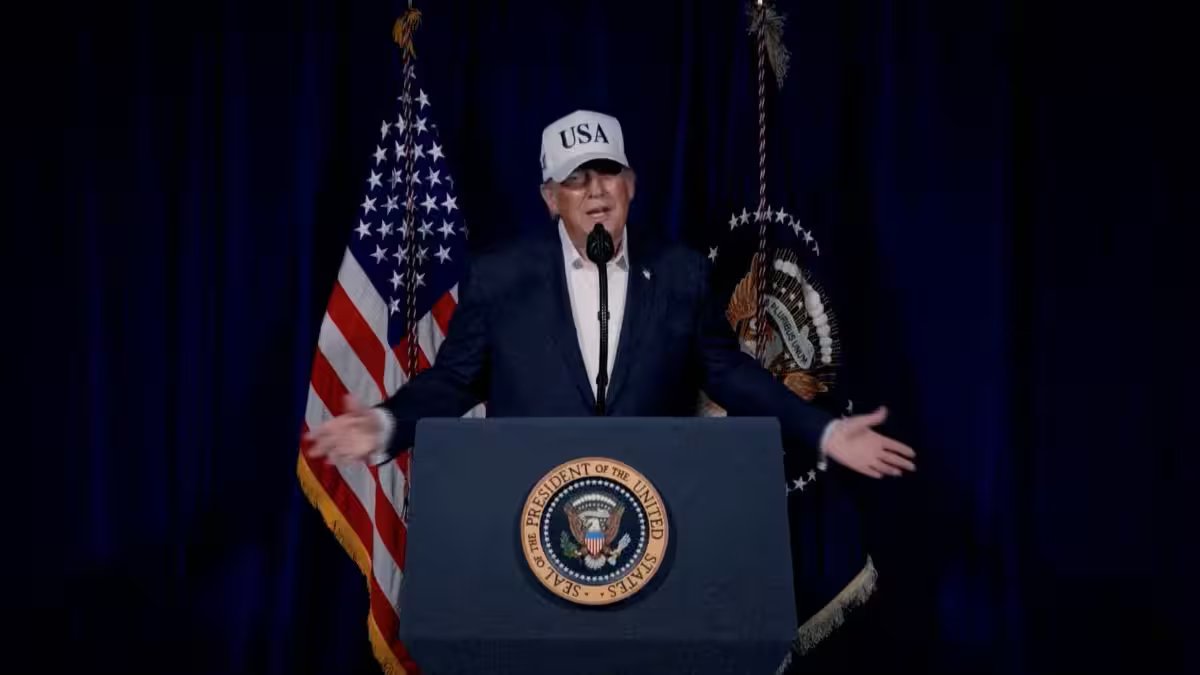
Despite the fact that Donald Trump has been vying for the Nobel Prize, his second stint in office has witnessed sweeping American military activity across multiple continents.
The scope and pace of these interventions have few parallels in modern United States history.
In just over a year, Trump has ordered military action in at least seven countries, including Iran, Nigeria and Venezuela — none of which had previously experienced direct US strikes of this nature.
White House insists that the US president remains committed to peace, arguing that he seeks negotiated settlements wherever possible and views decisive force as a means to secure long-term stability.
But the contradiction is clear, especially when you look at the image of an anti-war candidate that Trump projected during the 2024 presidential campaign.
Which countries has Trump struck in his second term?
Iran – Operation Fury
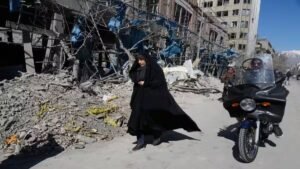
The latest centrepiece of Trump’s foreign policy is Operation Epic Fury, the joint American-Israeli military campaign launched last weekend (February 28, 2026).
In the weeks preceding the offensive, Washington staged a substantial military reinforcement across West Asia, the most extensive concentration of US forces in the region since the 2003 invasion of Iraq.
Within the opening phase of Israeli airstrikes,
Iran’s Supreme Leader Ali Khamenei was killed, along with dozens of senior figures in the country’s governing structure.
The assassination marked a dramatic escalation in the conflict. Subsequent US and Israeli attacks have continued, targeting strategic installations and military assets, while Iranian missiles and drones have struck Gulf states aligned with Washington.
The
scale of the operation significantly exceeded earlier US action in June 2025, when American forces attacked Iran’s nuclear facilities at Fordow, Natanz and Isfahan during a 12-day war initiated by Israel.
That conflict resulted in the deaths of more than 600 Iranians. At the time, Trump asserted that the strikes had “obliterated” Iran’s nuclear capabilities.
Unlike previous limited operations, Operation Epic Fury was launched without formal US congressional authorisation.
Yemen
In Yemen, American forces
carried out dozens of naval and aerial strikes between March and May 2025 against the Houthi movement. The Houthis had been attacking ships transiting the Red Sea, seeking to pressure Israel to end its military operations in Gaza.
US strikes damaged infrastructure and resulted in civilian casualties. In April, a strike on the Ras Isa port in Hodeidah reportedly killed more than 80 civilians. Human Rights Watch said in June that the incident should be investigated as a possible war crime.
A ceasefire mediated by Oman was announced in May, temporarily reducing hostilities.
Somalia
Somalia has also seen a dramatic uptick in American air operations. The United States has long supported Somali authorities in their fight against al-Shabab and a local branch of ISIS.
Data compiled by the New America Foundation indicates that US forces conducted at least 111 strikes in Somalia during 2025 alone — a figure monitors say exceeds the combined total recorded under the administrations of George W Bush, Barack Obama and Joe Biden.
Syria
In Syria, US action continued in response to militant attacks. In December 2025, American forces struck ISIS targets after an assault in Palmyra killed two US soldiers and a translator.
Trump said the United States was “inflicting very serious retaliation” against those responsible. Syrian authorities stated that the attacker was an employee of the state security services who was set to be expelled due to hardline views.
Iraq
Iraq also remained a theatre for US counterterrorism.
In March 2025, a strike in Anbar province killed Abdallah “Abu Khadijah” Malli Muslih al-Rifai, described as ISIS’s second-in-command, along with another operative.
Nigeria
In Nigeria, Trump increased collaboration with local authorities and deployed 100 US military personnel to train Nigerian forces.
He warned that Washington could conduct further strikes unless Abuja did more to address what he characterised as a “genocide” of Christians perpetrated by Muslim groups.
Nigerian officials have rejected that depiction, arguing that it oversimplifies a complex conflict marked by intercommunal violence and insurgency.
In December 2025, Trump announced that the United States
had carried out “powerful and deadly” attacks against ISIS affiliates in northwestern Nigeria, with the cooperation of the Nigerian government.
Venezuela
In January 2026, US forces launched an operation in Venezuela that included bombing targets in Caracas
and abducting President Nicolás Maduro.
Venezuelan officials said 83 people were killed in the attack, including members of Venezuelan and Cuban security services and civilians.
In parallel, the US has conducted at least 45 strikes since September 2025 against vessels in Latin America and the Caribbean suspected of involvement in narcotics trafficking.
According to a tally by Airwars, these actions have resulted in at least 151 deaths. Trump and his allies have described the campaign
as a necessary response to criminal organisations that they argue function as foreign terrorist groups.
The administration has formally designated several such groups as foreign terrorist organisations, asserting that drug trafficking constitutes an armed attack against the United States.
How has Trump campaigned for the Nobel Peace Prize?
Trump has continuously argued that he deserves the Nobel Peace Prize for intervening in multiple international disputes.
He was not selected in 2025, when the honour went to Venezuelan opposition leader María Corina Machado.
Following a White House meeting with Machado in January earlier this year,
Trump took possession of her medal, despite the Nobel Committee’s statement that the prize and medal are non-transferable.
Last year, Trump received a “FIFA Peace Prize” from Gianni Infantino, largely seen as an attempt by the global sporting authority
to gain favour with the US president.
Trump has highlighted a series of diplomatic initiatives as evidence of his peacemaking efforts, which resulted in a few select countries even endorsing him, however most nominations came after the January 31, 2025 deadline.
Armenia-Azerbaijan
In August, he brought together the leaders of Armenia and Azerbaijan to sign a joint declaration committing to peaceful relations. “I got to know them through trade,” Trump said in a radio interview.
“I was dealing with them a little bit, and I said, ‘Why you guys fighting?’ Then I said, ‘I’m not going to do a trade deal if you guys are going to fight. It’s crazy.’”
The declaration followed a 2023 ceasefire and a March announcement that the two sides had agreed on a draft peace text.
Both countries endorsed his Nobel prize bid.
Cambodia-Thailand
In Southeast Asia, Trump helped facilitate talks between Cambodia and Thailand after a five-day military clash in July, the most lethal fighting between them in over a decade.
A ceasefire signed in Malaysia in October
collapsed within weeks before a new truce was reached on December 27.
Cambodia boosted Trump’s Nobel prize bid as well.
Rwanda-Democratic Republic of Congo
In Africa’s Great Lakes region, Rwanda and the Democratic Republic of Congo signed a US-brokered agreement on June 27 aimed at reducing hostilities linked to the Rwanda-backed M23 rebel group.
Despite the accord and subsequent reaffirmations at a Washington event in December,
fighting has continued.
Meanwhile, Rwanda joined in nominated Trump for a Nobel prize.
Inda-Pakistan
In South Asia, Trump consulted with US Secretary of State Marco Rubio and US Vice President JD Vance during a May confrontation between India and Pakistan.
A ceasefire
was announced on May 10 after four days of clashes. Trump later said he used trade leverage to help secure the truce, a claim disputed by New Delhi.
Islamabad also nominated Trump for the peace prize.
Egypt-Ethiopia
Trump has also asserted progress in the longstanding dispute between Egypt and Ethiopia
over the Grand Ethiopian Renaissance Dam. “We’re working on that one problem, but it’s going to get solved,” he said in July.
White House spokeswoman Karoline Leavitt later included Egypt and Ethiopia in a list of conflicts that “the president has now ended.” Details of concrete steps taken by Washington have not been made public.
Serbia-Kosovo
On the Balkans, Trump has stated — without providing evidence — that
he “stopped” war between Serbia and Kosovo during his first term and pledged to address tensions again.
Kosovo declared independence in 2008, but Serbia continues to regard it as part of its territory, and no comprehensive peace agreement has been concluded.
Russia-Ukraine
The Russia-Ukraine war, which Trump said during the 2024 campaign he could resolve within a day,
continues into its fifth year, with analysts estimating that more millions of people have been killed or wounded.
Israel-Hamas in Gaza
In West Asia, a phased hostage and ceasefire arrangement between Israel and Hamas
has not halted fighting entirely, and hostilities have flared intermittently.
North Korea-South Korea
Trump has also expressed interest in renewing engagement with North Korean leader Kim Jong Un. “We’ll come back, and we’ll, at some point in the not-too-distant future, meet with North Korea,” he told reporters during an October visit to South Korea.
During his first term, Trump and Kim held three summits and exchanged letters that Trump described as “beautiful.”
The diplomatic effort ultimately stalled over US demands for denuclearisation, and North Korea has since expanded its missile arsenal and nuclear infrastructure.
In his second term, Trump has acknowledged that North Korea is a “nuclear power.”
Why is Trump’s current war doctrine not new?
Trump’s reliance on force to solve what is designates ‘problems’ is now new and did not begin with his second term.
During his first presidency, he authorised missile strikes against the Syrian government led by Bashar al-Assad in 2017 and 2018 and continued military operations against ISIS in Iraq and Syria.
In 2019, US forces conducted the raid that killed ISIS leader Abu Bakr al-Baghdadi. In 2020, American forces assassinated Iranian General Qasem Soleimani.
In his second term, as we know, Trump launched sustained operations against the Houthis in Yemen, ordered strikes on Iranian nuclear facilities and targeted militants in northern Nigeria.
And let’s not forget how he rang in the new year — by authorising the seizure of Venezuela’s president.
This pattern reflects a doctrine that that includes targeted killings, air campaigns and regime-focused operations, often justified as preventive or retaliatory actions designed to avert larger conflicts.
Supporters have described this approach as “peace through strength,” arguing that decisive action deters adversaries and compels negotiation.
As Trump continues to press his case for the Nobel Peace Prize, the juxtaposition remains striking.
With inputs from agencies
End of Article