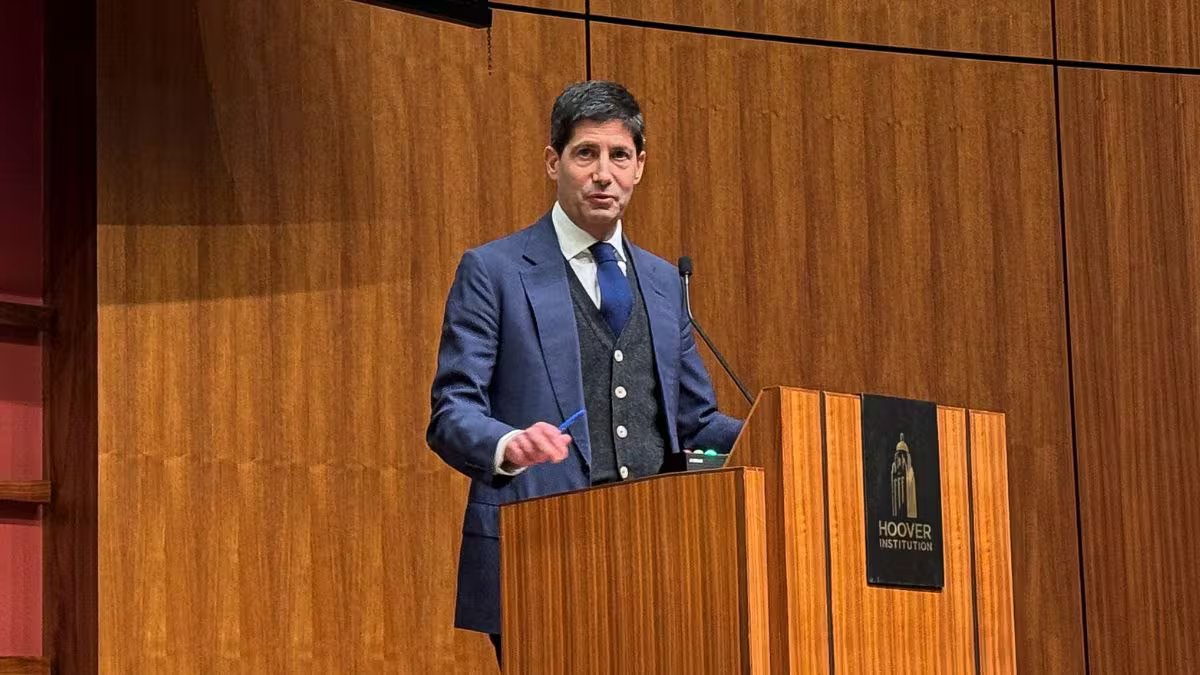
President Donald Trump has officially nominated former Federal Reserve Governor Kevin Warsh as the next US Fed chair, setting up a contentious Senate confirmation battle and raising fresh questions over the central bank’s independence and the timing of potential interest rate cuts
US President Donald Trump on Wednesday formally nominated former Federal Reserve Governor Kevin Warsh to lead the US central bank.
If confirmed by the Senate, Warsh will succeed Jerome Powell when his term as chair ends on May 15, marking a pivotal shift at the Federal Reserve at a time of sticky inflation, geopolitical tensions and mounting political pressure over interest rates.
The nomination signals Trump’s determination to install a chair more aligned with his long-standing demand for lower borrowing costs. Throughout Powell’s tenure, Trump has repeatedly criticised the Fed for not cutting rates “quickly or deeply enough,” and had indicated that backing rate reductions would be a prerequisite for any new chair.
Warsh has suggested that artificial intelligence-driven productivity gains could create room to ease monetary policy without fuelling fresh inflation — a view that may resonate with the White House but is far from universally accepted within the central bank.
Senate arithmetic and political crossfire
Warsh would fill the seat currently held by Fed Governor Stephen Miran, another Trump appointee and vocal proponent of rate cuts since joining the Board in September.
The Republican-controlled Senate Banking Committee is expected to schedule a confirmation hearing soon, and several GOP members have described Warsh as well qualified. But the path to confirmation is far from clear.
Senator Thom Tillis has vowed to block any Fed nomination while a Department of Justice investigation into Powell remains open. The probe relates to Powell’s testimony last summer about renovations to the Fed’s Washington headquarters.
Tillis has called the investigation frivolous and warned it risks eroding the Fed’s political independence — widely seen as essential to its credibility in controlling inflation. Given the committee’s narrow Republican majority, a unified Democratic bloc combined with Tillis’ opposition could stall the nomination.
The panel’s top Democrat, Senator Elizabeth Warren, launched a sharp attack on the pick. “Kevin Warsh would be nothing more than Donald Trump’s sock puppet at the Fed,” she said, raising concerns about potential political interference in monetary policy.
A tougher test inside the Fed
Even if Warsh secures Senate approval, translating Trump’s rate-cut ambitions into policy will be an uphill task.
Recent economic data show a stabilising labour market and inflation still running above the Fed’s 2 per cent target. Several policymakers have indicated they would prefer to see clearer evidence of sustained disinflation before lowering rates again.
Complicating the calculus is the five-day-old conflict in Iran, which has driven oil prices sharply higher, threatening to slow progress on inflation. Energy-led price pressures could force the Fed to tread cautiously, regardless of leadership changes.
Financial markets are currently betting against any rate cut before at least July, underscoring investor scepticism that policy easing is imminent.
Independence under scrutiny
Warsh’s nomination crystallises a broader tension between political pressure and central bank autonomy. While the White House is eager to boost growth and reduce borrowing costs, many economists caution that premature easing could reignite inflationary risks.
At stake is not just the direction of interest rates, but the perception of the Federal Reserve’s independence at a politically charged moment.
Trump’s choice leaves little doubt about his policy preference. Whether Warsh can navigate Senate politics — and then persuade fellow policymakers — will determine if that preference becomes monetary reality.
With inputs from agencies.
End of Article