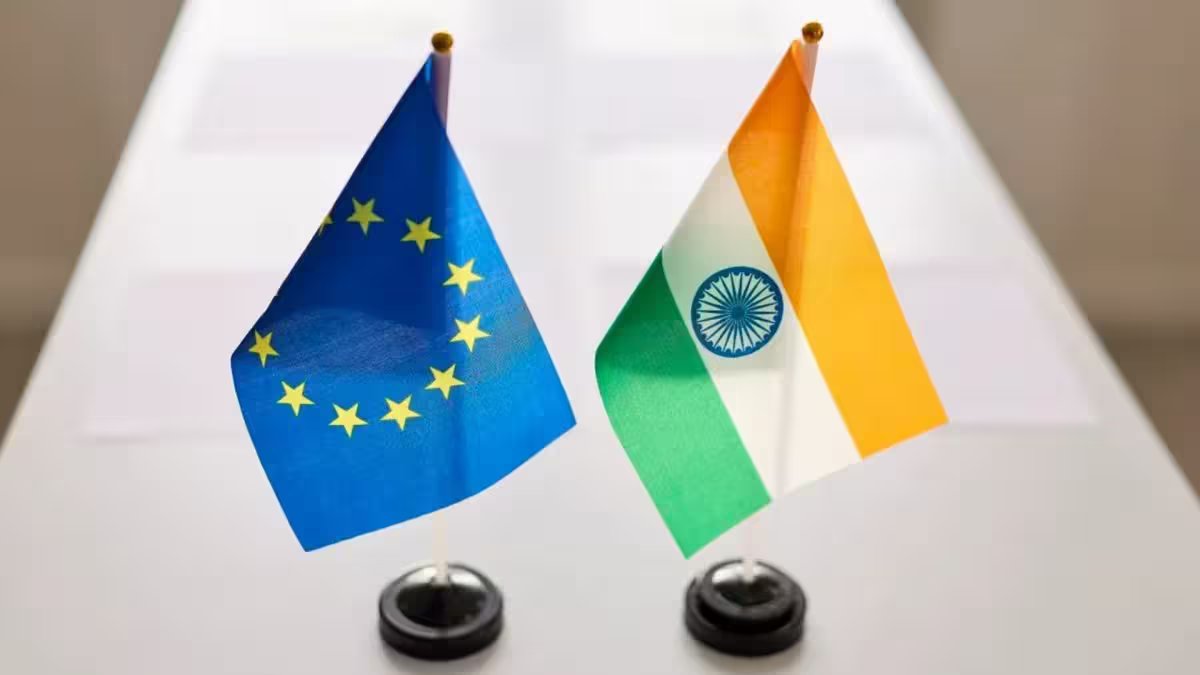
By avoiding “mixed competence” clauses, the India-EU FTA bypasses the need for ratification by all 27 member-state parliaments. This strategic legal move ensures faster implementation, focusing on exclusive EU powers to streamline a historic deal for New Delhi and Brussels
As India and the European Union move toward finalising their long-awaited
Free Trade Agreement (FTA), a crucial legal distinction known as “mixed competence” is set to fast-track the deal’s implementation.
By structuring the agreement to avoid this classification, negotiators have ensured that the pact may bypass the grueling requirement of being ratified by the individual parliaments of all 27 EU member states.
What’s the typical process?
Typically, comprehensive trade deals involving the EU face a decade-long gauntlet of bureaucratic hurdles.
If an agreement includes “mixed competence,” it means the treaty covers policy areas that fall under both the exclusive jurisdiction of the European Union and the shared national jurisdiction of its member states. In such cases, a single “no” vote from a regional or national assembly—such as the Belgian region of Wallonia’s famous 2016 block of the EU-Canada deal—can derail or indefinitely delay the entire process.
However, the India-EU FTA is being designed as an “EU-only” agreement. By focusing strictly on areas where the EU has exclusive authority—such as tariff reductions, trade barriers, and digital trade—the deal avoids the “mixed” label.
Follow this
LIVE blog for all the latest updates on the India-EU trade deal
This strategic legal architecture means that once the European Parliament and the Council of the European Union give their approval, the deal can be formally concluded and implemented without needing the stamp of approval from 27 separate capitals.
For India, this streamlined path is a significant victory. The “mixed competence” trap has historically made the EU a difficult partner for swift trade liberalization. By stripping away provisions that overlap with national laws—such as certain investment protection clauses that often trigger “mixed” status—the two sides have prioritized speed and certainty.
The move comes at a time of heightened geopolitical alignment. Both New Delhi and Brussels are eager to diversify their supply chains and
reduce economic dependence on China. An FTA is seen as the cornerstone of this new “strategic autonomy,” offering Indian exporters better access to the world’s largest single market while providing European firms a foothold in India’s rapidly expanding middle class.
While some critics argue that avoiding “mixed competence” might limit the scope of the deal in areas like investment arbitration, the trade-off is clear: a functional, ratified agreement today is worth far more than a “perfect” deal trapped in years of European domestic politics.
End of Article