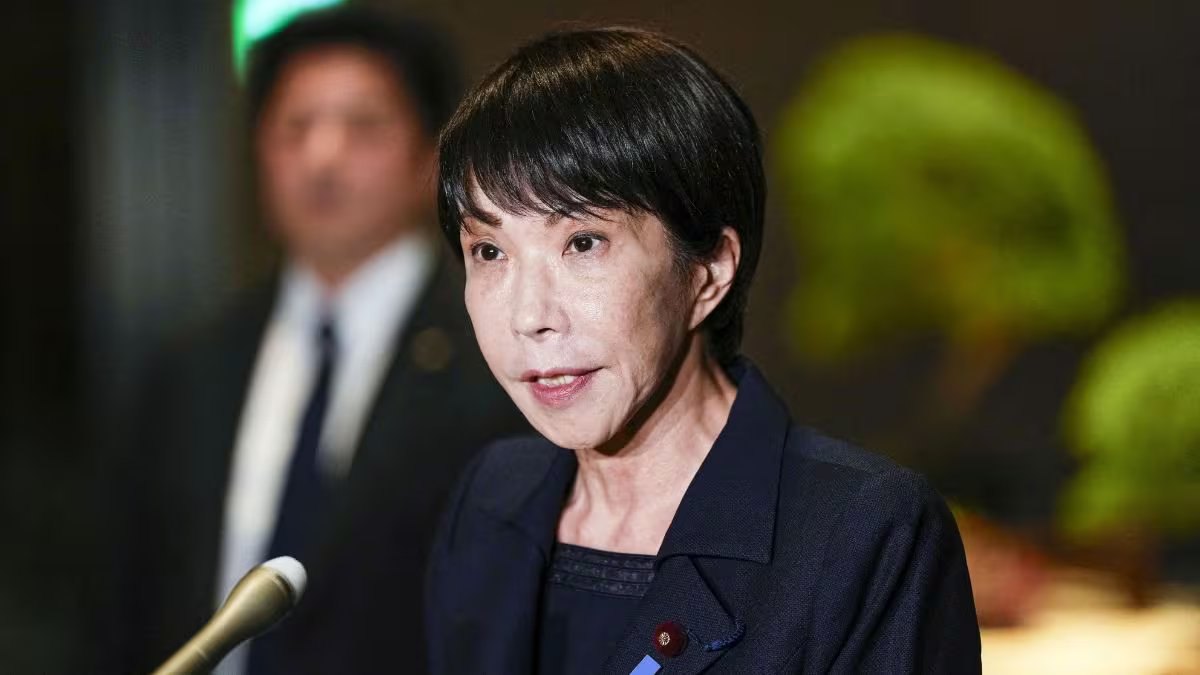
Prime Minister Sanae Takaichi has used her first post-election speech to pivot Japan towards a more assertive global stance, specifically targeting Chinese maritime activity and regional “coercion.”
In a powerful address to parliament this Thursday, Japanese Prime Minister Sanae Takaichi laid out a bold vision for a more assertive Japan. Following a resounding landslide victory in the recent lower house elections, the Prime Minister used her first major speech to signal a departure from the cautious diplomacy of the past.
Her agenda centers on a significant military buildup and a rigorous overhaul of national security and economic policies, all framed by the necessity of responding to shifting regional dynamics. With her ruling coalition now commanding a supermajority, Takaichi is positioned to push through reforms that were once considered politically sensitive.
Assessing a new era of regional tension
Takaichi did not mince words when describing the challenges facing the archipelago. She framed the current geopolitical landscape as a turning point for the nation, emphasizing that the threats are manifold and interconnected. The Prime Minister specifically highlighted the military expansion of China, its deepening partnership with Russia, and the persistent nuclear ambitions of North Korea as primary concerns.
“Japan faces its most severe and complex security environment since World War Two,” Takaichi told the gathered lawmakers. She further accused Beijing of aggressive maritime maneuvers, stating, “China has intensified its attempts to unilaterally change the status quo through force or coercion in the East China Sea and South China Sea.”
Reforming the national defence framework
To address these concerns, the Prime Minister announced an ambitious schedule to rewrite Japan’s foundational security documents by the end of the year. This includes a massive increase in military spending, aimed at reaching two percent of the national gross domestic product. This shift marks a historic move for a country with a pacifist constitution, potentially making Japan one of the world’s top military spenders.
Furthermore, Takaichi intends to relax restrictions on military exports to bolster the domestic defence industry and foster international partnerships. In a move to centralise national security, she also proposed the creation of a national intelligence council, which she would personally chair to streamline the flow of information between various government agencies.
Securing economic and energy interests
The Prime Minister’s strategy extends far beyond traditional military hardware, touching upon economic sovereignty and resource security. She proposed a new screening process for foreign investments in sensitive sectors, similar to the American CFIUS model, and promised to tighten rules on foreign land ownership. There is a clear drive to diversify supply chains and reduce reliance on any single nation for essential materials.
Takaichi specifically mentioned the importance of securing rare earth minerals near the remote island of Minamitori. On the energy front, she committed to accelerating the reactivation of nuclear reactors that have been dormant since the 2011 Fukushima disaster. Closing her speech with a call to action, she declared, “A nation that does not take on challenges has no future,” adding that “Politics that only seeks to protect cannot inspire hope.”
End of Article