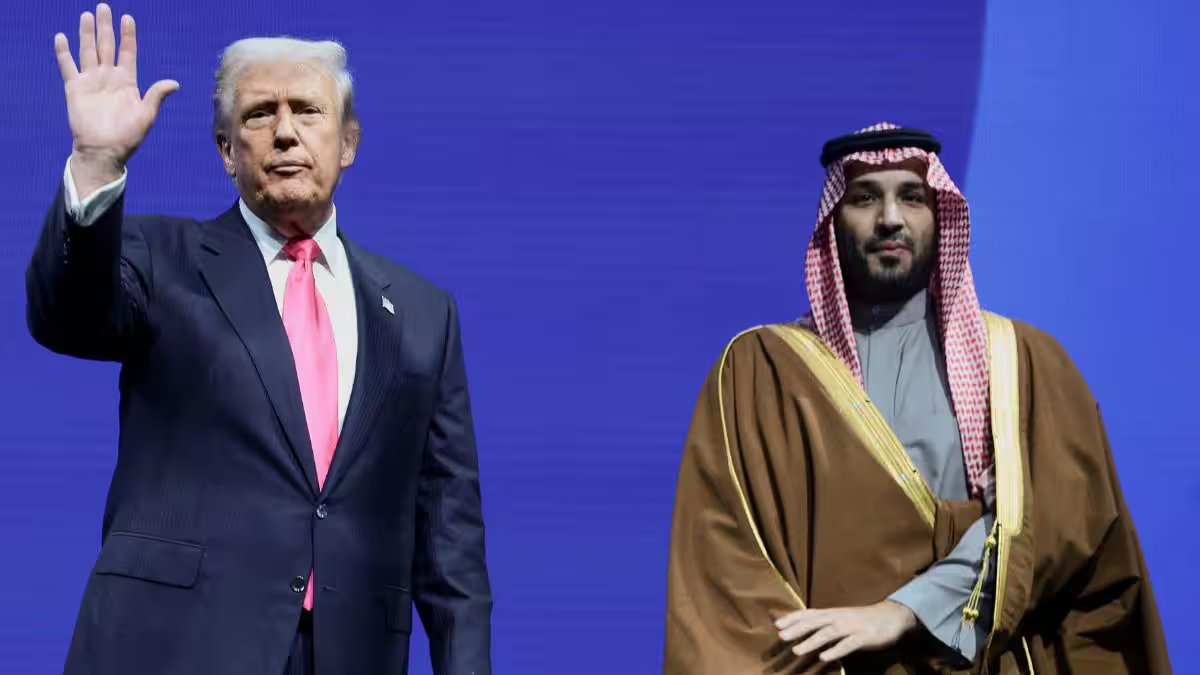
Under a proposed nuclear deal with the United States, Saudi Arabia could gain uranium‑enrichment capabilities and come closer to developing a nuclear weapon — prompting a nuclear arms race in West Asia amid surging US‑Iran tensions.
Under a proposed nuclear deal with the United States, Saudi Arabia could gain uranium‑enrichment capabilities and come closer to developing a nuclear weapon, according to congressional documents seen by the Associated Press.
Saudi Crown Prince Mohammed bin Salman, the de facto leader of the kingdom, has previously said that while he does not want to acquire nuclear weapons, “without a doubt, if Iran developed a nuclear bomb, we would follow suit as soon as possible”.
A Saudi nuclear weapon is widely expected to prompt other Arab powers, such as Qatar, to seek nuclear capabilities as well, sparking a regional arms race in West Asia.
The report has come at a time when West Asia stands on the brink of war as US President Donald Trump has deployed the most firepower to the region since the 2003 invasion of Iraq — including two aircraft carrier strike groups, hundreds of warplanes, and several thousand troops.
With negotiations between Iran and the United States appearing to have reached an impasse, Trump is expected to either order strikes soon to destroy Iran’s nuclear programme or shatter the theocratic regime or even launch an outright invasion of the country.
How the proposed deal could push Saudi Arabia toward nuclear war
Under the proposed deal, Saudi Arabia could receive centrifuges, and experts have warned that the kingdom acquiring centrifuges carries an inherent risk of moving it closer to a nuclear weapon, according to AP.
“Nuclear cooperation can be a positive mechanism for upholding nonproliferation norms and increasing transparency, but the devil is in the details,” Kelsey Davenport, the Director for Nonproliferation Policy at the Arms Control Association, told AP.
The congressional documents raise “concerns that the Trump administration has not carefully considered the proliferation risks posed by its proposed nuclear cooperation agreement with Saudi Arabia or the precedent this agreement may set”, Davenport said.
For its part, the congressional document argues that a deal with Saudi Arabia “will advance the national security interests of the United States, breaking with the failed policies of inaction and indecision that our competitors have capitalized on to disadvantage American industry and diminish the United States’ standing globally in this critical sector”. It further says that Washington seeks to strike 20 such deals with various countries.
According to the document, the US–Saudi deal would be subject to oversight by the International Atomic Energy Agency (IAEA), the United Nations’ nuclear watchdog, including oversight of the “most proliferation‑sensitive areas of potential nuclear cooperation” — a reference to nuclear fuel enrichment, fuel fabrication, and reprocessing.
“This suggests that once the bilateral safeguards agreement is in place, it will open the door for Saudi Arabia to acquire uranium‑enrichment technology or capabilities — possibly even from the United States. Even with restrictions and limits, it seems likely that Saudi Arabia will have a path to some type of uranium enrichment or access to knowledge about enrichment,” Davenport noted.
To be sure, merely acquiring fuel‑enrichment capabilities does not mean a country can build a nuclear weapon. Civilian nuclear activities, such as electricity generation, require 3–20 per cent enrichment, whereas producing a nuclear weapon requires enrichment levels of around 90 per cent.
End of Article