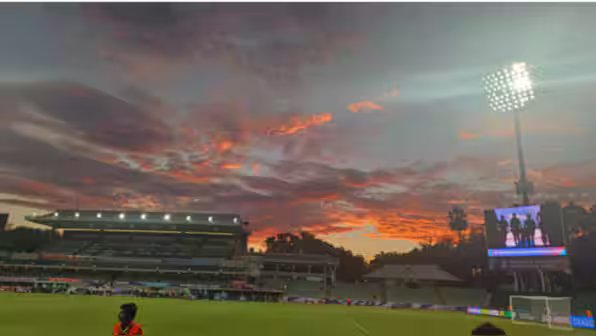
Three days earlier, on the same pitch, India had gone toe-to-toe with Vietnam and lost to a stoppage-time goal. This, against Japan, was a reminder that Asia has a very steep staircase – and India are somewhere near the bottom, craning their necks up.
Perth, Australia: Scoreboards are brutal at the best of times. At Perth Rectangular Stadium on Saturday night, the numbers just kept climbing: 1-0, 3-0, 5-0 by half-time, and eventually 11-0 to Japan. There is no way to dress that up. This wasn’t a plucky underdog story or a near miss. It was an absolute dismantling of India’s backline.
Three days earlier, on the same pitch,
India had gone toe-to-toe with Vietnam and lost to a stoppage-time goal: A punch to the gut that somehow still felt encouraging. You could argue they deserved a point. You could point to small margins, a late lapse, two somewhat equal sides. This, against Japan, was a reminder that Asia has a very steep staircase – and India are somewhere near the bottom, craning their necks up.
Japan is not in the business of consolation narratives. They are four-time Asian champions and former world champions. Meanwhile, India set up like they planned to stay compact and not concede early. That lasted four minutes. Yuzuki Yamamoto cut inside from the left and curled the opener past Panthoi after nutmegging Pyari Xaxa. Ten minutes later it was 2-0, then 3-0 by 20 minutes, 4-0 by 35, 5-0 from the penalty spot on the stroke of half-time. I’ve sat through one-sided games before, but there’s something uniquely draining about watching your team rarely cross the halfway line.
India’s body language refuses to collapse
And yet, the body language never really collapsed. Every time someone went down – winded by a shot, clipped by a late tackle, cramping after another sprint towards their own six-yard box – they got up again. Heads dropped occasionally, of course they did, but there was no sniping, no arms thrown up at each other, no one looking like they wanted out. Aveka Singh and Sarita Yumnam made their debuts in this match. Singh even managed the full baptism package: debut, hard minutes chasing shadows, and a first yellow card in a match she won’t forget for better or worse.
Japan was ruthless. Riko Ueki came on as a substitute and helped herself to a 20-minute hat-trick; Hinata Miyazawa matched that with three of her own. The rest of the goals were shared out like training-ground finishing drills. On the opposite end, Manisha Kalyan spent most of the game as a solitary blue speck near the centre circle, waiting for a ball that never arrived.
An 11–0 scoreline doesn’t leave much room for little white lies. You can’t say “on another day that goes differently” when the ball has gone into your net eleven times. What you can do, if you’re honest, is use it as a measuring stick. This is what the very top of Asia looks like. That doesn’t mean they should accept this as normal, but it does mean nobody should pretend the gap is small.
Is India’s campaign over?
It also doesn’t mean the tournament is mathematically over. Under Article 7.2.2 of the AFC Women’s Asian Cup regulations, ties in a group are first separated by a little head-to-head mini-table between the teams on the same points, before overall goal difference and goals scored come into play. In India’s case, that boils down to one simple non-negotiable: India have to beat Chinese Taipei in Sydney. If Japan also beat Vietnam and India win by two goals to top that three-way head-to-head between the rest of them, second place in Group C is still just about alive.
Anything narrower most likely leaves them third, thrown into the ‘best third-place’ lottery against Groups A and B with a goal difference currently marooned at –12. On paper, there are still pathways and clauses and appendices; in reality, the only part that matters now is simple: India must win, and preferably by a lot.
When the final whistle went at 11–0, there were no waves to the fans, the Indian players got up and disappeared down the tunnel quickly. It was hard to blame them. Some defeats you can make peace with in public. This wasn’t one of them.
For those of us who have followed this team through empty stands, COVID withdrawals and now two very different nights in Perth, “good” has become a strangely loaded word. The outing vs Vietnam was good and still hurt. Tonight, vs Japan was not good in any regard, but the fact that India are back on this stage, against this calibre of opponent, is itself a marker of progress from where they were four years ago.
The question now isn’t whether 11-0 will be remembered. It will. The question is whether, by the time they walk out for another Asian Cup, will it be a scar the players continue to carry – or would it have become the moment everyone else (hint: the administrators) finally decided the gap was too big to ignore.
For now, all roads lead to Chinese Taipei in Sydney. Whatever the math says, matchday three still feels like a character test – how many Indians still make the trip, how the team walks back onto a pitch after an 11–0 loss, and what they choose to do with a ball that, at some point, will finally cross halfway again.
End of Article