The New START treaty, the final nuclear agreement between Washington and Moscow after decades of Cold War-era arms control, is due to expire on Thursday
Russia on Tuesday warned that the world is entering a dangerous new phase as the last remaining US-Russia nuclear arms control treaty is set to expire this week, saying Moscow is prepared for a future with no limits on strategic nuclear arsenals.
The New START treaty, the final nuclear agreement between Washington and Moscow after decades of Cold War-era arms control, is due to expire on Thursday. Unless a last-minute deal is reached, the world’s two largest nuclear powers will, for the first time in more than half a century, be left without any formal constraints on their long-range strategic nuclear weapons.
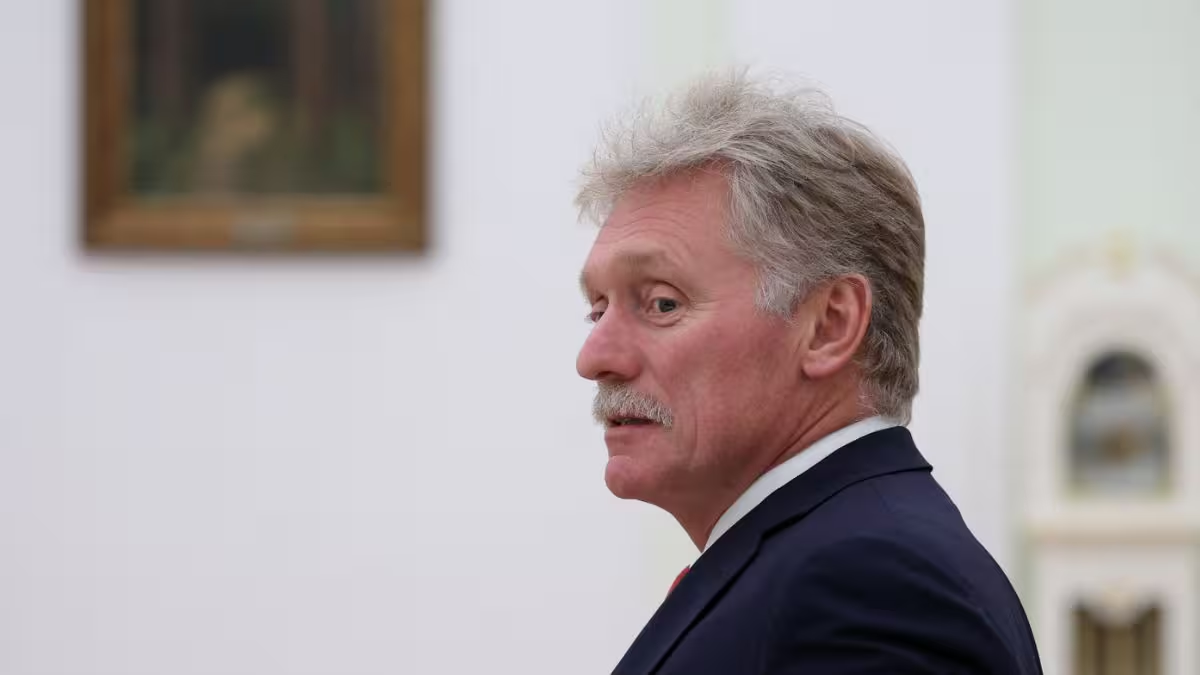
“In just a few days, the world will be in a more dangerous position than it has ever been before,” AFP quoted Kremlin spokesman Dmitry Peskov as telling journalists during a daily briefing.
He said Russia had offered a one-year extension of the treaty but had yet to receive a response from the United States.
If New START is allowed to lapse, the two sides would be left “without a fundamental document that would limit and control these arsenals,” Peskov added.
Russia’s Deputy Foreign Minister Sergei Ryabkov, who oversees arms control, said Moscow was ready for the consequences of the treaty’s expiration.
Speaking to Russian news agencies during a visit to Beijing for strategic stability consultations, Ryabkov said Russia was prepared for “a new reality” without US-Russian nuclear arms control limits.
“This is a new moment, a new reality — we are ready for it,” he said.
Signed in 2010 by then US president Barack Obama and Russian president Dmitry Medvedev, New START caps the number of deployed strategic nuclear warheads at 1,550 and includes verification and monitoring mechanisms. The treaty has been the cornerstone of nuclear arms control between the two countries over the past decade.
US President Donald Trump, who has withdrawn the United States from several international agreements, said in September that extending New START “sounds like a good idea,” but negotiations have made little progress since then.
Talks on extending the treaty have stalled in recent years amid heightened tensions over Russia’s war in Ukraine. Moscow suspended on-site inspections during the COVID-19 pandemic and later accused Washington of obstructing Russian monitoring missions on US territory.
In 2023, Russia froze its formal participation in New START but said it would continue to voluntarily observe the treaty’s limits. Since then, Moscow has tested new nuclear weapon delivery systems without nuclear warheads, while Trump has said he ordered two US nuclear submarines to move closer to Russia.
The impending expiration of New START has raised concerns among arms control experts that the collapse of the treaty could accelerate a new nuclear arms race at a time of already strained relations between the world’s leading nuclear powers.
With inputs from agencies
End of Article