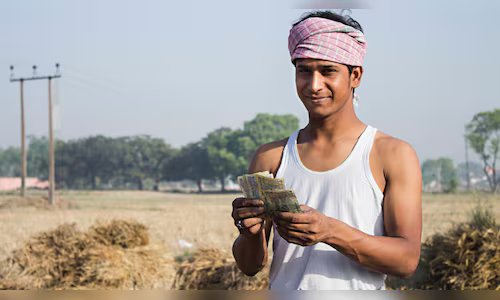
Speaking in a CNBC-TV18 discussion alongside Harish Damodaran, Agriculture Editor, The Indian Express, Chakraborty said the ongoing recovery in rural areas appears to be more durable than previous cycles, supported by higher employment and wage growth.
“Our synthetic index to track rural demand vis-à-vis urban demand is still pointing to the fact that rural is likely to outperform urban for the time being, barring the festive season data,” Chakraborty said.
“I am getting more convinced about this rural recovery being a more sustained one because it’s now affecting things positively through the employment and wages channel, and not just dependent on the relatively more volatile agricultural part,” he added.
Chakraborty explained that the positive effects of last year’s strong kharif crop and this year’s robust rabi output are spreading beyond agriculture. “Rural is somewhat of a circular economy,” he noted, with agricultural income now feeding into non-agricultural activities, resulting in better job creation and wage growth.
Rural wages, he added, are currently at an eight-year high, reflecting tighter labour markets and strong demand in rural manufacturing and construction. “We have had almost 12 million new jobs created in rural manufacturing in the last year,” Chakraborty pointed out.
The decline in demand for NREGA work, along with improved tractor and two-wheeler sales, supports the narrative of a healthier rural economy.
Echoing this view, Harish Damodaran said much of the current rural upturn is being driven by non-agricultural sectors such as construction and services in smaller towns. “The drivers very clearly are non-agriculture,” he said.
“Migration patterns are changing — instead of moving to metros, workers are finding employment closer to home, within 200 kilometres or so. Tier-3 and district-level towns are seeing more economic activity.”
Damodaran attributed this shift to ongoing investments in infrastructure, roads, and communications, which are generating new job opportunities across India’s hinterland. “This could be a more secular kind of trend, where rural wages are being supported by non-agricultural sector growth,” he added.
While the recent late rains have affected kharif output, Damodaran noted that the strong rabi harvest and improved water storage levels offer reasons for optimism. “The rains have helped recharge groundwater and fill reservoirs. We are likely to see a bumper rabi harvest ahead,” he said.
He expects the benefits of this to reflect in rural sentiment and consumption by April 2026.
For the entire discussion, watch the accompanying video
