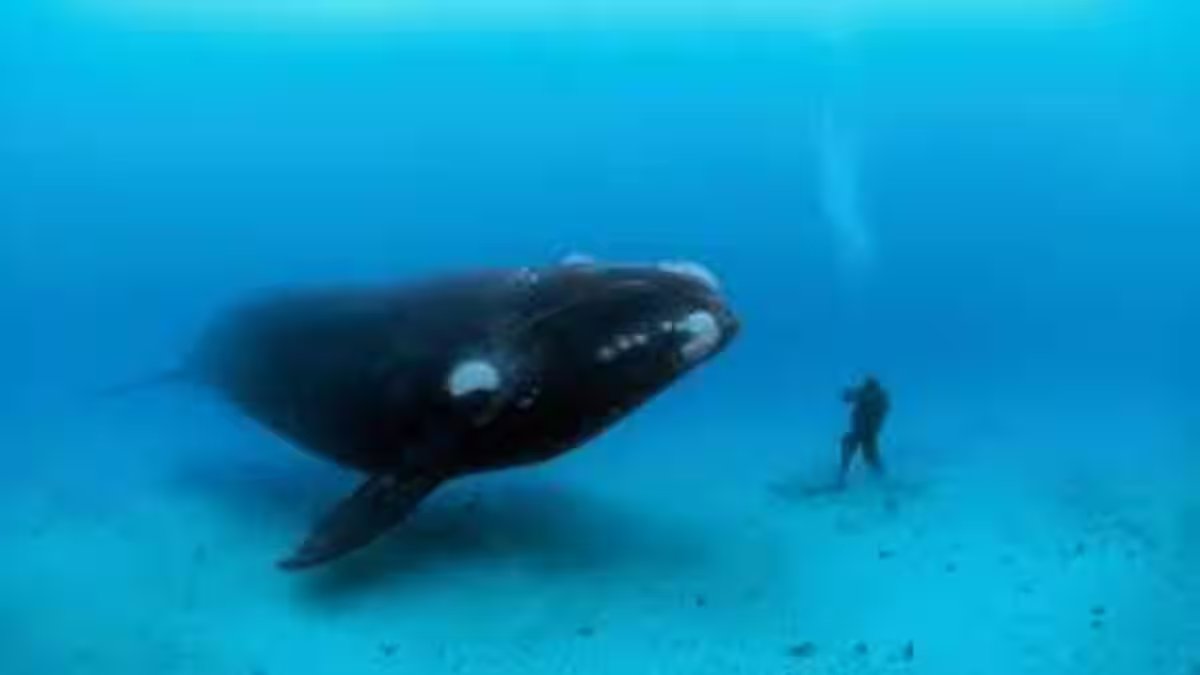
After nearly two decades, Callosity Back returned to Florida waters as a mother with her calf, joining an unusually high number of newborns this season for the critically endangered North Atlantic right whale population.
After nearly two decades, a distinctive North Atlantic right whale named Callosity Back has returned to Florida waters, this time accompanied by her newborn calf. First spotted as a calf herself in 2007 by marine researchers, the whale earned her name from unique white callosities covering her back, setting her apart from others of her kind.
The sighting marks a rare moment of hope for a species teetering on extinction, though conservationists caution that such individual successes cannot guarantee the population’s survival.
Unique whale reunited with researchers
Julie Albert, who directs the Right Whale Sighting Network through Blue World Research Institute, remembers the young Callosity Back clearly from that first encounter off Florida’s coast. The calf’s unusual markings immediately caught attention among whale watchers accustomed to spotting the rough white patches typical of North Atlantic right whales.
Albert recalls the excitement when a call came through on New Year’s Eve 2025 from the Florida Fish and Wildlife Conservation Commission reporting an unidentified mother and calf pair nearby. Racing to a beachfront hotel overlooking the water, Albert and her team confirmed it was their long lost whale. For hours they watched the pair swim together until nightfall, joined occasionally by curious hotel guests peering from the pool deck.
Record calving season brings cautious optimism
Callosity Back’s newborn represents one of twenty one calves documented so far during the 2025-2026 calving season, which runs from mid November to mid April along the southeastern US coast. This early surge surprises researchers, who counted just eleven calves at a similar point last season. In the 1980s and 1990s, seasons rarely exceeded eighteen calves total.
Several experienced mothers absent from recent counts have appeared in the calving grounds, raising hopes for even more births by spring. Phil Hamilton, senior scientist at the New England Aquarium, welcomes the numbers but stresses that annual fluctuations mean little for a population numbering only around three hundred eighty four individuals as of late 2024.
Population remains critically endangered
North Atlantic right whales once numbered in the thousands before 18th and 19th century whaling reduced them to near extinction. Despite conservation efforts, the species struggles to recover. A devastating 2017 period saw eighteen whales die within six months from vessel strikes and fishing gear entanglements, reversing population gains.
That year also claimed Joe Howlett, a whale rescuer killed while cutting lines from an entangled right whale in Canada’s Gulf of St Lawrence. Such losses underscore the fragility of the remaining population, where a few catastrophic events could spell disaster.
Ongoing threats to mothers and calves
Newborn calves arrive without blubber, making them vulnerable to cold waters if born outside traditional calving grounds from Florida to North Carolina. Callosity Back herself represents extraordinary resilience; her mother gave birth in chilly northeastern waters, far from typical habitats, with only one other such case documented.
Researchers now track whale health through extensive photo catalogues containing millions of records spanning decades. Photogrammetry techniques stitching multiple images create three dimensional models to detect pregnancies by measuring body shape changes. Hormone analysis from fecal samples provides another pregnancy indicator.
Individual tragedies highlight conservation urgency
Researchers bear heavy emotional loads monitoring known individuals. Wildlife photographer Joel Cohen captured the first images of a 2022 calf born to a whale named Pilgrim along Canaveral National Seashore. Drone footage later showed the female calf playfully rolling over her mother’s back. The juvenile returned the following year, delighting beachgoers just offshore. Tragically, nine days later, aerial surveys found her carcass off Georgia, killed by a vessel strike with skull fractures confirmed at necropsy. Cohen still processes the loss, haunted by nightmares of dead whales washing ashore.
Conservation measures show promise
No right whale deaths occurred throughout 2025, though injuries persist. In December, a male named Division appeared entangled with fishing lines cutting into his blowhole. Rescuers removed some gear, but sea lice threaten open wounds as he loses condition. Canada has implemented dynamic fishing management, pulling vessels from areas when whales appear.
Ocean gliders track whale movements relative to shipping lanes, reducing collision risks. Conservationists urge slower vessel speeds and greater sighting distances. Cohen emphasises land based whale watching through hotlines like the Right Whale Sighting Network.
Resilience fuels continued efforts
Individual stories of loss and recovery drive researchers forward. Mothers who lose calves often birth again within years, demonstrating species resilience. Cohen finds hope knowing some whales persevere despite repeated tragedies. Albert acknowledges compassion fatigue among whale watchers but remains committed.
Hamilton anticipates the final 2025-2026 calving count may exceed recent seasons. With sustained protection from shipping and fishing threats, North Atlantic right whales retain recovery potential. Each calf sighted represents not just biological success, but collective human determination to prevent extinction.
End of Article