
The latest data shows that credit card spending remains strong despite post-festive cooling. Total spends rose 11.5% year-on-year to ₹1.89 lakh crore in November, even as they fell 12% sequentially from October due to normalisation after the festive season rather than a slowdown in underlying consumption.
Importantly, the November growth rate is nearly double that of the same month last year, driven by higher credit card penetration and sustained growth in e-commerce. Online transactions now account for over 60% of total credit card spending, highlighting the continued shift towards digital consumption.
However, average spending per card has moderated. Per-card spends fell to around ₹16,470 in November from the festive peak in October, though they remain higher than a year ago.
This reflects a shift away from large festive purchases, increased use of EMI options, tighter lending norms amid rising delinquencies in unsecured loans, and greater use of UPI for small-value payments.
Also Read: Zaggle aims to issue 1 million credit cards in 5 years after Rio acquisition
Private sector banks continue to dominate credit card spending, accounting for about 74% of total spending, though their share has declined over the past year. Public sector banks have gained ground, raising their share to 20.8% through aggressive card issuance, particularly in mass-market and co-branded segments.
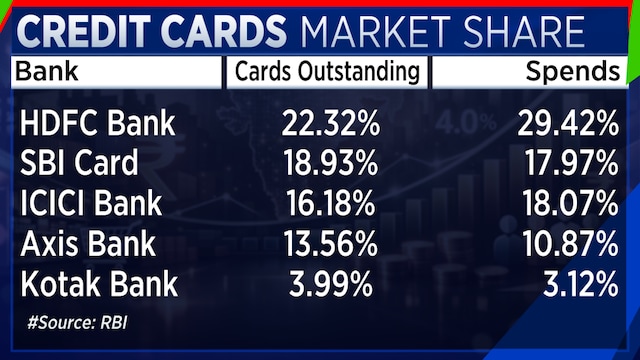
Despite these shifts, the market remains highly concentrated, with a handful of large private and public sector banks accounting for nearly 80% of total spending. HDFC Bank continues to lead in both card issuance and spending, followed by SBI Card, reflecting ongoing consolidation in India’s credit card market.
For more details, watch the accompanying video