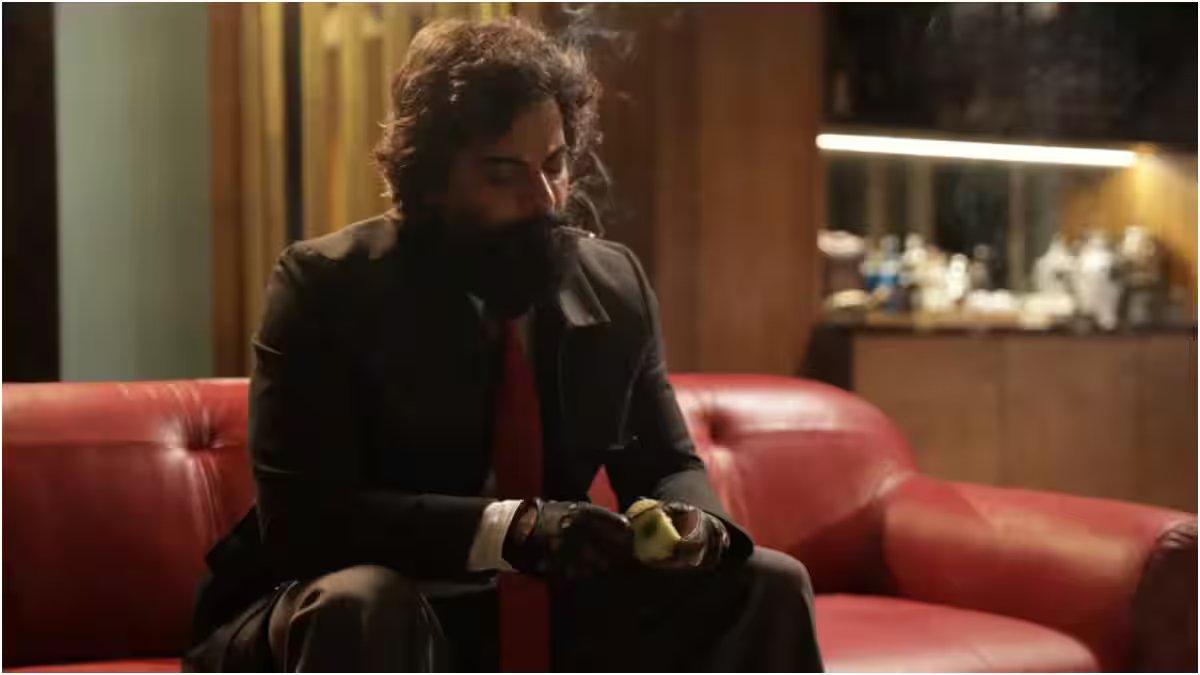
In an exclusive interview with Firstpost’s Zinia Bandyopadhyay, Rahul Bhat reveals how Anurag Kashyap shaped Kennedy’s unsettling violence, chilling silences and hypnotic music to create deep psychological tension.
Actor Rahul Bhat’s Kennedy is finally out. The neo-noir film, with its violence, is oddly delicious and terrifying at the same time. In an exclusive conversation with Firstpost’s Zinia Bandyopadhyay, Bhat offers a rare insight into the philosophy behind Kennedy’s unsettling emotional landscape, crediting director Anurag Kashyap’s unique treatment of violence for the film’s haunting impact.
Violence as Psychological Disturbance, Not Spectacle
“Anurag handles violence in a very unique way,” Bhat says while talking to us. “In Kennedy, violence isn’t externalised like in mainstream films. It’s internal, almost cellular. You see it in the eyes, the breath patterns, the refusal to blink. It’s deeply psychological.”
Instead of loud confrontations and graphic imagery, the film chooses restraint. According to Bhat, this deliberate underplaying makes the violence linger far longer in the audience’s mind.
“It’s unsettling because it’s restrained. The audience begins to wonder what Kennedy is capable of, and that ambiguity is far more disturbing than overt brutality,” he explains.
This conscious departure from performative aggression turns violence into something atmospheric rather than visual, a simmering presence that refuses to release its grip.
Music as a Second Nervous System
Equally vital to the film’s emotional architecture is its evocative score, composed by Konrad. Bhat describes the music not as background accompaniment, but as an invisible character guiding the viewer’s unease.
“The music isn’t ornamental. It functions almost like a second nervous system,” he says. “There are moments of complete silence, something we hardly see in Hindi cinema anymore, and then there are moments where the score becomes hypnotic, almost seductive.”
This deliberate contrast creates tension, destabilising the audience’s emotional footing. “The music doesn’t tell you how to feel. It unsettles you. In many scenes, where Kennedy remains silent, the music expresses what he suppresses.”
The careful balance between silence and sound allows the character’s inner collapse to echo through the film’s sonic landscape. “Because the performance is contained, the music can breathe, and vice versa. The violence becomes atmospheric rather than physical, and the music mirrors his inward disintegration.”
The Chilling Family Massacre Scene
One of the film’s most disturbing moments involves Kennedy wiping out an entire family- a sequence that leaves viewers deeply unsettled.
Asked about approaching this scene, Bhat explains that the emotional flatness was entirely intentional.
“That sequence is very disturbing. The kills are not staged for effect. They are procedurally efficient, emotionally flat. There’s no operatic rage, no screaming. Kennedy’s violence is routine, and that numbness is far more frightening than fury.”
From an acting perspective, the approach demanded mechanical precision rather than emotional expression.
“You’re not enjoying the act, and you’re not reacting to it either. It’s almost clinical. The aim was not to make the audience feel adrenaline, but discomfort, and I think it achieves that completely,” Bhat explains.
Redefining Darkness in Hindi Cinema
With Kennedy, Rahul Bhat and Anurag Kashyap push Hindi cinema deeper into psychological noir territory, replacing spectacle with silence, chaos with restraint, and overt brutality with lingering dread.
End of Article