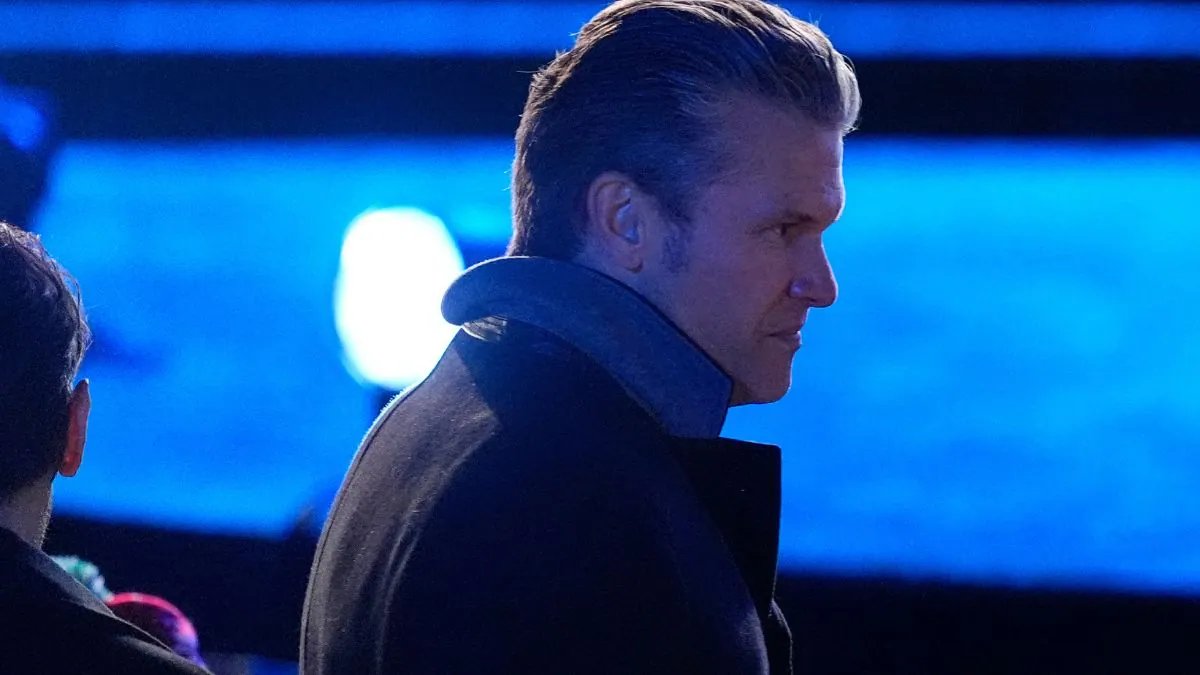
US Defence Secretary Pete Hegseth faces mounting pressure over alleged Caribbean war crimes and mishandling of classified intelligence with bipartisan calls for resignation growing amid ongoing Pentagon controversies and scrutiny of his leadership.
The United States defence secretary Pete Hegseth is confronting the most severe crisis of his tenure as two separates but overlapping controversies engulf the Pentagon.
At the center are allegations of war crimes linked to the Trump administration’s Caribbean campaign against suspected drug smugglers and a scathing inspector general report accusing Hegseth of mishandling classified intelligence via a personal messaging app. Despite bipartisan calls for his resignation, Hegseth has remained defiant, with the unwavering backing of President Donald Trump.
The Caribbean strikes, which have killed at least 87 people across 22 attacks since September, were initially justified by Trump as critical to countering fentanyl trafficking. The administration claimed each destroyed vessel saves 25,000 American lives, a figure widely criticised by fact-checkers and policy experts as implausible, given that most fentanyl enters the United States overland from Mexico rather than by boat from Venezuela.
The campaign’s legality has come under intense scrutiny after reports emerged that two men who survived a September 2 strike were deliberately killed in a follow-up “double-tap” attack. While Hegseth initially dismissed these reports as fabricated, he later confirmed the basic facts, citing the “fog of war.”
Democrats have seized on these revelations to demand Hegseth’s removal. Senator Patty Murray, vice-chair of the Senate appropriations committee, labelled the defence secretary “unfit for the role” following a bipartisan briefing. The New Democrat Coalition described him as “incompetent, reckless, and a threat to the lives of the men and women who serve in the armed forces,” accusing him of repeatedly lying, deflecting, and scapegoating subordinates.
Even experienced counter-narcotics officials have questioned the strategic logic of the Caribbean campaign. Jake Braun, a former acting principal deputy national cyber director, noted that the administration was diverting military resources 2,500 miles from the primary drug trafficking route in Mexico. Emily Tripp, executive director of Airwars, highlighted the lack of transparency regarding the decision to strike survivors, questioning why humanitarian alternatives were not considered.
The Pentagon has struggled to clarify the chain of command for the strikes. Conflicting statements from the White House and Hegseth muddled who authorised the follow-up attack. President Trump later claimed ignorance of operational details, even suggesting he would not have sanctioned the second strike.
Hegseth’s troubles intensified with the release of a Department of Defence inspector general report, which concluded he violated Pentagon policies by sharing pre-operational intelligence for Yemen airstrikes via the Signal app, including precise aircraft types, strike times, and targets.
The transmission of secret information on an unclassified personal device not only violated operational security but also federal record-keeping requirements. Senator Jack Reed emphasised that such disclosures could have endangered American pilots, while experts noted the level of detail was typically classified to prevent mission compromise. Hegseth, however, claimed on social media that he was “totally exonerated,” dismissing the findings.
While Democrats have led calls for accountability, some Republicans have also voiced concerns. Senator Rand Paul accused Hegseth of lying or incompetence over the September boat attacks, and Representative Don Bacon indicated the defence secretary might not be fit to lead the Pentagon. Internally, the department has been described as dysfunctional, with leaks and internal purges creating a chaotic atmosphere that further questions Hegseth’s managerial competence.
Despite the mounting crises, Trump has continued to publicly back Hegseth, and the Republican-controlled Senate reduces the likelihood of immediate consequences. Meanwhile, the administration has defended the Caribbean campaign as targeting vessels linked to designated terrorist organisations, though no public evidence has substantiated these claims. Legal experts have disputed the framing of the strikes as part of an armed conflict, underscoring the controversial and potentially unlawful nature of the operations.
With fresh attacks continuing, Hegseth appears undeterred. At a recent cabinet meeting, he declared that the military had “only just begun striking narco-boats and putting narco-terrorists at the bottom of the ocean,” signalling a continuation of the controversial campaign despite mounting political and operational scrutiny.
With inputs from agencies
End of Article