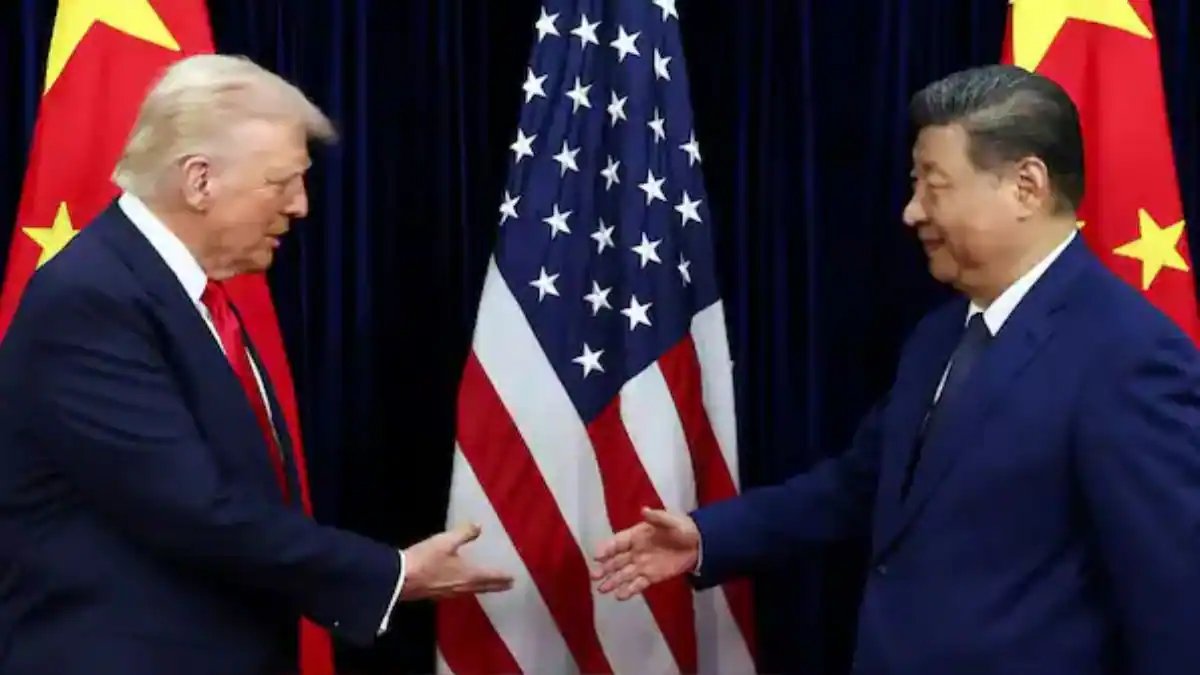
The US Department of Défense has released its 2026 National Defence Strategy, outlining changes to Washington’s military priorities that identifies China no longer regarded as the Pentagon’s top security threat and indicating “more limited” support for traditional allies.
The document revises earlier assumptions about US global defence responsibilities and places greater emphasis on homeland protection, adjusting Washington’s approach to overseas military engagement. “As US forces focus on homeland defence and the Indo-Pacific, our allies and partners elsewhere will take primary responsibility for their own defence with critical but more limited support from American forces,” the strategy said.
China was depicted as the most consequential challenge to US security in the 2018 and 2022 iterations, ranking at the top of Washington’s threat hierarchy. The updated document, however, relocates China to a secondary position, placing primary strategic weight on homeland security and deterrence in the Americas, while retaining deterrence of China in the Indo-Pacific as an important but not dominant concern.
The change reflects a broader recalibration of the US defence posture, driven by a desire to balance domestic security priorities with external commitments. The strategy underscores a focus on defending American citizens and securing critical economic and military access across key terrain stretching from the Arctic to South America, signalling a more selective approach to global involvement.
A strategic downgrade: The new threat matrix
For years, the US defence establishment focused largely on the Indo-Pacific, viewing Beijing’s military modernisation as the greatest threat to global stability. The 2026 NDS recalibrates this stance, arguing that prolonged “hyper-fixation” on a single competitor has left the US exposed to domestic vulnerabilities, including economic instability, border security challenges and erosion of the industrial base.
The strategy suggests Washington will no longer seek to match China ship-for-ship in contested waters such as the South China Sea. Instead, it prioritises internal strength and homeland defence, signalling a move away from the expectation that the US must police every region. The analytical shift reflects a judgement that the costs of sustained containment outweigh the direct benefits, favouring a framework of managed competition rather than confrontational rivalry.
The end of collective security? Allies on notice
The most contentious element of the 2026 strategy is its message to US allies in Europe and Asia. The Pentagon makes clear that future engagement will be characterised by “limited support” rather than automatic protection, placing greater responsibility for regional security on partner nations.
This shift is likely to unsettle allies already questioning American reliability. In East Asia, countries such as Japan and South Korea may face renewed pressure to bolster independent deterrence capabilities. European Nato members, meanwhile, could interpret the recalibration as a signal to accelerate defence spending and modernisation amid changing threat perceptions. For Taiwan, the language suggests a more transactional approach, where support is weighed against US domestic priorities.
Experts note the repositioning is not merely rhetorical. The strategy’s burden-sharing provisions outline clearer expectations for allies to assume primary responsibility for local defence, reflecting a broader trend toward self-reliance. Analysts caution this could create short-term security gaps if partners are unable to adjust rapidly.
At the same time, the document rejects isolationism, stressing that the United States will continue working with partners through “focused engagement” rather than expansive security guarantees. The reduced emphasis on blanket commitments nevertheless marks a tangible recalibration of US global strategy.
China’s evolving role and global strategic context
Despite the downgrade, the strategy does not dismiss China’s significance. It acknowledges Beijing’s military build-up as substantial and advocates deterring China in the Indo-Pacific “through strength, not confrontation,” aiming to maintain balance without provoking escalation.
The framing departs from the harsher rhetoric of earlier strategies, suggesting an effort to blend deterrence with diplomatic engagement as Washington prioritises homeland and hemispheric defence interests.
The broader implications of the 2026 strategy are expected to unfold as allies and rivals respond to Washington’s revised priorities. For partners, the shift may prompt policy recalibrations and defence investments. For China, it could open space for engagement within a less confrontational strategic framework. Either way, the updated doctrine signals a period of transition in US security policy.
‘Restore military dominance’
The 2026 NDS also includes no mention of the dangers of climate change – which Biden’s administration had identified as an “emerging threat.”
Like Trump’s national security strategy, which was released last month, the NDS elevates Latin America to the top of the US agenda.
The Pentagon “will restore American military dominance in the Western Hemisphere. We will use it to protect our Homeland and our access to key terrain throughout the region,” the NDS said.
The document called that the “Trump Corollary to the Monroe Doctrine,” a reference to the declaration two centuries ago by the then-young United States that Latin America was off limits to rival powers.
Since returning to office last year, Trump has repeatedly employed the US military in Latin America, ordering a shocking raid that captured Venezuelan leader Nicolas Maduro and his wife, as well as strikes on more than 30 alleged drug-smuggling boats that have killed more than 100 people.
Trump’s administration has provided no definitive evidence that the sunken vessels were involved in drug trafficking, and international law experts and rights groups say the strikes likely amount to extrajudicial killings as they have apparently targeted civilians who do not pose an immediate threat to the United States.
End of Article


