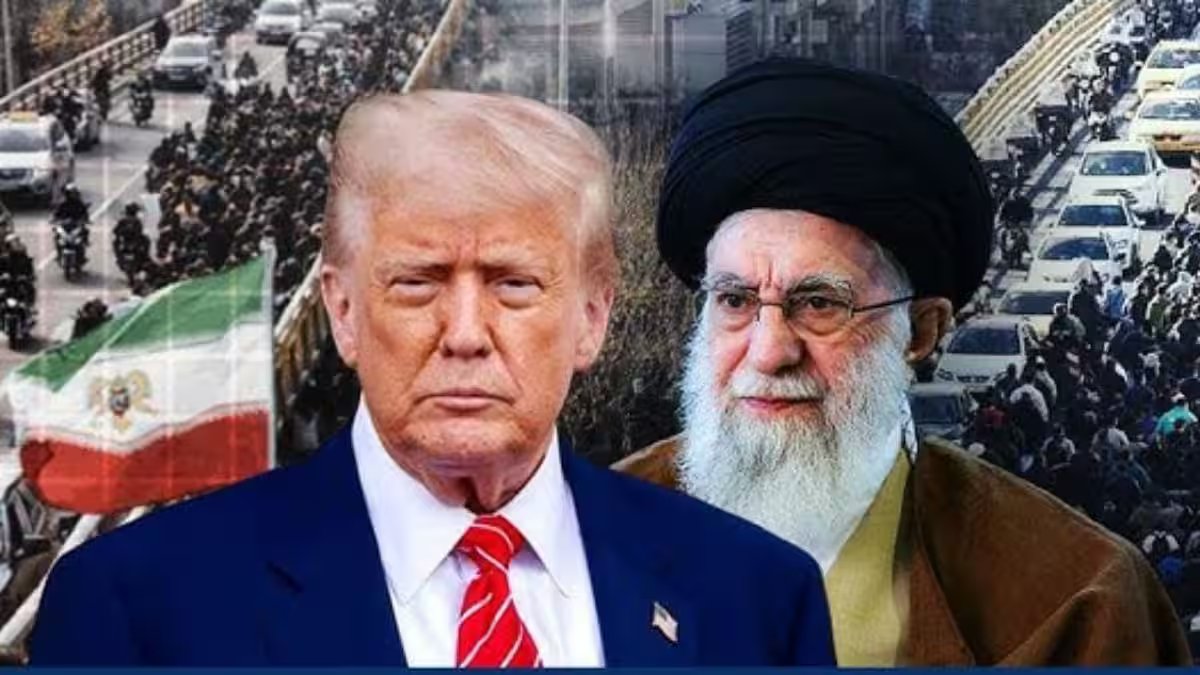
The top US and Israeli generals held talks at the Pentagon on Friday as tensions with Iran intensify, with Tehran warning that any American attack would trigger a regional war amid rising military deployments in the West Asia.
Senior US and Israeli military leaders met at the Pentagon on Friday as tensions with Iran continued to escalate, two US officials told Reuters on Sunday. The officials spoke on condition of anonymity as the discussions were held behind closed doors.
The talks involved US General Dan Caine, Chairman of the Joint Chiefs of Staff, and Eyal Zamir, Chief of Staff of the Israeli armed forces. No details of the meeting were disclosed and the encounter had not been reported previously.
The meeting comes as Washington has strengthened its military posture in the West Asia, expanding its naval deployment and reinforcing air defences following repeated threats by President Donald Trump against Iran. The moves are intended to pressure Tehran into negotiations, but Iranian leaders warned on Sunday that any US attack would trigger a wider regional conflict.
Iran’s Supreme Leader Ayatollah Ali Khamenei escalated the rhetoric further, saying that a US strike would ignite a “regional war” across the West Asia. His comments followed Trump’s warnings of possible military action against the Islamic Republic, linked to Tehran’s violent crackdown on recent nationwide protests.
The remarks by the 86-year-old Khamenei mark his most explicit warning so far and come amid the deployment of the US aircraft carrier USS Abraham Lincoln and accompanying warships to the Arabian Sea, ordered after the unrest in Iran turned deadly.
Despite the escalating rhetoric, it remains uncertain whether Trump will resort to military force. He has repeatedly said Iran is interested in talks and has also pointed to its nuclear programme as a key issue he wants addressed.
Khamenei, however, described the mass protests as a “coup,” reinforcing the government’s hardline stance as reports suggest tens of thousands of people have been detained since demonstrations began. Sedition charges in Iran can carry the death penalty, raising renewed concerns over potential mass executions — an outcome Trump has previously described as unacceptable.
Iran has also announced plans to conduct live-fire military exercises on Sunday and Monday in the Strait of Hormuz, a critical global oil transit route. The US military’s Central Command has warned against any actions that could threaten American vessels or aircraft, or disrupt commercial shipping in the area.
Khamenei warns US
Khamenei spoke to a crowd at his compound in Tehran as Iran marked the start of a days long commemoration of the country’s 1979 Islamic Revolution. He, at one point, described the U.S. as being interested in its oil, natural gas and other mineral resources, saying that they wanted to “seize this country, just as they controlled it before.”
“The Americans must be aware that if they wage a war this time, it will be a regional war,” he said.
The supreme leader added that: “We are not the instigators, we are not going to be unfair to anyone, we don’t plan to attack any country. But if anyone shows greed and wants to attack or harass, the Iranian nation will deal a heavy blow to them.”
Asked about the warning, Trump on Sunday told reporters that the U.S. “has the biggest, most powerful ships in the world over there, very close, a couple of days, and hopefully we’ll make a deal. If we don’t make a deal, then we’ll find out whether or not he was right.”
Khamenei also hardened his position on the demonstrations after earlier acknowledging some people had legitimate economic grievances that sparked their protests. The demonstrations began Dec. 28, initially over the collapse of Iran’s rial currency. It soon grew into a direct challenge to Khamenei’s rule.
With inputs from agencies
End of Article