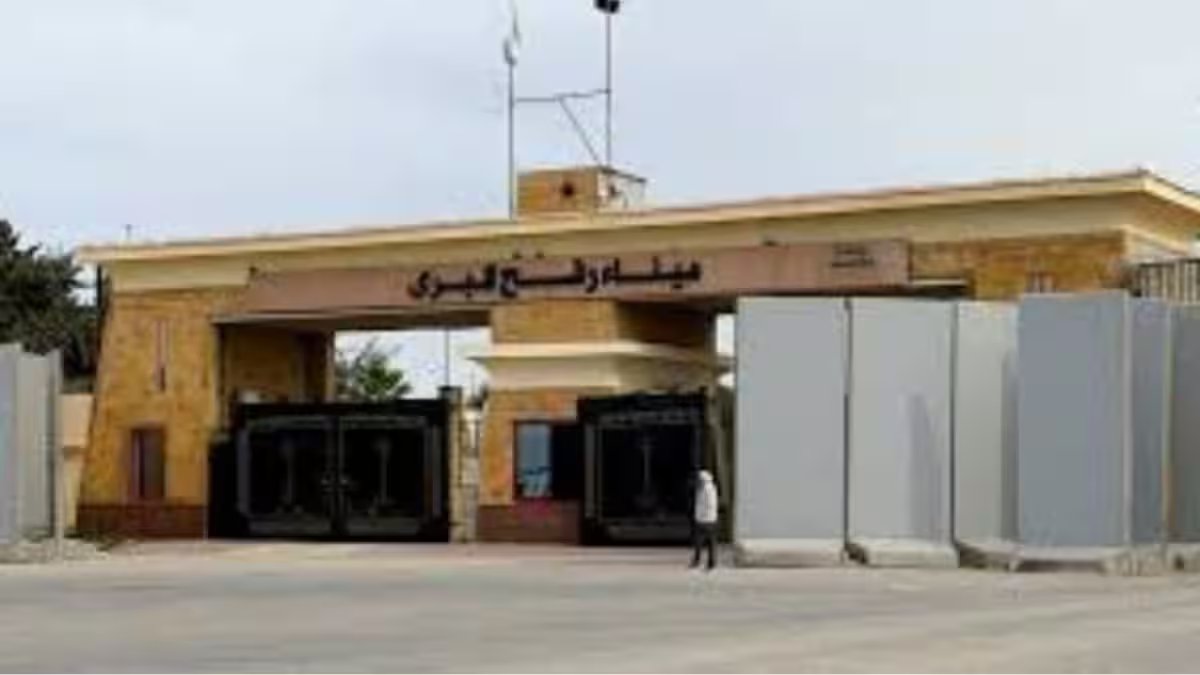
After months of closure, Gaza’s Rafah crossing with Egypt has reopened, raising hopes for those seeking medical treatment and family reunions. Yet delays, strict checks, and limited approvals have meant that only a handful of Palestinians have crossed so far, exposing the continuing hardships under the fragile ceasefire.
After months of closure and uncertainty, Gaza’s Rafah crossing briefly came alive again this week as long queues of Palestinians gathered on both sides of the border with Egypt, hoping at last to move across. For many, it was a chance to return home after medical treatment or to seek crucial care unavailable inside the war-torn territory. Yet, the long-awaited reopening brought more frustration than relief, as bureaucratic delays and disagreements turned what was meant to be a modest breakthrough into another day of waiting.
The first crossings and early delays
On Monday, Rafah reopened for limited passage under the new ceasefire agreement brokered in October. Dozens of hopeful travellers assembled, but only a handful were able to cross after hours of negotiations. The process stretched to more than ten hours, with just a small group of medical evacuees and returnees allowed to move in each direction. Officials had earlier suggested that around fifty people would cross both ways, but the outcome fell far short.
Painful patience and personal stories
Among those waiting was Iman Rashwan in Khan Younis, who spent hours anticipating the arrival of her mother and sister returning from medical treatment in Egypt. She expressed hope that others would soon be reunited with their relatives too, praying that normal life might eventually resume. Her story reflected the emotions of countless families stranded between border limits and political uncertainties.
The evacuation process under strain
By Tuesday morning, attention shifted to a Red Crescent hospital in Khan Younis, where World Health Organisation staff coordinated with Palestinian medical teams to transport patients toward the border. Red Crescent spokesman Raed al Nims said sixteen patients suffering from chronic diseases or injuries were brought along with their families to await crossing. The number was far below the forty five originally approved for evacuation that day.
Slow progress under political scrutiny
Officials on both sides suggested that crossings could gradually increase once the screening system stabilised. However, delays triggered by tight vetting procedures and disagreements over luggage restrictions hindered progress. Reports indicated that arguments arose when returnees attempted to bring back personal belongings, leading to last-minute negotiations. One woman, Rotana Al Regeb, said travellers were forced to leave nearly everything behind, taking only one small bag per person.
A symbolic beginning amid immense need
So far, the movement through Rafah remains largely symbolic. Israeli and Egyptian authorities agreed that around fifty medical evacuees and a similar number of returning Palestinians would be processed initially. However, with Gaza’s Health Ministry estimating around twenty thousand people urgently needing treatment abroad, this pace barely scratches the surface. The WHO stated that over ten thousand patients have left Gaza for care since the start of the conflict, but the numbers have dwindled dramatically in recent months.
Security fears and regional politics
The question of who controls the Rafah crossing remains a sensitive one. Israel and Egypt continue to coordinate lists of travellers, each side wary of potential misuse of the crossing. Egyptian officials have repeatedly insisted that Rafah must stay open both ways to prevent any attempts at forced displacement. Israeli Prime Minister Benjamin Netanyahu, meanwhile, maintained that those who wish to leave Gaza will eventually be permitted to do so under proper checks.
Continuing violence despite ceasefire
Despite the fragile truce, violence has not entirely subsided. On Tuesday morning, Nasser Hospital in Khan Younis reported that nineteen-year-old Ahmed Abdel Al was shot dead by Israeli forces in the southern part of the city, an area outside direct military control. His death added to the grim toll of more than five hundred Palestinians killed since the start of the ceasefire in October, according to Gaza’s Health Ministry. The ministry also reports over seventy one thousand eight hundred deaths since the war began, with casualties including both civilians and fighters.
End of Article