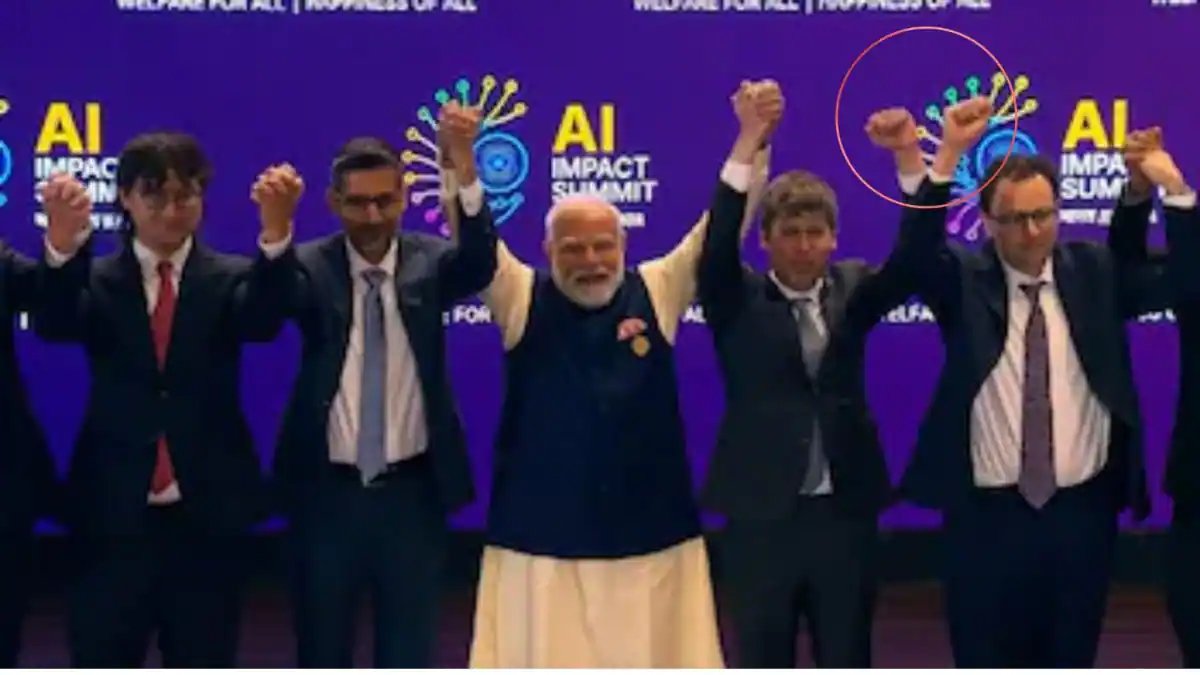
Over 85 countries have adopted the Delhi Declaration as the summit concluded, supporting India’s vision of “AI for All.”
The Ministry of External Affairs on Saturday said more than 85 countries and international organisations have adopted the Delhi Declaration on AI Impact. Guided by the summit’s theme — welfare for all, happiness for all — participating members committed to advancing seven core pillars, or “chakras”, of artificial intelligence development.
The AI Impact Summit, held from February 16 to 21 at Bharat Mandapam, concluded with the adoption of the Declaration after six days of deliberations, demonstrations and international dialogue. Delegates from over 85 countries and organisations took part, marking one of the broadest multilateral engagements on artificial intelligence.
The Declaration presents AI as a public good aligned with human welfare and shared prosperity. Rooted in the principle “Sarvjan Hitaye, Sarvjan Sukhaye”, it describes AI as a defining force of the century and calls for global cooperation across governments, industry, academia and civil society.
7 pillars of AI cooperation
The framework is structured around seven pillars: human capital development, social empowerment, trust and security, energy efficiency, AI for science, democratisation of AI resources, and the use of AI for economic growth and social good.
Rather than proposing binding regulations, the Declaration emphasises voluntary cooperation while respecting national sovereignty. It highlights the need for equitable access to computing power, infrastructure and data to support inclusive AI adoption worldwide.
Focus on access, trust and sustainability
Participants underscored AI’s potential across healthcare, agriculture, education, climate resilience and public service delivery. Open-source models and shared platforms were identified as key tools to expand access and scalability.
The Declaration also stresses the importance of public trust, energy-efficient systems and resilient infrastructure. It calls for greater investment in skills, reskilling and scientific collaboration to ensure that AI benefits are widely shared.
Broad global participation
The Declaration has been endorsed by a wide coalition of countries and international organisations across regions, reflecting a shared approach to AI governance based on cooperation and human well-being.
Union IT Minister Ashwini Vaishnaw said on X that dozens of countries and organisations supported the Declaration, describing it as aligned with Prime Minister Narendra Modi’s human-centric vision of artificial intelligence.
The Declaration places particular emphasis on democratising AI resources by making them accessible and affordable so that all countries can develop and deploy AI for public benefit.
End of Article