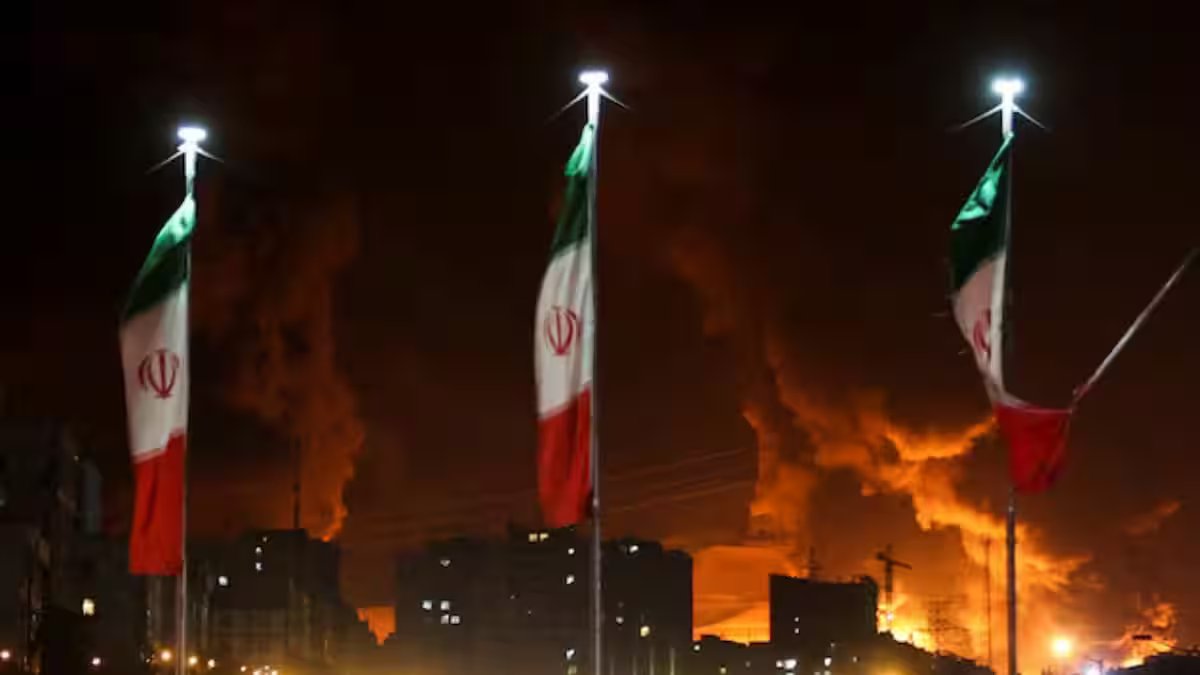
Key members of the OPEC+ oil cartel announced a greater-than-expected increase to production quotas on Sunday following US and Israeli strikes on Iran that triggered retaliation by Tehran across the West Asia.
OPEC+ surprised markets on Sunday by announcing a larger-than-expected increase in oil production, raising quotas by 206,000 barrels per day starting in April. The decision comes amid escalating tensions in the West Asia following US and Israeli strikes on Iran that prompted retaliatory missile attacks across the region.
The move by the eight-member “V8” group including heavyweights Saudi Arabia and Russia, as well as Gulf producers Kuwait, Oman, Iraq, and the UAE was framed as a response to steady market fundamentals and global economic growth, rather than the unfolding conflict. Analysts, however, warned that geopolitical risks, particularly the potential closure of the Strait of Hormuz, could undermine the impact of the production boost.
“The additional output is modest in comparison to the scale of disruption possible if the strait remains closed,” said Jorge Leon, energy economist at Rystad Energy. Nearly a quarter of the world’s seaborne oil passes through the Hormuz, and Iranian authorities have already signalled restrictions. Footage aired on Iranian state TV showed a tanker burning in the strait after attempting passage, highlighting the severity of the threat.
Leon pointed to the possibility that Iran could target the Strait of Hormuz, a key waterway through which around nearly a quarter of the world’s seaborne oil supplies, in retaliation.
Iran’s Revolutionary Guards have contacted ships to announce the strait was closed. On Sunday, Iranian state TV said an oil tanker in the strait was struck while attempting to “illegally” pass through and was sinking, showing footage of a burning tanker at sea.
“If oil cannot move through Hormuz, an extra 206,000 barrels per day does very little to ease the market,” Leon said, arguing that “logistics and transit risk matter more than production targets right now”. The OPEC+ move “is unlikely to calm markets”, he said.
“Prices will respond to developments in the Gulf and the status of shipping flows, not to a relatively small increase in output.” ‘Nightmare scenario ‘Besides Russia and Saudi Arabia, the V8 group within OPEC+ includes Kuwait, Oman, Iraq and the United Arab Emirates, all of which were targeted by Iranian attacks for a second day on Sunday.
Algeria and Kazakhstan are also part of the group. Another analyst, Stephen Innes, managing partner at SPI Asset Management, said that, with the fear of incoming missiles in the Strait of Hormuz, insurers cancelling contracts for vessels wanting to go through there, and jammed electronic signalling in the Gulf region, commercial shippers were scared. They are “starting to act as if the route is compromised”, he said.
“A full closure for more than a few days is the nightmare scenario,” he said. A blockage of the strait could mean oil prices leaping from around $72 before the war to $120 to $150 a barrel when trading starts on Monday, he said, based on industry estimates.
He and other analysts pointed to land pipelines Saudi Arabia and the UAE could use to get around shipping through the strait, but noted that would still leave a shortfall of some eight million to 10 million bpd on the market. “Those are meaningful pressure valves, but they are not a replacement for the full seaborne flow,” Innes said.
While higher prices might seem a boon for OPEC+ countries, it in fact carries the risk of increasing competition from producers outside the cartel, such as the United States, Canada and Brazil.
Kpler analyst Homayoun Falakshahi told AFP that the cartel might “prefer prices of $80-90, but around $70 per barrel is the ideal price level” to cut the incentive for more investment by those rival producers. He added that Russian production has been on a downward trend since November, leaving analysts to think that it was at its maximum output.
Leon, of Rystad Energy, said the only OPEC+ members “who can really boost their production are Saudi Arabia, the United Arab Emirates and, to a lesser degree, Kuwait and Iraq.”
With inputs from agencies
End of Article



Pretty! This has been a really wonderful post. Many thanks for providing these details.
Awesome! Its genuinely remarkable post, I have got much clear idea regarding from this post