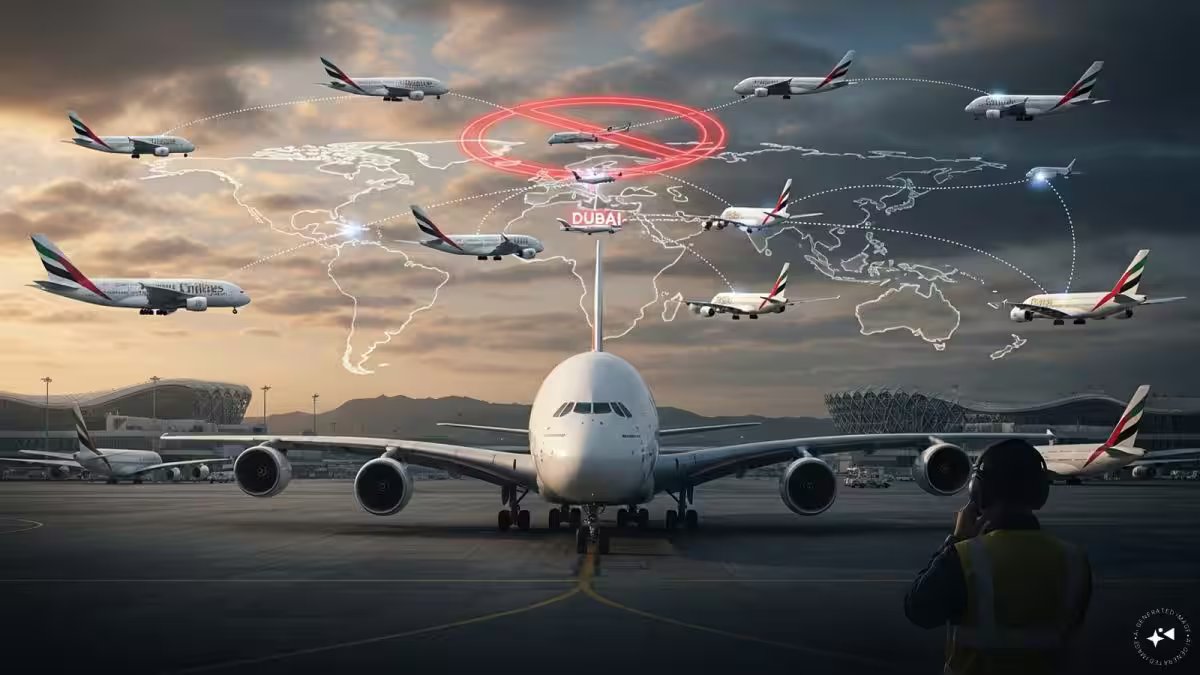
Of the 116 double-decker jets that Emirates operates, only about a third are back home in Dubai. The rest of the fleet is parked in places as far-flung as China, Australia and across dozens of other airports around the world, according to Flightradar24
With much of the West Asia’s airspace still shut to civilian traffic, Emirates is grappling with a scattered fleet of Airbus SE A380 superjumbos, highlighting the turmoil caused by the conflict in Iran and the operational hurdles involved in restoring normal schedules.
According to a Bloomberg report, citing flight-tracking data from Flightradar24, of the 116 double-deck aircraft in its fleet, only around one-third have made it back to Dubai while the remainder are stranded at airports stretching from China and Australia to dozens of other destinations worldwide.
No airline relies on the Airbus A380 more heavily than Emirates, which has turned the world’s largest passenger jet into a hallmark of Dubai’s economic clout.
The aircraft has become as emblematic of the city’s ambitions as the soaring Burj Khalifa — the tallest building on the planet — and the lavish Palm island developments.
Since Saturday, the carrier has canceled more than 2,000 flights, marking one of the most serious disruptions in its history.
Known for its 24-hour global network and operational resilience, Emirates has begun limited evacuation services from Dubai, but regular commercial flights remain suspended.
Several aircraft attempting to return to Dubai early Tuesday were forced to turn back, diverting to Mumbai and airports in Oman instead.
Despite the widespread airspace closures, Emirates has continued operating select routes under so-called fifth freedom rights, which allow airlines to fly between two foreign cities. These include services linking New York and Milan, Mexico City and Barcelona, and Christchurch and Sydney.
Although Emirates has not disclosed the financial toll of the latest disruption, repositioning its stranded A380s is expected to add to the costs.
The airline’s most recent large-scale shutdown took place during severe flooding in Dubai in 2024, an episode it said resulted in losses of $110 million.
With inputs from agencies
End of Article