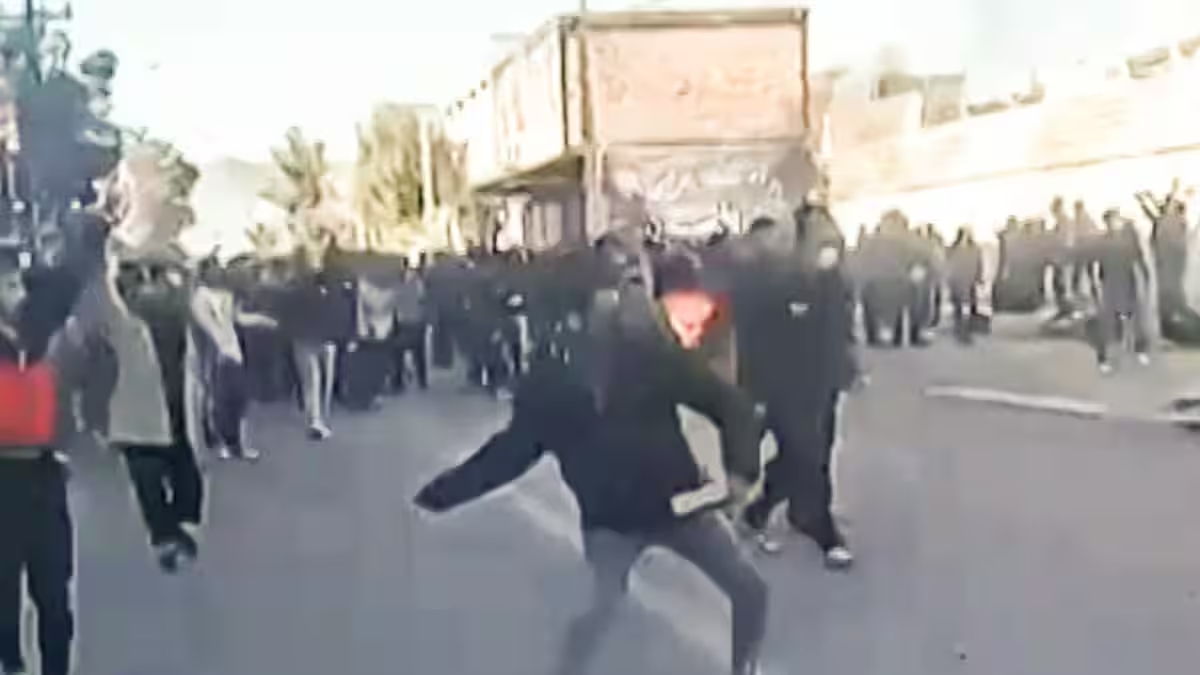
An officer was stabbed to death during unrest near Tehran as demonstrations over soaring prices and the collapsing rial spread across much of Iran, prompting warnings from authorities and drawing sharp reactions from the United States.
An Iranian police officer was killed during unrest near Tehran on Thursday, according to local media, as protests driven by
economic anger stretched into their 12th day and spread across much of the country.
Shahin Dehghan, a police officer stationed in Malard county west of the capital, died after being stabbed while security forces were attempting to contain disturbances. “Shahin Dehghan, a member of the police force in Malard county west of Tehran, ‘was martyred a few hours ago after being stabbed during efforts to control unrest’,” Fars news agency reported, adding that authorities were working to identify those responsible.
Similar news came from Iran’s southeastern province of Sistan and Baluchestan where a police officer driving a car was fatally shot in what authorities say was a drive‑by attack by unknown assailants. A chilling video of the incident has been doing the rounds on social media.
Disclaimer: Viewers may find the video disturbing. Discretion is adviced.
🇮🇷 Mahmoud Haqiqat, commander of the police station in Iranshahr, Iran, assassinated.
He was the former head of the city’s intelligence and was responsible for cracking down on anti-regime Baluchs in the city. pic.twitter.com/jV7MAzujc3
— Angelo Giuliano 🇨🇭🇮🇹🔻🔻🔻 (@angeloinchina) January 8, 2026
The current wave of unrest began on December 28, when merchants in Tehran took to the streets to protest soaring prices and the sharp fall of Iran’s currency. That protest quickly sparked similar protests in cities across the country.
On Thursday, the pressure on the rial was evident, with the US dollar trading above 1.4 million rials and the euro crossing the 1.7 million mark, according to websites tracking unofficial exchange rates. The economic strain has been a central grievance for protesters, many of whom say daily life has become increasingly unaffordable.
According to an AFP tally based on official statements and local media reports, demonstrations have now reached 25 of Iran’s 31 provinces. Clashes between protesters and security forces have left dozens dead, including members of the security services, state media has said.
A familiar pattern of unrest
While officials say the current protests are significant, they have yet to reach the scale of Iran’s last major protest movement in 2022–2023, which erupted after the death of Mahsa Amini in custody following her arrest for allegedly violating Iran’s strict dress code for women.
Nor do they yet rival the mass demonstrations that followed Iran’s disputed 2009 presidential election.
Still, the protests make for a serious challenge for Iran’s leadership, coming amid a deepening economic crisis and less than a year after the country’s war with Israel.
The unrest has also drawn sharp reactions from abroad. On Wednesday, Iran’s foreign ministry condemned what it called “meddlesome and deceptive remarks by US officials regarding Iran’s internal developments.”
The statement followed comments by US Senator Lindsey Graham, who told Fox News: “To the people of Iran: We stand with you tonight.” Graham also warned Iran’s supreme leader Ayatollah Ali Khamenei that US President Donald Trump would kill him “if you keep killing your people who are demanding a better life”.
Trump had warned earlier this week that Tehran would “get hit very hard” if more demonstrators were killed.
Iran’s foreign ministry rejected the US position, saying it was not driven by concern for Iranians but was “in line with the policy of maximum pressure, threats and interference in Iran’s internal affairs.” It also said US sanctions were responsible for “a major part of” Iran’s economic difficulties.
End of Article