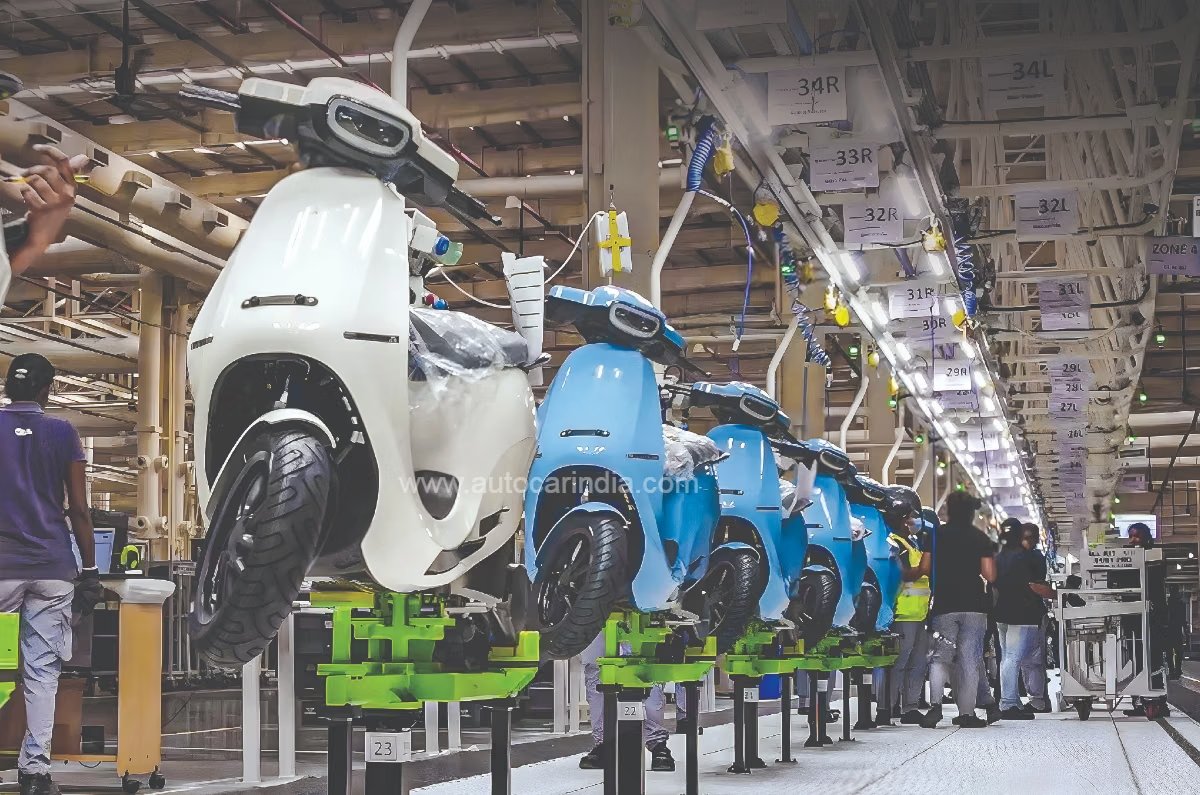
Ola Electric has announced that approximately 5 percent of its workforce will be impacted as part of what the company describes as an “ongoing structural transformation” aimed at increasing automation across its frontend operations.
- Workforce reduction affects 5 percent of employees
- Move comes amid declining market share
- Company cites automation and cost reduction as key drivers
Ola Electric workforce reduction and market challenges
The company has not specified how many employees will be affected
While Ola Electric has not clarified which departments will be most affected by the layoffs, the move raises concerns given the company’s already strained position. Over the past year, Ola Electric has been steadily losing market share in the electric two-wheeler segment. In CY25, the company’s sales dropped sharply to 1,99,316 units, down 51 percent from 4,07,700 units in 2024. As a result, Ola’s market share has nearly halved – from 35 percent to 15.57 percent – pushing it down to fourth place after previously leading the segment.
The company has also faced sustained scrutiny over customer service and after-sales support. While Ola claims that it has addressed a large portion of these complaints, a reduction in workforce could potentially worsen service centre experiences at a time when the brand is attempting to rebuild customer confidence.
At the same time, Ola Electric continues to outline ambitious future plans, with multiple products said to be in development. These include a compact electric car and the Diamondhead concept motorcycle – a futuristic model that the company claims will use aerospace-grade materials such as titanium, magnesium, and carbon fibre, deliver a sub-2-second 0-100kph sprint, and still be priced at around Rs 5 lakh.
Layoffs in themselves aren’t uncommon, even among global giants like Amazon and Google, and they don’t necessarily signal a company in distress. Such moves are often part of restructuring efforts to adapt to new technologies or to realign operations. However, viewed in the context of Ola Electric’s declining sales, shrinking market share, and persistent service-related concerns, this development does raise questions about the company’s long-term success.


There is definately a lot to find out about this subject. I like all the points you made