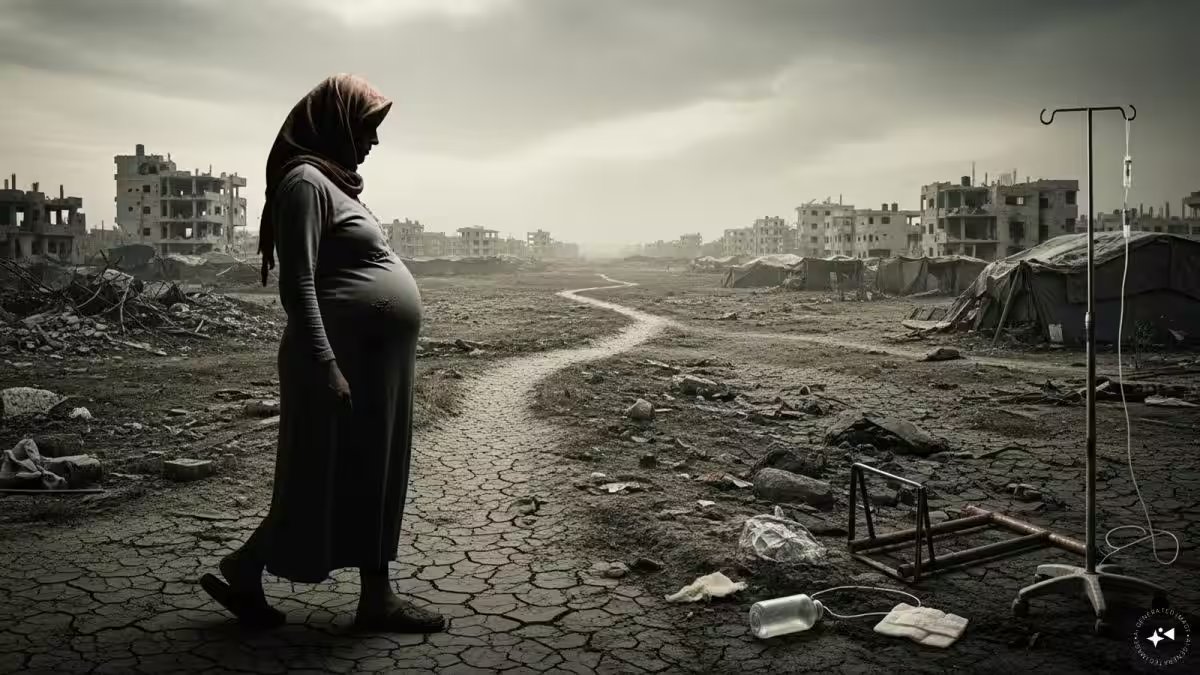
Nearly two-thirds of maternal deaths happen in conflict-affected and fragile countries where health systems struggle to provide care, highlighting the urgent need to protect women and strengthen maternal health services globally, WHO says.
Nearly two-thirds, about 60 per cent of maternal deaths worldwide take place in countries marked by conflict or institutional fragility, according to a World Health Organisation (WHO) technical brief released on 17 February 2026.
The analysis, conducted by WHO in partnership with the UNDP-UNFPA-UNICEF-WHO-World Bank Special Programme of Research (HRP), reveals that pregnant women in unstable environments face dramatically higher risks of death from largely preventable causes compared with their peers in more stable regions.
In 2023 alone, an estimated 160,000 women died from maternal causes in fragile and conflict-affected countries, far more than in peaceful settings despite these places accounting for only one in ten of global live births. The maternal mortality ratio (MMR) in conflict-affected countries stands at around 504 deaths per 100,000 live births compared with 368 in socially fragile nations and just 99 in stable countries.
The stark disparities highlight how conflict erodes health systems, disrupts essential services and deepens inequalities, leaving pregnant women dangerously vulnerable. “Crises create conditions where health systems cannot consistently deliver lifesaving maternal care,” the report says.
Young girls and women pay the highest price
For a 15-year-old girl living in a conflict-affected country, the lifetime risk of dying from a maternal cause is now roughly 1 in 51, a grim contrast with a risk of 1 in 593 for a girl in a relatively stable country. Even in settings deemed institutionally or socially fragile, the lifetime risk (1 in 79) remains far above that in stable regions.
Experts say these differences reflect how violence, instability and weakened governance hit maternal health hardest. Conflict disrupts routine care, destroys infrastructure, limits access to skilled birth attendants and undermines supply chains for essential medicines and equipment. Women’s access to quality antenatal care, emergency obstetric services and safe delivery becomes sporadic or impossible.
Structural issues including gender inequality, displacement, ethnic marginalisation and migration, further compound the risks. The analysis highlights that the consequences of conflict extend beyond direct violence to include barriers like fear of travelling to health facilities, lack of transportation, cost constraints and social exclusion.
Learning from resilience and solutions
Despite the overwhelming challenges, the report also points to examples of resilience and adaptation. In countries such as Colombia, Ethiopia, Haiti, Myanmar, Papua New Guinea and Ukraine, frontline health teams have devised innovative approaches to maintain maternal services. These include training traditional birth attendants, deploying mobile maternal care teams, renovating facilities and reorganising care pathways to ensure continuity of care even amid instability.
In Colombia, for example, strengthening trusted local networks and mobile outreach helped improve timely care where access was limited by insecurity and geography. In Ethiopia, mobile teams and additional midwives helped re-establish disrupted services while in Haiti removing cost barriers for caesarean sections ensured lifesaving interventions were accessible to displaced women.
Moving forward: Investment and resilience
Linking MMR data to conflict and fragility classifications gives policymakers a sharper tool to target resources where they are most needed. The brief emphasises the importance of investing in primary health care, strengthening data collection in hard-to-reach areas, and developing resilient health systems capable of withstanding shocks and maintaining essential services.
As the world seeks to reduce preventable maternal deaths, experts say the latest WHO analysis makes one thing clear: where conflict and fragility persist, women continue to lose their lives giving life not because solutions are unknown but because fragile settings lack the capacity to deliver them.
End of Article