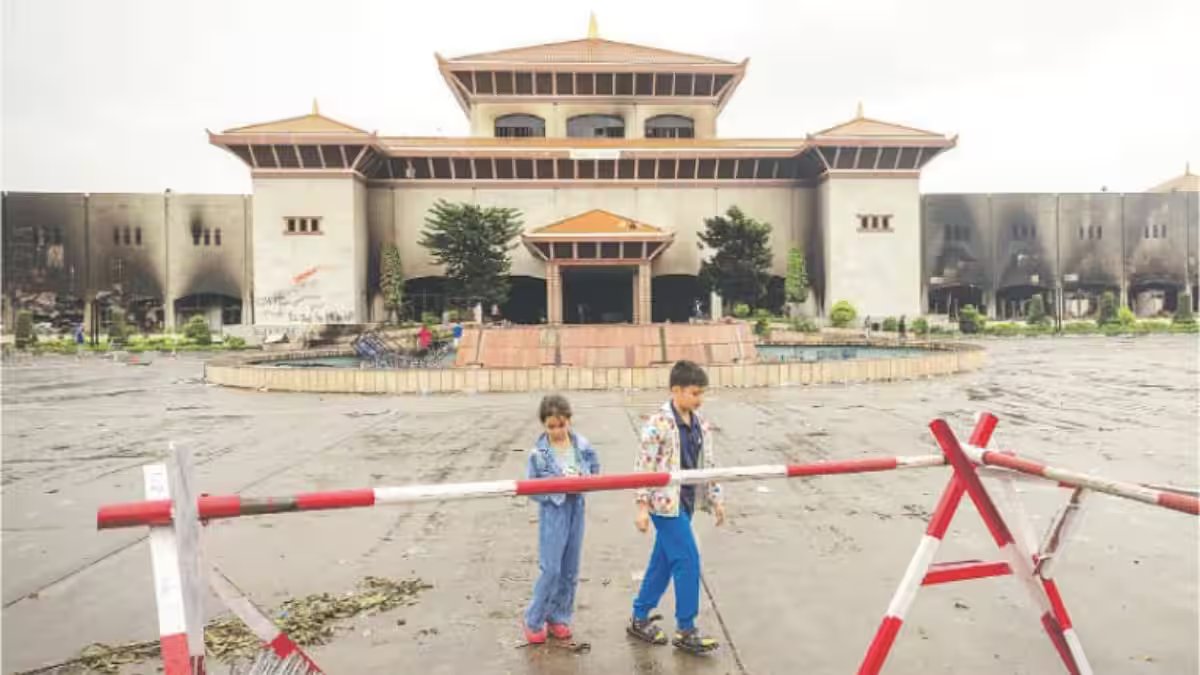
Ahead of parliamentary elections in Nepal on March 5, the code of conduct has come into effect. The elections were necessitated after widespread protests toppled the government of Prime Minister KP Sharma Oli last year.
The Code of Conduct for Nepal’s parliamentary elections came into effect on Monday.
Nepal is scheduled to hold elections to the parliament’s lower chamber, the House of Representatives, on March 5. The elections were necessitated after widespread protests toppled the government of Prime Minister KP Sharma Oli last year.
After Oli resigned amid widespread violence that targeted nearly every state institution, Sushila Karki, 73, became the interim prime minister on September 12, with the stated objective of holding elections at the earliest and handing over power to a democratically elected government.
Last month, the Election Commission (EC) said that 19 million voters and 114 political parties, many of them new, would take part in the elections.
Of these 114 parties, around a fifth are new, and many were registered by young activists who were part of the agitation that brought down Oli’s government last year, according to AFP.
Ahead of the elections, the Nepali Congress (NC), one of the country’s main parties, suffered a split. After the EC recognised the rebel faction as the real NC, the establishment faction approached the Supreme Court. The intra-party dispute has added fresh drama to the election cycle.
The code of conduct covers the federal and provincial governments and their ministers, constitutional bodies and officials, local executives and members, employees of government, semi-government, and public institutions, security personnel, political parties, and their affiliated organisations, according to The Kathmandu Post.
The code also applies to candidates and related individuals, election representatives, polling and counting agents, monitoring committee officials, observers, media institutions and personnel, private and non-governmental organisations and staff, educational institutions and employees, voters, development partners, and organisations running voter education programmes, as per The Kathmandu Post.
“The commission expects full cooperation from all concerned for effective implementation and adherence to the code of conduct,” Election Commission Spokesperson Narayan Prasad Bhattarai said.
End of Article



jililuck 22 https://www.jililuck-22.com