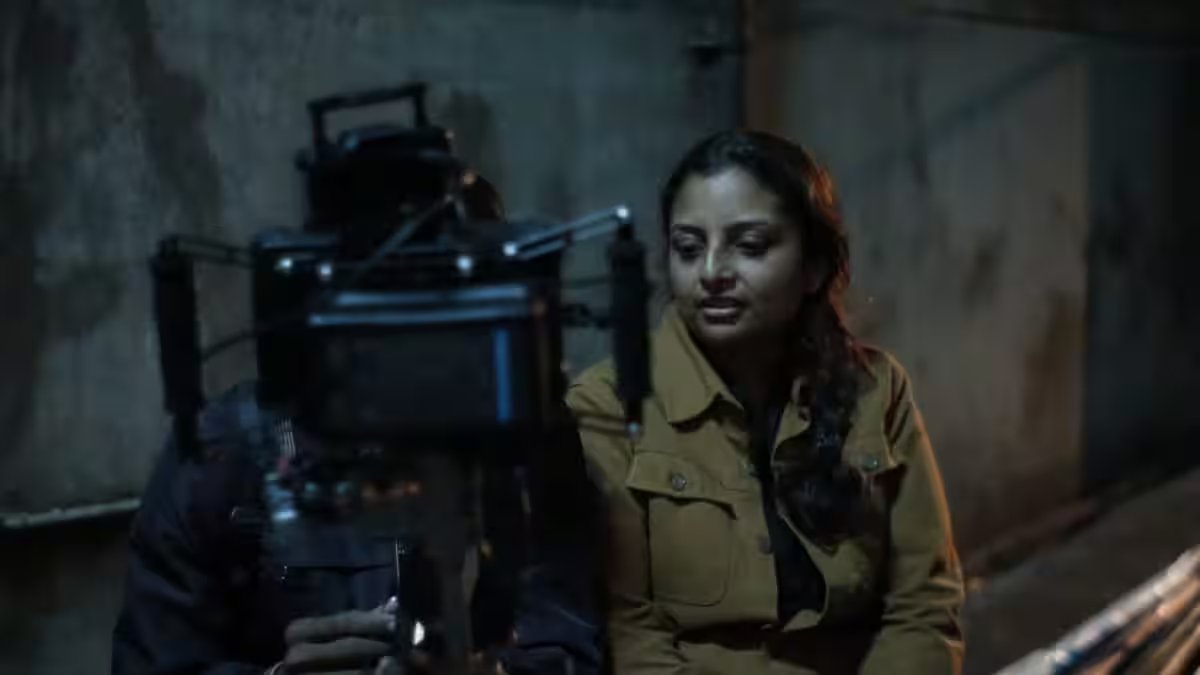
Independent filmmaker Suruchi Sharma has spent over a decade working outside the conventions of mainstream cinema, building a body of work shaped by patience, process and deep personal inquiry. From musical documentaries to fiction shorts, her films resist speed and spectacle, choosing instead to sit with people, places and ideas that often fall through the cracks of popular narratives.
As her short film Gagan Gaman gears up for release after premiering at MAMI, Sharma reflects on the realities of sustaining an independent practice in India, from navigating visibility beyond festivals and OTT platforms to rethinking how films find their audiences. In an exclusive interview with Firstpost’s Zinia Bandyopadhyay, she speaks about creative survival, the unresolved conversation around short film distribution, and why honesty and slowness remain central to her filmmaking philosophy.
Excerpts from the interview:
As an independent director, what is the biggest challenge that you have faced while making a film? Is it people not believing in your script, getting the budget sanctioned, or challenges with release?
Filmmaking is essentially signing up for a lifetime of challenges. Each step is a new challenge and one begins to derive pleasure in this endless cycle of conquering hardships. For me personally, the biggest challenge was to change gears from one form to another, from non fiction to fiction. I made my first independent documentary Utsav while I was still a student. I did not anticipate this, but what followed was a series of non fiction works in the next seven to eight years. I was desperate to come to fiction but it would not happen unless I put my buck first on this exercise. Gagan Gaman is my fiction work nine years after my short film Sandhya, which was also my graduation film at the National Institute of Drama. A series of challenges followed once I decided to embark on this idea, but what a relief to have finally made it on the other side!
Many independent filmmakers struggle with visibility once the festival run ends. How are you personally rethinking the idea of “audience” beyond festivals and OTT platforms?
That’s a great question and a matter of struggle for many independent filmmakers. I have always had faith in my films that they would age well. OTT release was never on my mind for my musical documentaries because I knew they were a different breed. It took me time to create a substantial body of work that can now be experienced thematically on the question of “understanding folk” or with a certain curiosity into a filmmaker’s journey. Thanks to the Jairangam Theatre Festival, I got to host my first solo exhibition titled “Bheetar/ Bahar” at the end of last year. This was a peek into my work as an artist and a filmmaker – a journey of a decade compiled as an experience in a room. I got a heartening response from the people of Jaipur. I wish to travel with this exhibition to other cities and connect with my audience.
We are often disheartened by the general state of affairs but I have learned through this exhibition that if you put up a good show, the audience respects it and gives it time, attention and love. We are all in the middle of an overload of content, looking for spaces for quiet meditation, Bheetar/ Bahar became that for many of the visitors. I am quite grateful that an idea for an exhibition such as this, which was also a secret dream from my teenage years, finally manifested after about 15 years of patience and created a new path for me to connect authentically and deeply with my audience.
Your short film Gagan Gaman premiered at MAMI and is now gearing up for release. What conversations around distribution for short films still feel unresolved in India, even today?
Oh the conversation has not even begun! In 2022, when I was gearing up to make Gagan Gaman, the response was quite cold for the fact that it was a short film. Even in terms of exhibition, the opportunities were not looked at as significant. Thankfully, I did not succumb to the pessimism around me. For me Gagan Gaman is not just another short but a piece of my heart that I have put out with all honesty. How could it not be of value! I still have a lot of faith in this film. It’s not about making the perfect film for me but discovering a new world, a new meaning with every venture I take. People who come from a commercial mindset want you to mine a diamond every time. That’s not how I see it.
To crack distribution for short films or any film for that matter, filmmakers will have to be more resilient and not give up at the completion of the film. A film is a commitment of a lifetime, the more support you give it, it will give back to you. It’s like raising a child. We are not looking at the ecosystem with this lens and therefore lost in terms of how to navigate it. I have to add that my recent experience at the Short Film Festival of Winterthur, Switzerland also opened up my mind to the many possibilities for a short film. We need more platforms and patrons to acknowledge short films as a form in its own merit and not reduce it to only a pitch / pilot or shorter version of a feature. I am glad to partner with Platoon One for distributing Gagan Gaman across platforms. Thankfully they shared my optimism for the film, and now I am hoping to reach my audience in India and across the globe with their help.
With platforms rewarding speed, volume and visibility, how does a filmmaker committed to slowness, process and nuance survive, creatively and economically?
As a matter of fact, they survive with a lot of difficulty. There are days when you are so exhausted you want to quit the ride all together. Unless you come from money, such a practice can become highly exhaustive. For me, my ability to live frugally and adapt to all circumstances has come in handy. Also, an independent practice of works for hire along with personal projects has supported me through thick and thin. Lastly, a very small tip early in my career has helped me survive financial dry spells. It’s a simple mantra I received from a senior “Save first, spend later.”
Apart from economics, the emotional turmoil should be dealt with utmost honesty. Be honest to yourself on what you are feeling and why you are feeling something. And with constant reflection and introspection, set the most unadulterated intention for your work. And most importantly, identify your source of nourishment, this is what keeps us going.
You have also founded Studio Ainak and Rewrite to help filmmakers and screenwriters. What was your inspiration behind it?
For me most things I build are personal. Ainak is my place to dream. I am glad with time and patience, I have been able to cultivate a garden of my own at Studio Ainak- metaphorically speaking! It’s my place of creative autonomy that has expanded over time.
As for Rewrite- I started when I felt lonely in the process of writing. Struggling to refine my feature script, I had no writer friends or mentors to look up to, no access. It was an impulse, that possibly there might be others who’d be feeling the same way. Thanks to encouragement and initial support from friends, I could set it up quite easily in the first go. It’s unique in its setting and the experience it creates for the fellows. We have had more than 40 screenwriters benefit from the program with more than half accessing the program on scholarships funded by Studio Ainak.
Unfortunately, as an independent filmmaker, artist and entrepreneur away from the mainstream industry, it’s a lot on my plate to handle within limited resources. I had to pause the program last year because of lack of funds. I am keen to find partners and patrons who can support the program and I can assure it to be the finest retreat for artists in the long run. In good time, I aim to make Rewrite a place for filmmakers to find support and create it as a holistically nurturing space for collective growth.
What are the most common misconceptions young filmmakers have today about “making it” in the industry?
“Making it” is an illusion that draws you into a whirlwind. Beware or be prepared!
To the young fellow artists on the journey, I’d say: be smart but don’t be clever. Your honesty will support you. Work towards being more and more honest. The universe aligns when you move in that direction. Those who are actually working with or towards honesty, I’d say take care of yourself. A healthy body and mind is what you need the most in this long arduous journey. Be ready for however time it takes to arrive. I recently was able to phrase it as a personal mantra: “Arrive within to arrive without”.
In other words, for “making it”, make it small, make it with utmost honesty with the best people you can and support the film long after its completion, and the rest takes care of by itself.
End of Article