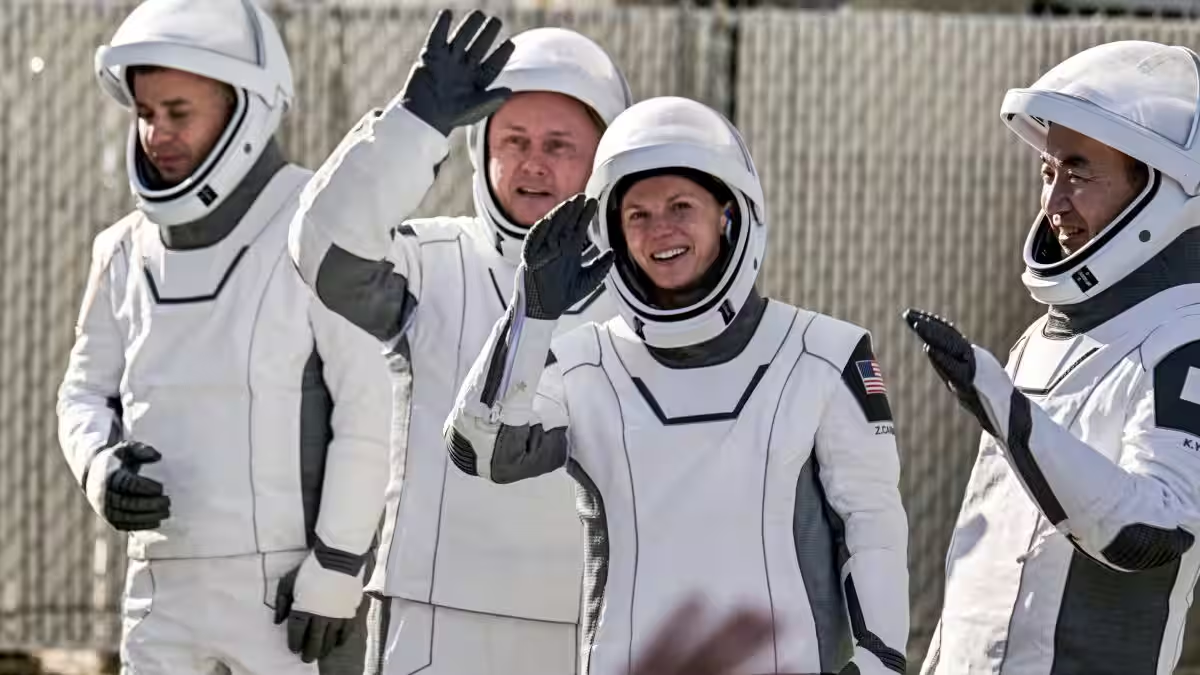
Nasa is using the SpaceX Crew-12 mission to find out if a pilot can still fly a multi-billion-pound spacecraft while feeling this level of motion sickness. To do this, they are using a high-tech experiment called Manual Piloting.
Astronauts are adapted to the surface of the moon, they usually find themselves floating up and down, but the trouble starts when they have to land back to the world with gravity, like the moon or earth.
For them it’s a total tailspin, when daily one is living on their head and suddenly on their legs. To the brain, it feels like the room and the pilot is standing on the real life ahead.
Nasa is using the SpaceX Crew-12 mission to find out if a pilot can still fly a multi-billion-pound spacecraft while feeling this level of motion sickness. To do this, they are using a high-tech experiment called Manual Piloting.
How does it work?
The experiment essentially puts the astronauts inside a flight stimulator using a virtual reality headset. While they are rotating and orbiting Earth in zero gravity, they put on goggles and try to land a virtual ship on the lunar south pole.
As their brains have adapted to that weightlessness, they fake gravity making them disoriented. Scientists believe that the astronaut can ignore the dizziness and use their hand controllers to stay erect and oriented, or their balance misses the landing pad entirely.
Inner ear sends the signal to the brain
The inner ear usually sends the signal to the brain that where is the gravity and which way is down. It sends conflicting signals to the brain, causing a sensation known as a gravity hangover.
This experiment shows that this confusion slows pilot’s reaction time or affects their ability to make prompt decisions.
Technology can also fail, as modern spacecraft land using computers. Crew-12 study is testing a theory that, if astronauts practice landing in virtual reality right before they leave the space station, it will prime their brains for the real thing.
It can also monitor how well the brew can override and redirect the vehicle during dizzy spells, Nasa can design better programs.
Researchers are looking to limit human ability and achieve success. It can track how often pilots drift off course in the simulation, Nasa can decide if future landings should be 100 per cent automated or if humans need special tools to help them see straight.
This ensures that when the Artemis crews eventually head to the lunar surface, a bit of vertigo might not lead to a disastrous crash.
End of Article