The
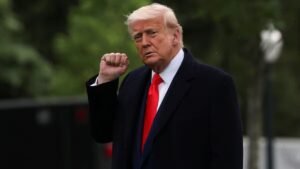
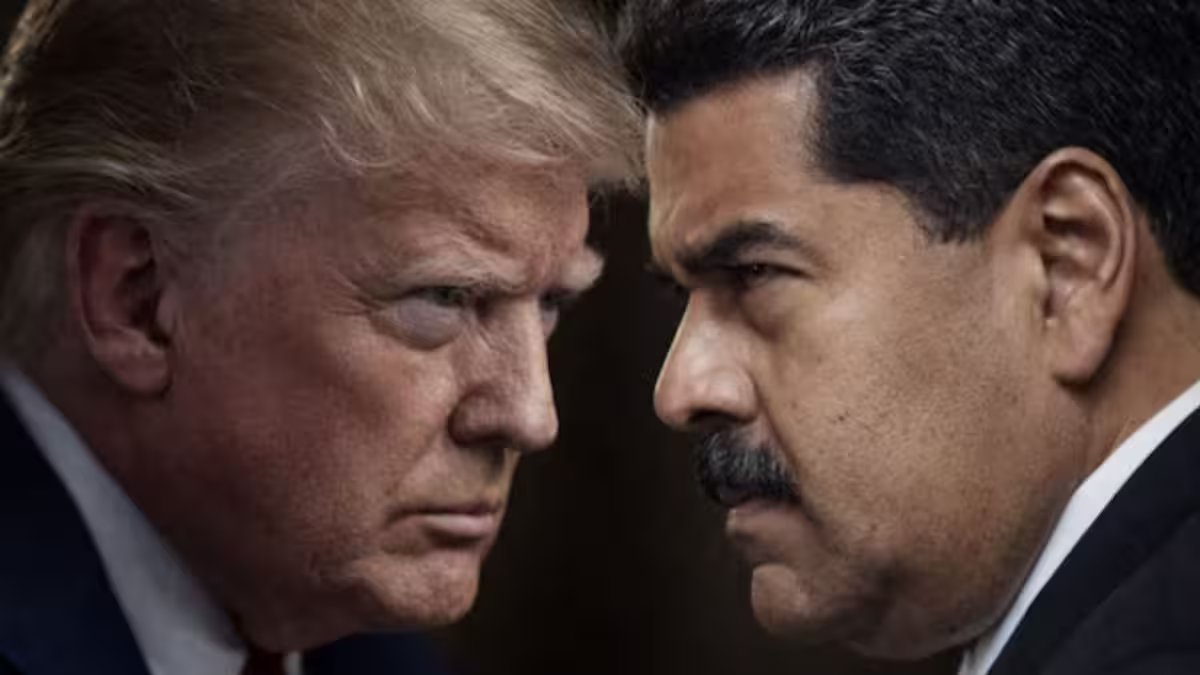
US military operation that captured Venezuelan President Nicolás Maduro and his
wife was the US strutting through the world like nothing could stop it. The couple was pulled from their bedroom, blindfolded, put on a plane, and dropped into a
New York detention centre at Trump’s command.
On the surface, Washington’s explanation is straightforward. Maduro was running a “narco-state,” and the operation was a law-enforcement strike against international drug trafficking. Trump went on to call the move a decisive blow against organised crime, warning that the Venezuelan regime had long endangered the US with cocaine and other illicit drugs.
“We’ve taken out a narco-state. This is a dangerous regime, and we are making it accountable,” he said.
But the real story is far more complicated. Oil, geopolitics, and strategic influence all appear to be part of the equation, and the stakes are gigantic.
‼️Maduro, wearing flip-flops and home clothes, was taken to a Brooklyn pre-trial detention center — he wished everyone good night and a happy New Year
In the second video, he can be heard addressing those present in English.
Maduro and his wife were transferred to a detention… pic.twitter.com/jjaesfgJ7Z
— NEXTA (@nexta_tv) January 4, 2026
Drugs: The official explanation
The US Justice Department pictures Maduro’s government as a linchpin in a global cocaine network. Prosecutors claim the regime collaborated with criminal groups, notably the Cartel de los Soles, moving roughly 250 tonnes of cocaine annually to the US and Europe.
Congressman Michael Baumgartner described the strike as a triumph for US national security: “This is about stopping narco-terrorism and preventing these criminal networks from operating freely,” he said.
Yet, while cocaine is a significant part of the US drug conversation, Venezuela is not a major source of fentanyl, which drives most of the current opioid crisis.
Centers for Disease Control and Prevention (CDC) data shows overdose deaths in the US jumped from 5.7 per 100,000 in 2016 to 21.6 per 100,000 in 2021. Crucially, this surge wasn’t driven by cocaine. It was fueled mainly by synthetic opioids, especially fentanyl, which is far more potent and deadly.
Furthermore, major cocaine flows still come from Colombia and Mexico, according to the
United Nations Office on Drugs and Crime (UNODC) and the
US Drug Enforcement Administration (DEA).
Oil: The bigger prize
Here’s where the story deepens.
Venezuela holds the
largest proven oil reserves in the world, estimated at 303 billion barrels, surpassing Saudi Arabia. Most of it is heavy crude in the Orinoco Belt, which is more difficult and expensive to refine but still highly valuable globally.
Oil has always been at the heart of US–Venezuela tensions.
At its peak in 1970, Venezuela produced 3.75 million barrels per day (bpd). By 2016, output had fallen to 2.25 million bpd, and sanctions and mismanagement drove production down to just 527,000 bpd by 2020. Recent estimates suggest a rebound to over 1.14 million bpd in late 2025, but this is still a fraction of its former capacity.
Trump himself made no secret of the US interest in Venezuelan oil, stating post-operation: “We have the greatest oil companies in the world… and we’re going to be very much involved in it.”
Put two and two together, and the economic incentive is pretty obvious. Controlling Venezuela’s oil sector strengthens US influence in a strategic region while limiting access to Russia, China, and Iran, who have cultivated close ties with Maduro.
Sanctions and the slow choke
Before the strike, US sanctions had already crippled Venezuela’s economy.
PDVSA, the state oil company, lost access to key financial channels, and US naval blockades cut exports by over 50%. Between 2018 and 2024,
Venezuela lost billions in revenue, adding pressure on the Maduro government.
This combination of sanctions, declining oil production, and international isolation created conditions where a US operation became feasible.
Geopolitics can’t be ignored.
Venezuela’s alignment with US rivals made it a target for intervention. Many argue that the operation was as much about reasserting US influence in the Western Hemisphere as it was about drugs or oil. By removing Maduro, the US sends a message about its willingness to act decisively when strategic interests are at stake.
Both, and beyond
So, was it drugs or oil? The truth appears to be both, with layers of geopolitics and strategic calculation. The drug trafficking narrative provided the legal and political justification, tapping into domestic concerns. Meanwhile, Venezuela’s massive oil reserves and strategic alliances offered long-term economic and geopolitical incentives.
End of Article