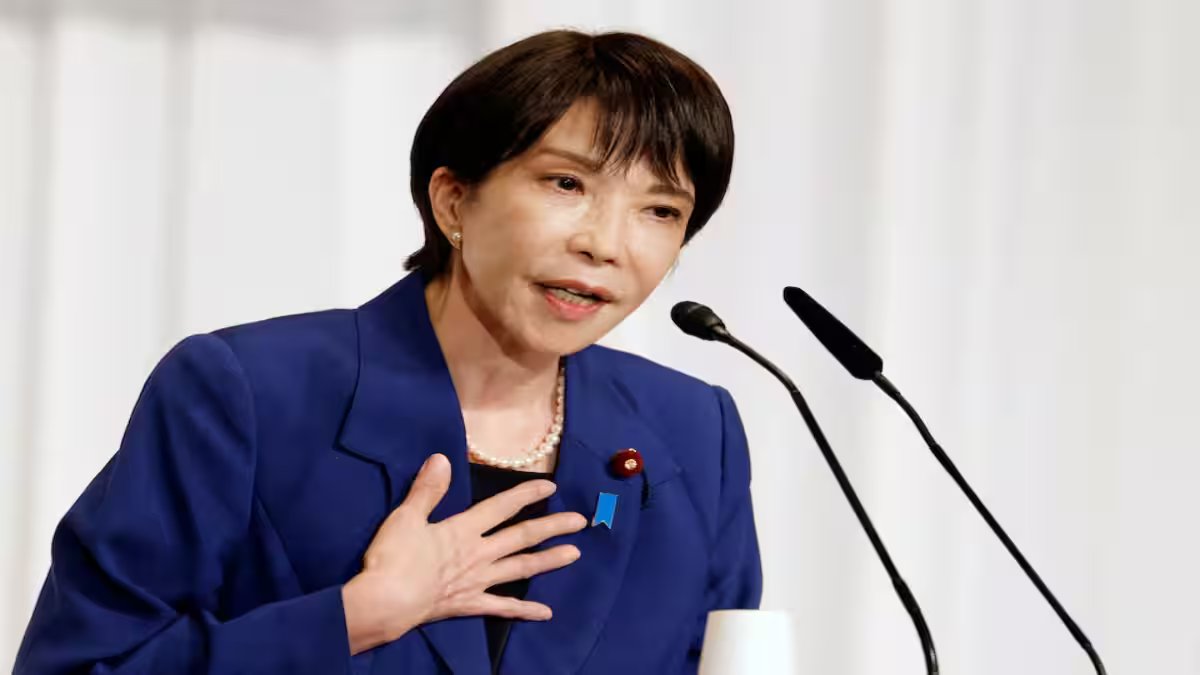
Japan’s female lawmakers, including PM Sanae Takaichi, are calling for more toilets inside parliament, turning a daily inconvenience into a pointed symbol of gender imbalance. With women’s representation rising but facilities stuck in the past, the debate has opened a wider conversation on how inclusive the country’s politics really are.
Nearly 60 female lawmakers in Japan, including Prime Minister
Sanae Takaichi, are taking an unusual but pointed stand on gender equality by petitioning for more toilet facilities in the country’s parliament building.
With just one toilet with two cubicles reserved for the lower house’s 73 women lawmakers near the main plenary session hall, long queues have become a routine frustration.
Petition highlights real-world imbalance
The petition, signed by 58 female legislators from across party lines, was submitted earlier this month to Yasukazu Hamada, chair of the lower house committee on rules and administration.
“Before plenary sessions start, truly so many women lawmakers have to form long queues in front of the restroom,” Yasuko Komiyama, a member of the opposition Constitutional Democratic Party, told the Guardian, describing the daily inconvenience.
The National Diet (the legislature of Japan) building, completed in 1936—nearly a decade before Japanese women gained the right to vote in 1945—was designed in a markedly different era.
Today, the entire lower house has 12 men’s toilets with 67 stalls but just nine women’s toilets with 22 cubicles, according to Japanese media reports.
A win on paper, gaps on the ground
Japan’s gender gap remains wide.
In the
World Economic Forum’s global gender gap report, the country ranked 118th out of 148 nations this year, and women are underrepresented not just in politics but also in business and media.
Currently, 72 of 465 lower house lawmakers are women, up from 45 in the previous parliament, and 74 of 248 upper house members are female. The government has set a target of having women occupy at least 30 percent of legislative seats, but critics say there’s still a long way to go.
Takaichi, the
first female prime minister of Japan, has publicly expressed aspirations for greater gender balance, even comparing her goals to “Nordic” levels of equality. For context, in Nordic countries—namely Sweden, Norway, Finland, Denmark and Iceland—women regularly make up 40–50% of parliamentary and cabinet positions.
End of Article