Over 200 political prisoners at a Venezuelan jail have gone on hunger strike after discovering they are excluded from a new amnesty law
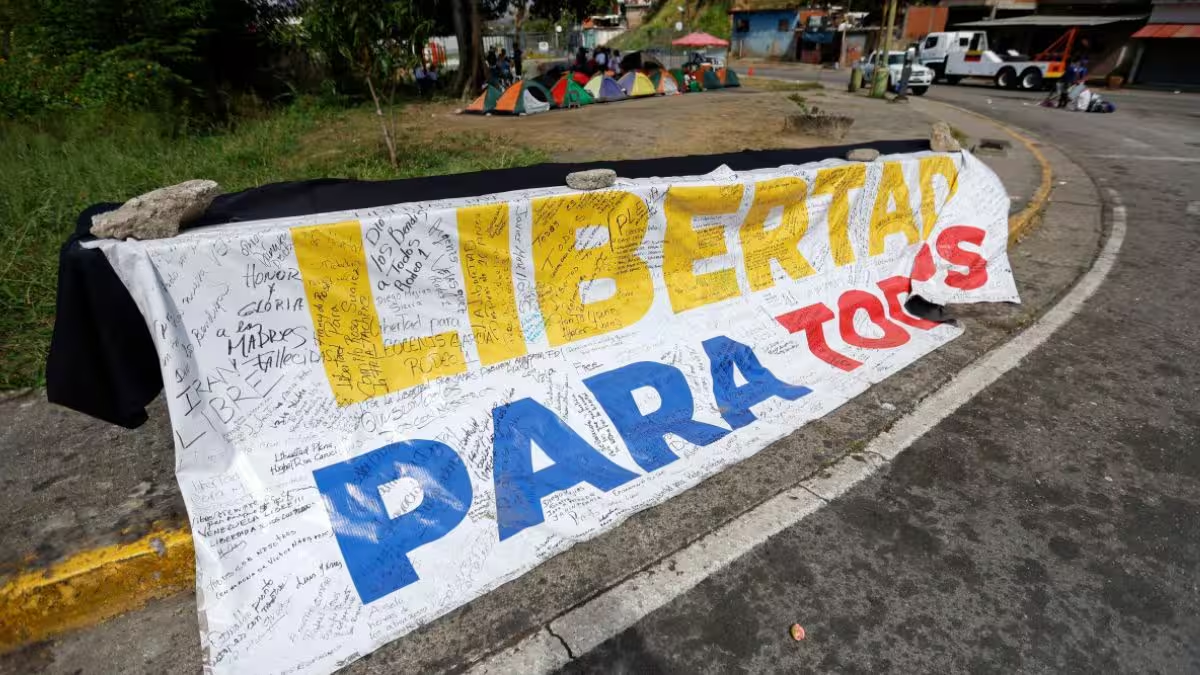
More than 200 political prisoners at the Rodeo I prison east of Caracas have refused food in protest against a new amnesty law that excludes many detainees, prompting anguish among families gathered outside the facility.
The inmates, who began their hunger strike on Friday night, shouted to relatives from inside the prison compound, calling for release and demanding that all detainees be included in the legislation.
“Freedom!”, “release us all!” and “Rodeo I on strike” echoed from the facility as heard by an AFP journalist.
The amnesty law was approved by Venezuela’s legislature on Thursday as part of reforms encouraged by the United States after it ousted and captured former President Nicolas Maduro on January 3.
Around 214 detainees refuse food
Relatives said the protest involves about 214 people, including both Venezuelans and foreign nationals. Yalitza Garcia, mother-in-law of detainee Nahuel Agustin Gallo, said many inmates felt abandoned by the exclusions.
Gallo, an Argentine police officer accused of terrorism, is among those whose charges fall outside the amnesty.
“They decided Friday to go on hunger strike because of the scope of the amnesty law, which excludes many of them,” said Shakira Ibarreto, whose father—a police officer—was arrested in 2024.
ICRC granted access for first time
On Sunday, a team from the International Committee of the Red Cross visited Rodeo I.
“This is the first time they have allowed us to approach that prison,” said Filippo Gatti, the ICRC’s health coordinator for Venezuela. “It’s a first step, and I think we’re on the right track.”
Family members said not all inmates were participating in the strike.
The law was crafted by interim leader Delcy Rodriguez under pressure from Washington after US commandos arrested Maduro and his wife and transported them to the United States to face drug-trafficking charges.
Opposition figures have sharply criticised the legislation, noting carve-outs for offences often used to target Maduro’s political opponents. The law excludes members of the security forces convicted of crimes the government classifies as terrorism.
Thousands seek relief through amnesty
The amnesty extends to 11,000 political prisoners who, over nearly three decades, were paroled or placed under house arrest. More than 1,500 prisoners have already applied for amnesty, according to the head of Venezuela’s legislature. Hundreds of others had been released by Rodriguez’s government before the bill passed.
On Sunday, a small group of prisoners emerged from Rodeo I carrying release papers, greeted by applause from waiting relatives. “I’m out, I love you so much, my queen! I’m doing well,” said freed detainee Robin Colina during an emotional phone call.
Another released inmate, Armando Fusil, a 55-year-old police commissioner from Maracaibo, told AFP, “Right now there are quite a few people on hunger strike because they want to get out.”
He said he had been “arrested for no reason” in October 2024 and that his family had travelled nearly 40 hours each week to visit him.
“We all help each other,” he said. “It’s created a beautiful brotherhood.”
Maduro, who ruled Venezuela from March 2013 to January 2026, is in US custody awaiting trial. The 63-year-old has pleaded not guilty to drug-trafficking charges and has described himself as a prisoner of war.
End of Article