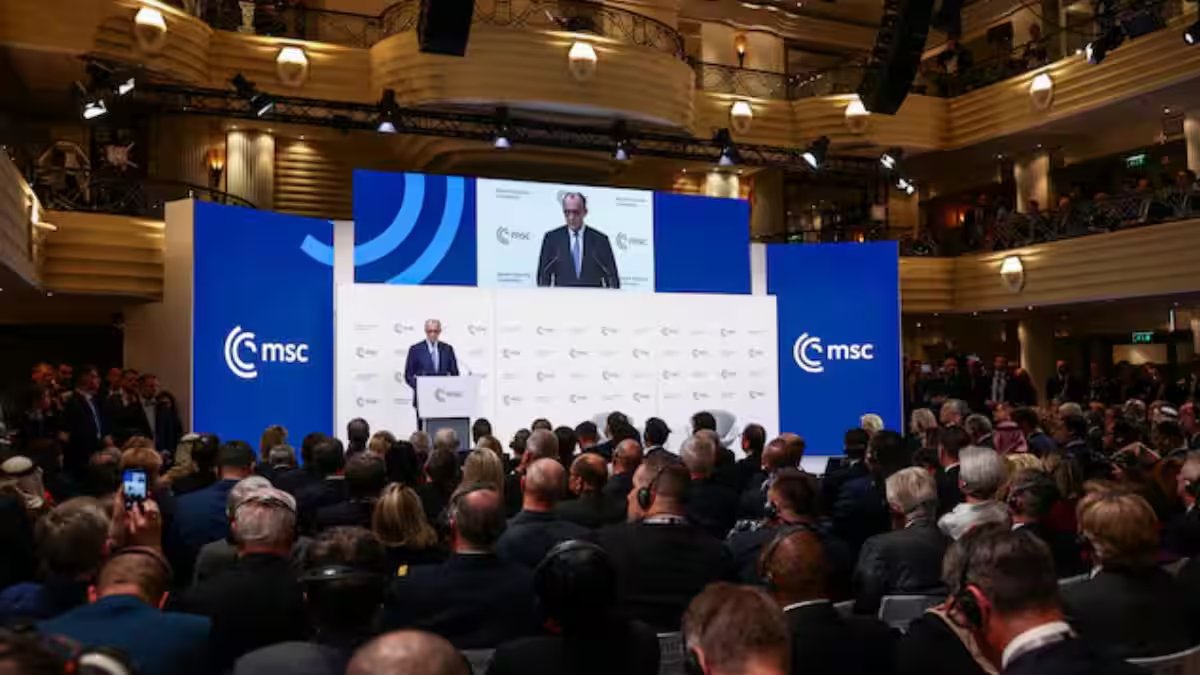
German Chancellor Friedrich Merz calls for restoring trans-Atlantic trust at the Munich Security Conference as US Secretary of State Marco Rubio joins talks amid lingering Nato and trade tensions.
German Chancellor Friedrich Merz called Friday for “a new transatlantic partnership” between the US and Europe, appealing to Washington: “Let’s repair and revive transatlantic trust together.”
“In the era of great power rivalry, even the United States will not be powerful enough to go it alone,” Merz told the Munich Security Conference, switching to English to appeal directly to Washington.
“Dear friends, being a part of NATO is not only Europe’s competitive advantage. It’s also the United States’ competitive advantage. So let’s repair and revive transatlantic trust together. We, the Europeans – we are doing our part.”
The conference this year brings together senior European officials alongside US Secretary of State Marco Rubio and other international policymakers.
Merz also said on Friday that he was holding talks with French president Emmanuel Macron over creating a joint European nuclear deterrent as urged on Europe to rebuild its relationship with its US ally. “We’re not doing this by writing Nato off. We’re doing it by building a strong, self-supporting European pillar within the alliance,” he said.
Tensions were evident at last year’s gathering, which took place shortly after US President Donald Trump began his second term. During that meeting, Vice President JD Vance surprised European participants with pointed remarks criticising the state of democracy in parts of Europe.
In the months that followed, disagreements widened. The Trump administration made several moves that unsettled allies, including a warning in January about potential tariffs on certain European nations as part of an effort to gain greater influence over Greenland, the self-governing territory belonging to NATO member Denmark. The proposal was later withdrawn.
With Rubio leading the American delegation this year, European officials are hoping discussions will center more squarely on shared security priorities and less on political disputes.
Ahead of his departure for Germany on Thursday, Rubio struck a conciliatory tone, describing Europe as a vital partner for the United States.
“We’re very tightly linked together with Europe,” he told reporters. “Most people in this country can trace both, either their cultural or their personal heritage, back to Europe. So, we just have to talk about that.” But Rubio made clear it wouldn’t be business as it used to be, saying: “We live in a new era in geopolitics, and it’s going to require all of us to re-examine what that looks like.” Rubio arrived in Munich Friday and is due to address the conference on Saturday morning.
Since last year’s Munich conference, Nato allies have agreed under pressure from Trump to a large increase in their defence spending target.
Nato Secretary-General Mark Rutte said there has been a “shift in mindset,” with “Europe really stepping up, Europe taking more of a leadership role within Nato, Europe also taking more care of its own defence.”
With inputs from agencies
End of Article